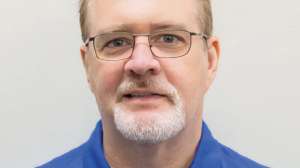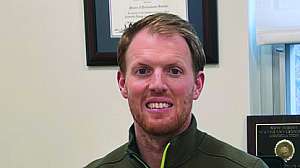
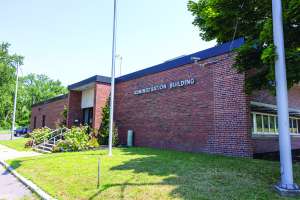
Eric Kerr came to the Chicopee Wastewater Treatment plant four years ago to find a 1970s facility running on mostly original equipment.
Kerr and the staff have been steadily renewing and replacing equipment, and design is in progress for a $60 million upgrade, mainly to enable nitrification/denitrification to meet a new NPDES permit limit for effluent nitrogen discharges in the Connecticut River.
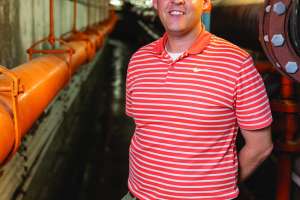
But something else needed rebuilding: the level of professionalism on the operations and maintenance teams. “We have a good culture here,” says Kerr, chief operator at Chicopee, a western Massachusetts city of 55,000.
“My biggest thing is to build rapport with people. I try to get to know them. What’s their background? What is their family life like? But at the same time we need to be professional and have pretty high standards.
“People need to be pushed. I tell our team members there are three Be’s: Be fair, be firm, be professional. I like to ask our supervisors: What did you get today? You have four people on your team. That’s 32 hours of manpower. What did you accomplish? If they were your employees, would you be happy with the product they provided for you?
“I remind our people: We expect you to behave professionally. That means the way you talk to your peers and your subordinates. When something happens, you’ve got to address it then and there. You can’t be afraid to talk to your people when they have a performance gap.”
For his efforts, Kerr received a 2023 Operator Award from the New England Water Environment Association. That shares office wall space with a Rookie Operator of the Year award he received several years ago from the Water Environment Association of South Carolina while at the clean-water plant in Columbia.
Kerr grew up on the Lake Murray Reservoir in South Carolina where he enjoyed outdoor adventures and developed a love for water. But his route into a clean-water career was far from direct.
He earned a bachelor’s degree in theology and theological studies from Southern Adventist University and, for three years, served as a pastor in a three-church district in Northern Michigan. That profession didn’t suit him, and so he and wife Ruth moved to Lincoln, Nebraska, where he worked for an electroplating company.
“We made chrome plating for Harley-Davidson, Peterbilt and Ford Motor,” he recalls. “That gave me my first taste of industrial wastewater treatment. Chrome has a notorious reputation as a carcinogen. My company was renowned for performance. There was very strict monitoring for our discharge, and we always got a clean bill of health.”
Along the way, Kerr earned an associate degree in power plant operations from Southeast Community College in Milford, Nebraska, with a focus on nuclear power. He did a brief internship at a nuclear plant, but saw that the work schedule was not conducive to a stable family life: “Even though it was going to be a good wage, my wife wasn’t thrilled about me being pretty much the property of the utility.”
The couple then moved to Nicaragua for several months to help establish a rehabilitation center for people struggling with alcoholism. Kerr then landed an operator position at the 60 mgd (design) Metro Wastewater Treatment Plant in Columbia. There he earned all four grades of licensing in just eight months, while helping several colleagues pass their license exams.
“Because I had all my licenses, I was an unofficial supervisor,” Kerr says. “Anytime a supervisor was out sick or on vacation, I would basically manage operations and take care of the plant.” He left for Chicopee after two years to step into an official leadership role.
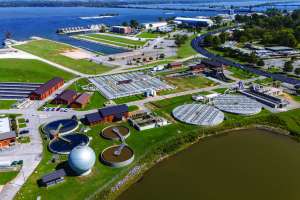
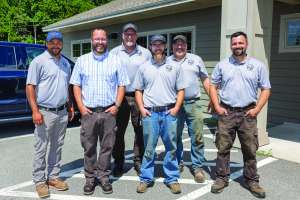
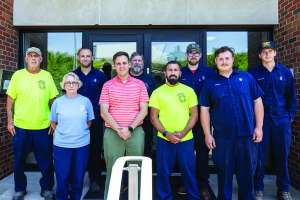
The Chicopee plant (15 mgd design, 9 mgd average) is an activated sludge facility using pure oxygen for secondary treatment. During Kerr’s tenure, four operators have retired and he faced rebuilding the staff while bringing the plant up to modern standards. Team members are:
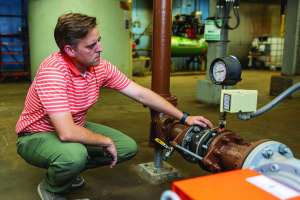
Kerr helped engage team members by bringing a fresh perspective to plant operations and by being a hands-on leader. “I don’t dress in typical laborer’s clothes, but I’ll get right down in the tanks with my team,” he says. “Any of the nightmares that transpire, I am deeply acquainted with. I don’t micromanage, but I do get into the water and get a feel for what they’re facing. I stay late. I show people that I care and tell them how much I appreciate them.”
He counts among his best moves the creation of a second-shift briefing. “That changed the culture a lot,” he says. “Before, the second shift were the stragglers no one cared about. They were lucky to get a bone from the day-shift team coming and going. We now have a formal briefing for our second shift with our maintenance, operations and lab supervisors. It gives second shift a voice and makes them feel more like a part of the team.”
He constantly stresses professionalism: “I encourage our supervisors to be assertive, but not aggressive. To my direct reports, I emphasize helping their people understand that they hold state licenses and occupy professional roles.
“I believe our plant should be no different than our fire department, where they take pride in safety and pride in their work. That is a big thing here as well. Even though our industry is undesirable in the material we handle, there is no reason our plant shouldn’t look like the fire department. Our vehicles ought to be clean. Everything ought to be tight and clean. If I come through and there is sludge splattered on the wall, I am not going to be happy.
“As you instill those values, people realize it’s actually nice to take pride in what they do. Once you introduce that mentality, they will quickly rise to that level. If someone gives me excuses, I’ll say, ‘You’ve got a Grade 5 operator’s license don’t you? There’s no excuse for what has happened. You know that.’ It’s not to grind them to powder. It’s to give them a push, to give them a compliment but also to challenge them.”
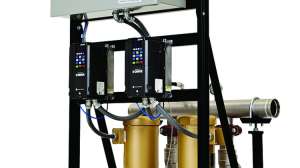
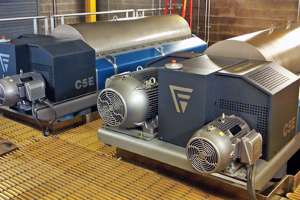
An ongoing challenge is restoring the plant. A project is in place to replace every pump. Two primary and two secondary clarifiers have been rehabilitated. A new Westfalia centrifuge (GEA Group) replaced a worn-out unit and yields biosolids at up to 35% solids. For disinfection the team replaced liquid chlorine with sodium hypochlorite, dosed with a peristaltic pump (Blue-White Industries). Much more is still to come.
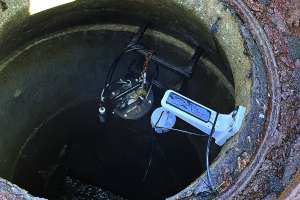
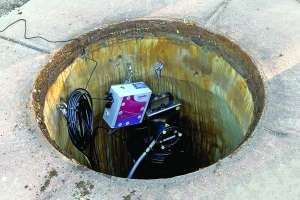
The treatment process starts with a rag rack (Vulcan Industries) followed by traditional grit settling. The flow then passes to four primary clarifiers (Brentwood). The secondary treatment bioreactor is a covered tank with pure oxygen delivered to the head space; the contents are agitated with Lightnin fountain-type mixers (SPX FLOW) on the surface. From there the water flows through four organ-pipe secondary clarifiers (Kusters) with dissolved oxygen and TSS probes (YSI, a Xylem brand) before disinfection and discharge.
Primary and waste activated sludges pass through gravity thickening (Kusters). Chlorine is dosed to the thickeners to deaden the microbes in the waste activated sludge and enhance settling. After two Muffin Monster grinders (JWC Environmental), a rotary lobe pump (Boerger) delivers the material to the centrifuge. Biosolids are hauled off by Casella Organics for lime stabilization and beneficial use.
While the plant is performing effectively, the coming upgrade will significantly improve effluent quality and compliance. It includes a major expansion of the bioreactor and the creation of zones for nitrification/denitrification.
The process will continue to use pure oxygen, but with innovative technology. The INVENT HYPERCLASSIC mixing and aeration system (INVENT Environmental Technologies) is a mechanically optimized process with a hyperboloid mixer body installed near the tank bottom and a drive at the tank top.
As the mixer rotates, its eight fins produce a bottom flow directed radially outward. The turbulence lifts settled material off the bottom while an upward flow along the walls carries particles to just below the water’s surface. The result is thorough mixing.
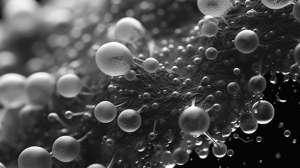
Meanwhile, blower air escaping at the underside of the mixer body meets dispersing tunnels and shear fins, creating extremely fine bubbles that optimize retention time, leading to high aeration efficiency. “The mixers don’t rag up, and they are very effective,” Kerr says. “They enable control of the DO level to a very fine tolerance.”
Kerr notes that the Woodard & Curran engineering firm was instrumental in developing the nutrient removal process: “Paul Dombroski was key to our pursuit of the INVENT mixers, and they are heading the engineering for the $60 million upgrade.”
That upgrade will also include a new pump for the combined sewer overflow tank and a Blue-White peristaltic pump for disinfecting the contents. The city’s largest pump station has its own CSO and will also be fitted with a Blue-White pump for dosing chlorine.
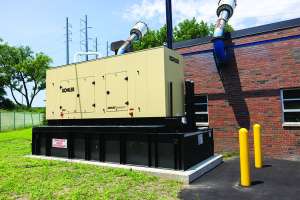
In addition, the upgrade includes a new 500 kW Rehlko emergency generator to pair with an existing 350 kW Caterpillar generator, each able to fulfill half the plant’s electricity demand.
A renewed facility and a highly professional crew can only bode well for high-quality effluent from the Chicopee clean-water plant.