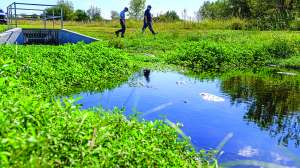
Rising rural populations and climate change are making water scarcity a problem in country townships in Australia. As a solution, Flinders University environmental health experts developed high-rate algal pond (HRAP) systems for sustainable, energy-efficient sewage treatment.
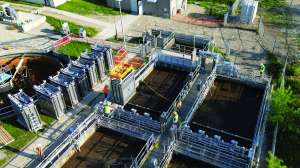
Now, new research led by Flinders University is investigating improved effluent and biosolids removal using sequencing batch reactors at SA Water's Angaston wastewater plant.
Professor Howard Fallowfield says the new systems work better and faster without major capital expense due to advanced bio-processing. The team is trialing new algal-bacterial combinations to produce higher quality treated effluent.
Ph.D. candidate Felipe Sabatté, using a native filamentous algal population, aims to scale up these new developments. He explains that traditional microalgae in HRAPs are hard to remove, leaving high levels of suspended solids. The larger filamentous algae are easier to separate, significantly improving effluent quality.
This research provides a new strategy for HRAPs in rural communities, helping them meet UN SDG6 (clean water and sanitation) targets.
Another researcher, Sam Butterworth, is investigating how the technology can develop dense, algae-bacterial granules that are easily removed from wastewater, which can also reduce phosphorus levels. Read more about it here.