In the movie Hoosiers, coach Norman Dale preached a team approach. Every player contributed to the effort that led to the Indiana state basketball championship.
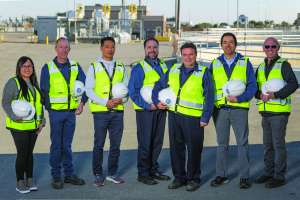
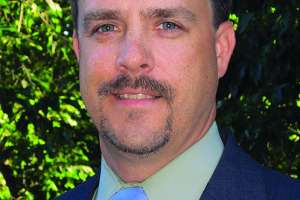
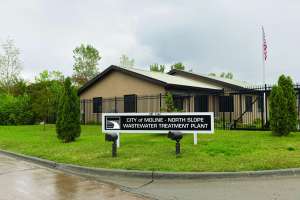
Next door in Moline, Illinois, Greg Pyles takes the same approach. The focus on teamwork has resulted in a 2023 Class B Plant Award for the city’s North Slope Wastewater Treatment Plant from the Illinois Association of Water Pollution Control Operators.
“I think of my role in terms of being a general manager of a sports team,” says Pyles. “I draft the best people I can and find a role for them on our team. There isn’t always a No. 1 draft choice, but everyone has some meaningful way they can contribute. If someone from our team retires, quits or gets hit by a bus, we still have people who can operate our facilities.”
That team approach enables the Moline staff to operate two other plants: the 9 mgd (design) South Slope plant in the city and a 1 mgd facility in the nearby community of Colona. Pyles recalls that when Colona lost its operator, leaders there approached Moline to help find a replacement. Moline had a different idea.
“We were able to add staff to our team, and we now operate the Colona facility,” Pyles says. The move was helpful since the smaller community might not have been able to hire and keep a licensed operator on staff, Pyles says. “Additionally, we have a depth and breadth of experience that a single person couldn’t possibly match.”
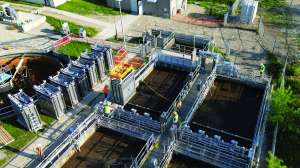
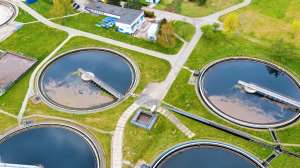
The North Slope facility (5.5 mgd design) dates to the 1970s. In the past few years, it has undergone a $40 million upgrade and modernization. Today it treats an average flow of 4 mgd, serving about 22,000 customers in the north and east sectors of Moline. Wet weather capacity is 34 mgd. Storm flow was a central factor in the expansion, since the city opted for partial treatment and release of stormwater instead of building storage reservoirs around the system.
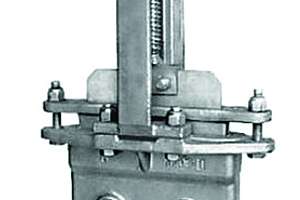
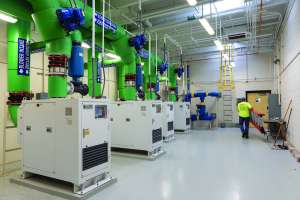
Flow enters the plant through a mechanical screen and wash press (Headworks International). Walker Process clarifiers settle out primary solids, and the flow passes to aeration basins equipped with fine-bubble diffusers (Sanitaire, a Xylem brand) and APG-Neuros blowers. The plant’s two aeration trains operate in the conventional activated sludge mode.
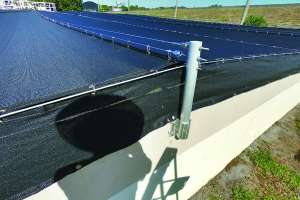
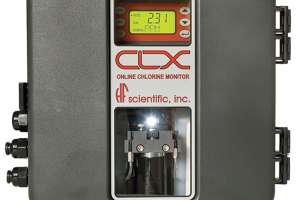
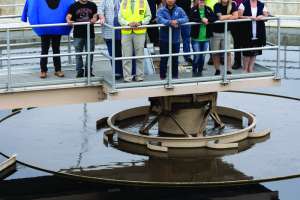
Treated effluent settles in circular secondary clarifiers (Walker Process) and is then disinfected with liquid sodium hypochlorite on a seasonal basis (May 1 to Oct. 31) before discharge to the Sylvan Slough of the Mississippi River. Monthly effluent averages 3-4 mg/L BOD and TSS, which is well within permit limits. Pyles and plant staff anticipate a phosphorus requirement sometime in the next five to seven years.
All submersible pumps in the plant and lift stations are Flygt, a Xylem brand. Sludge pumps are the Double Disc Pump by Penn Valley Pump. AVEVA Wonderware supplied the SCADA system, and the preventive maintenance management system uses Antero software (AllMax).
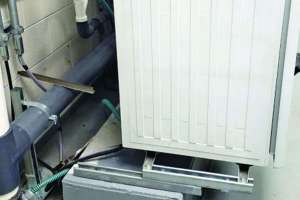
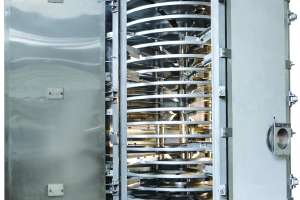
Solids handling at the North Slope plant is unique; the facility has no digesters. Instead, solids are stabilized with lime sludge from the water treatment plant, which is co-settled in the primaries with the primary sludge. Then the waste solids are dewatered to 40-50% solids on new FKC screw presses and hauled to landfill.
Today, the operation looks quite different than 10 years ago. The upgrade project, funded through the Illinois State Revolving Loan Fund, included a new administration building, laboratory and server and operations control center.
New screens were installed in the headworks, and new influent pumping was added. The old primaries were redesigned and repurposed to add storage capacity for excess flows. Wet weather can be a problem, and incidents are increasing, according to Pyles.
“We had a very wet spring in 2019 with 30-plus days of flooding,” he says. “We’re along the river. We have separated sewers, but we still have some infiltration and inflow.” In the new configuration, storm flow receives partial treatment at North Slope before discharge.
In addition to increased flows, the North Slope project addressed rising energy costs. Working with the Smart Energy Design Assistance Center at the University of Illinois, the plant staff has implemented several energy-saving measures and is contemplating more.
The center commended the North Slope staff for efforts to reduce energy consumption by having variable-frequency drives on pumps, fine-bubble aeration and a separate stormwater settling and treatment stream. Occupancy sensors, LED lighting and an energy saving HVAC system also help reduce the annual energy bill by several thousands of dollars.
“By also participating in a SEDAC energy assessment, the facility is exhibiting a sharpened focus as an organization dedicated to energy management practices” the center reported. “It sends a very strong message to one’s community.”
Pyles adds, “I believe we may be among the most energy-efficient treatment plants in the state. I know we ranked second among activated sludge plants in the audit of state facilities.”
In winning the award as the state’s best-operated plant, the North Slope team facility received a pat on the back for public outreach. Pyles says tours and communications are key: “We conduct numerous tours of the plant. We host the local plumbers and pipe fitters classes to show them the type of work that they will encounter in their jobs.”
The plant also maintains strong communications with environmental organizations focused on protecting and preserving the Mississippi River and its tributaries. “We’re very involved with them,” says Pyles. “We have hosted Riverine Walk tours with the River Action group a couple of times a year. We give numerous presentations about the plant. We are partners in protecting our waterways.”
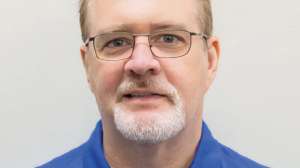
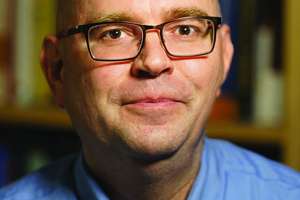
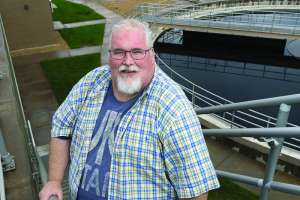
Pyles exemplifies the experience he appreciates on his staff. This is his 32nd year in the clean-water profession. He studied microbiology at the University of Illinois at Champaign-Urbana, while working as an operator in Decatur. He served there for 28 years, becoming the safety and training coordinator and then operations manager.
After that, Veolia hired him to manage the wastewater operation at Lincoln. In 2019 Pyles came to Moline. He has a capable team in place, with a mix of veterans and newcomers. Tony Loete leads the team as utilities director, and Pyles reports to him.
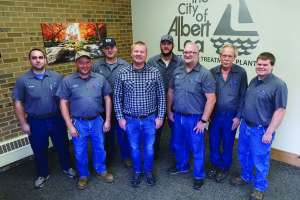
Reporting to Pyles are Justine Pratt and Carl Hensley, water pollution control crew leaders; Mike Butler and Bob Nees, water pollution control mechanics; Andy Laxton, Chuck Saunders, Emily DeGraff, Nick Poseteri, Chris Hancock and Alex Branham, operators; Josh Mader, Madison Jewell, Brandon Foutch, laborers; and Charles Brown, environmental compliance manager.
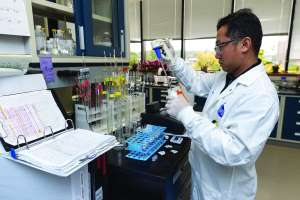
The team is supported by laboratory technicians Robin Markle, Susan Grau, Quoc Chu and Echo Claus, who is also the pretreatment coordinator.
Pyles is proud that in the past 24 months, Loete, Brown, Butler, DeGraff and Claus all have become Class 1 (highest) operators, passing the exam on their first attempt. In the same timeframe, Chu earned his Class 4 license.
“We’ve made a push to get operators certified and trained, even when it means we may lose them to another community,” Pyles says. “We want to empower operators to achieve their full potential.” He credits the Wastewater Short School at the Environmental Resource Training Center at Southern Illinois University Edwardsville for helping the staff reach these goals.
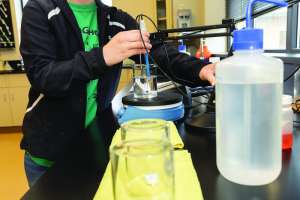
The staff rotates among the three treatment plants Moline is responsible for. For example, when the utilities laboratory is short-staffed, an operator can fill in and run solids or BOD tests. If there’s a vacancy at one plant, an operator can be sent from another plants or a crew leader or mechanic can step in when an operator is on vacation or calls in sick.
And while Moline struggles to find new hires, Pyles is happy with his team: “We’ve got some with years of experience who are very skilled. We have a lot of resources. By recognizing what an employee brings to the team, playing to their strengths and avoiding their weaknesses we have built a solid team of wastewater professionals.”
Sounds a lot like coach Dale.