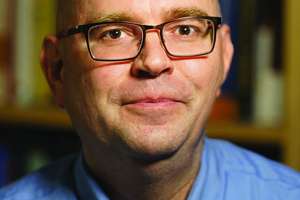

When Manuel Dos Santos entered the Air Force, he wasn’t sure what he wanted to do with his life.
He only knew it couldn’t require a lot of reading (he’s dyslexic) or speaking to people — his condition was accompanied by a stutter. He did know that he wanted to help people, help his community and help make the world a better place. It took some time, but he found his place in and a platform from which to achieve his dream.
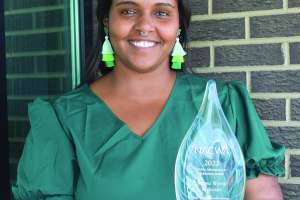
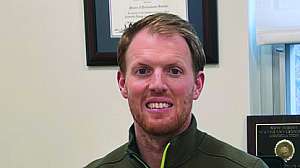
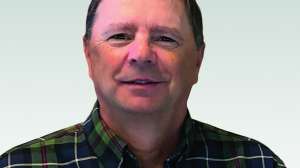
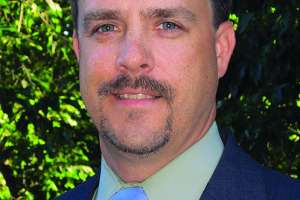
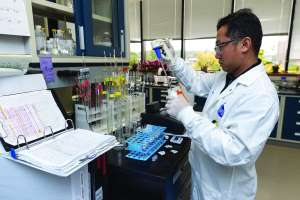
Now Dos Santos is nearing the end of a 35-year water career, currently as lead plant operator at the South San Francisco-San Bruno Water Quality Control Plant. He was recognized for his work as 2022 Operator of the Year by the California Water Environment Association.
Dos Santos was serving in the Air Force in 1988 when his brother Angelino, then an instrument technician at the Millbrae (California) Wastewater Treatment Plant, took him along on a visit to a city lift station. “I thought everything was kind of cool, this huge lift station with a lot of electronics,” he remembers.
Angelino told him about wastewater work, the generous benefits and the job security. Intrigued, Manuel switched his on-base training to wastewater management. He struggled. Air Force personnel tested him to discover the root of his learning difficulties, but failed.
But he persevered and eventually made staff sergeant, environmental compliance specialist. In 1991 he was finally confirmed dyslexic. From that point he received the tools and knowledge he needed to manage his condition, and applied himself to his career.
After military service in 1994, he wanted to remain in wastewater management and took a few college courses, but didn’t do well. “When it comes to understanding how things work, I’m very good at that,” he says. “I remember things really well, and I’m very detail-oriented. That’s part of being dyslexic.”
In 1995, he signed on with his current facility as a temporary worker, proving his worth, and stayed on permanently. He worked his way up to Grade III Operator certification, which is the level he holds today.
Nicholas Talbot, assistant plant superintendent and Dos Santos’ boss, observes that “Manny is the go-to guy here in terms of institutional knowledge, with the staff and all the contractors and engineers coming onsite perform major capital improvement projects. He is like the god of the plant and all the underground utilities here. You dig a hole and won’t even have to look at a map, because Manny will know: ‘Oh, that’s this pipe from 1952.’”
It began with Dos Santos learning about the plant in detail in his early days there. In the Air Force a new officer came on board to run the plant. “The first thing he did was get a big piece of construction backboard and drawing out all the piping in the plant,” Dos Santos recalls. I thought that was a great way to learn the plant really quick.
“So, when I got here, I started making a similar drawing of this plant. Within the first year I really knew it pretty well. Soon he was re-creating all the plant logs and electrical schematics, with help from operator Robert Keen. By retaining vast knowledge of the plant through the years, Dos Santos became something of a walking encyclopedia for his colleagues. In 2011 he was named the city’s first lead plant operator.
Dos Santos acknowledges ample help from colleagues who wanted him to succeed. It started with a mentor in the military: “I don’t remember his name, but he was a civilian contract operator. He was one I learned a lot from.” At South San Francisco, his first assistant superintendent, Ken Navarre, encouraged him in many areas, as did Brian Schumacker, who started as an operator and is now plant superintendent.
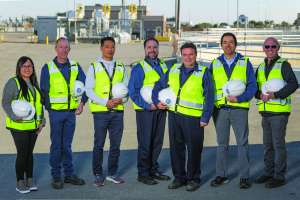
Other key team members include Eunejune Kim, public works director; Dave Bockhaus, deputy director; and Nicholas Talbot, assistant plant superintendent. The laboratory, environmental compliance, maintenance, and operations teams comprise 40 certified professionals.
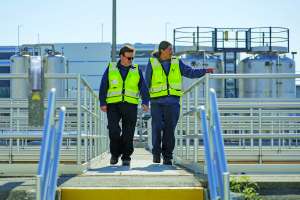
The plant (13 mgd design, 8 mgd average) serves about 112,000 residents. There are 12 lift stations and two stormwater station in the system’s 150 miles of collection lines. Plant personnel are responsible for lines and flows after they leave the lift stations.
Influent passes through Parshall flumes and the plant’s original bar screens. A Jones + Attwood ram compactor piston (Ovivo) pushes rags from the bar screens into a dump bin. The liquid flows through a PISTA vortex grit chamber (Smith & Loveless).
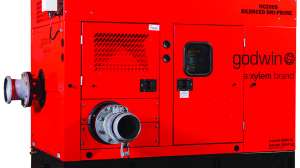
From there, a WEMCO Torque-Flow grit pump (Trillium Flow Technologies) pushes solids to a dump container while the wastewater flows to an influent pump station with six 125 hp submersible channel impeller pumps (Flygt, a Xylem brand).
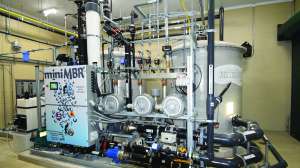
A flow splitter divides the influent among four primary clarifiers, two online during dry weather and the others activated during significant rain events. Then the flow is split between two secondary treatment trains with aeration basins that include anaerobic selectors with Flygt mixers. Two APG-Neuros high-speed turbo blowers deliver air through Sanitaire fine-bubble diffusers.
Dos Santos is enthusiastic about the blowers: “We save 10,000 to $12,000 a month in electricity. Our total bill gets reduced by about another $40,000 using a 580 hp INNIO Waukesha VHP engine for co-generation.”
After the final clarifiers, the flow is disinfected with sodium hypochlorite and dosed with sodium bisulfite for dechlorination before discharge a mile out into San Francisco Bay.
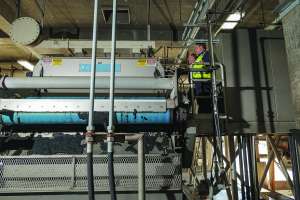
On the solids side the plant has four anaerobic digesters; a new high-solids digester with Omnivore technology (Anaergia) takes the place of two digesters. Biosolids are dewatered to 18% solids on two Komline-Sanderson Kompress Series III belt filter presses. The material is land-applied through Lystek International as LysteGro agricultural fertilizer.
Dos Santos has had an influence on plant upgrades, even serving as construction liaison based on knowledge acquired =over his career. He believes his input has improved treatment efficiency and workforce productivity.
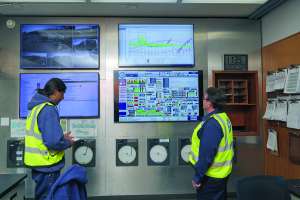
A SCADA system was introduced in the year 2000. “I loved programming and doing things on computers,” Dos Santos says. “Most dyslexics like that kind of stuff, logic type things. I was watching the guy program our SCADA system, and talked to him a lot.
“So I started playing with it. I would read, program a few things, add things. I kept numerous system backups. We didn’t hire anyone from outside to do the SCADA work. Our assistant superintendent said, ‘You could do it.’”
In 2012, the plant needed a new generator building, and Dos Santos volunteered to be the construction liaison. “That was rough,” he recalls. “Taking power down at the plant while keeping things running was very difficult. I had to do a lot of writeups for shutdowns and put generators on certain pieces of equipment while things were down.” That was a two-year project involving a 2 MW Caterpillar diesel emergency generator.
Dos Santos was also construction liaison for the most recent four-year, $60 million plant upgrade. All told, the projects he oversaw amounted to more than $200 million of capital improvements, says assistant superintendent Talbot.
He observes, “Most plants hire outside people to do this, but Manny was doing the work along with his normal duties as lead plant operator; all the standard procedures for regular shutdowns, night shutdowns, all the operational automation.”
Dos Santos, who years ago didn’t want to interact with people because of his stutter, evolved his skills enough to run tours, lead city-run events and teach big classes at Skyline College. In doing so, he discovered a huge benefit.
“I was horrible with stuttering, couldn’t get through one sentence without doing it most of the time,” he says. “In giving tours, initially I was just like a machine gun. But Brian [Schumacker] encouraged me a lot, and he went with me at first. We got through a few of them, and I got better and better. Now, after more than 500 tours, I hardly stutter at all.”
Talbot says, “You can just tell, he loves what he does. The biggest thing is, he actually cares about this place, the people. He wants to see the organization do really well.”
Dos Santos says he developed his attitude toward life and work in the military: “I got orders to South Korea for a one-year short tour. You can’t take dependents, so your coworkers become your family. We all kind of stuck together, and I brought that back with me.
“I feel like everybody here is supposed to be family. We’re supposed to all work together. That’s why I raised my hand to do the liaison work. I knew the plant better than anyone here. I felt like it was my duty to help, to make sure things were done correctly.”
He recalls something he heard that had a huge influence on his work ethic. “Back in the late ’70s, I was watching football. They were praising this groundskeeper for taking care of the field, because he always did a phenomenal job. And he said he put in 110% every day. So that kind of stuck with me.
“Then, after doing that SCADA system, I was out of my comfort zone, but I learned a lot. I think we need to push ourselves. That way, we can excel. I got out of mine by giving tours.
“In the military, I was in supply. When somebody needed to get a hold of me and couldn’t remember my name, they would refer to ‘the guy that stutters.’ That’s how they knew me.”
Talbot concludes, “Manny just cares about this place and the people here, and it’s infectious. They’re all stepping up their game because Manny is so involved and knows this stuff so well. When there’s a problem and the lights are going off, what do you do? You run to Manny.”
Editor’s Note: Manuel Dos Santos retired from the South San Francisco-San Bruno Water Quality Control Plant in early 2024 after 25 years of service.