There’s a lot of talk in the water/wastewater industry about conserving energy and conserving water. But in the bigger picture, the two are intimately connected in what has come to be called the water-energy nexus.
How are they connected? Well, for example, it takes a great deal of energy to draw water from its source, treat it for drinking, distribute it to the population, then collect it as wastewater and treat it again for discharge back to the environment. And on the flip side, it takes enormous amounts of water to produce energy: Big electric power plants use water for process cooling.
Leaders of the Water Environment Federation see the water-energy nexus as a place for the industry to engage and achieve major progress toward optimizing the use of both resources. WEF held a conference on the topic in August in Chicago that drew a diverse audience of 371 professionals.
Jeff Eger, WEF executive director, and Matt Ries, WEF managing director of technical and educational programs, talked about the water-energy nexus and its implications in an interview with Treatment Plant Operator.
TPO: What is driving the federation’s interest in the water-energy nexus?
Eger: The bulk of our membership consists of utilities and professionals involved in utility management. For utilities, energy is one of the largest costs, usually second only to labor. The extraction, pumping, conveyance, and treatment of water and wastewater consume a great deal of energy.
We don’t often look at the other side — water is integral to the production of energy. They are linked together. There is one example in New York where the discharge from a wastewater treatment plant is being pumped under the Hudson River to a power plant for cooling, so as not to be using water from the river for that purpose.
And of course there is potential for energy production from wastewater itself — biogas, combined heat and power, pelletized biosolids for incineration, micro-hydro power. And then there is another byproduct — fats, oils and grease. Can we find an effective way to create biodiesel from that material? There is a plethora of opportunities on both sides for the energy and water industries to be smarter, more efficient and more effective.
TPO: WEF has stated that there is potential for wastewater treatment plants to be net energy producers. Is that actually feasible?
Ries: At our conference in Chicago, it was exciting to see the paradigm shift toward the concept of wastewater not being a waste but a resource. Maybe mainstream is too strong a word, but this concept is definitely becoming more accepted by utilities, consultants and engineers.
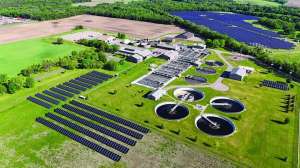
We had some case studies presented at the conference. The Strauss Wastewater Treatment Plant in Austria has been a net energy producer for several years. Here in the U.S., the East Bay Municipal Utility District in the San Francisco Bay area has stated plans to be a net zero energy facility next year.
We also had a case study of the Johnstown-Gloversville plant in upstate New York, which produces about 95 percent of its own energy. It’s actually a regulatory hurdle that is keeping them from producing 100 percent. There are actually people out there doing this, and others have pledged to do it. It’s an exciting trend we’re seeing.
TPO: How does a plant become a net energy producer or achieve net zero energy? Is it through biogas utilization or through other measures like on-site wind and solar power?
Ries: Generally speaking, it’s done by first looking at energy efficiency to conserve, and then looking at generation through optimizing the capture of digester gas and using that gas to offset electric power needs. In the case of East Bay, they are bringing in materials from the industry and adding them to their digesters to maximize gas production.
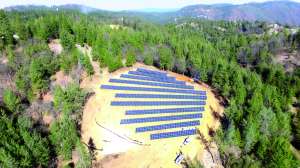
Digester gas is the first place treatment plants are looking, but renewables such as solar and wind are becoming more common. You combine high efficiency with the production of energy, and that’s how you can approach net zero. It’s still a long way off for most plants today, but we now have some real-world case studies to show that it can work.
TPO: How has the Strauss plant become a net energy producer?
Ries: The Water Environment Research Foundation is doing a benchmarking study on that plant now. They are producing up to 120 percent of their electricity needs on site from biogas.
It’s not just technology. It’s also a philosophy among the plant operators and management to focus on efficient operation and energy capture and production. They have a vision of sustainability and what it means to them.
Significantly, they have a highly educated and well-paid workforce. The operators have been trained in how to identify energy savings and efficient operating practices. You need the right kind of operators to do what they are doing. They are empowered to take risks, and that has helped them to get where they are.
TPO: How did the Chicago conference on water and energy come about?
Ries: It goes back to a 2008 conference we held, Green Practices for the Water Environment. It had parallel tracks on energy and climate change, stormwater and green infrastructure, and sustainable watersheds. As these topics grew in stature and as more people became interested, we decided to break these topics out. For 2011, we focused on energy. It seems we got the timing right — there was a real buzz among the participants.
TPO: How would you describe the makeup of the audience?
Ries: We were pleased to see that it was quite diverse. We had quite a few utilities represented and a number of consultants. We had a good number of academics who were doing research on the topic, as well as students and a few regulators, including representatives from the U.S. EPA.
There were also several presenters from outside North America and a couple of people I would call thought leaders, people thinking outside the fenceline of a treatment plant, looking at how we could integrate a city’s energy and water resources and what role a water and wastewater utility would play.
Eger: When our staff came back, one comment was that people were there whom we hadn’t seen before. That says a lot — that this is of interest to a lot of people, including new people who are trying to figure out how to get engaged on the topic.
TPO: What will WEF do going forward on the water-energy nexus?
Eger: We’ll look at other annual activities. We had a varied energy program track at WEFTEC last October. At our Residuals and Biosolids Specialty Conference, we’ll make sure that we include some components on energy. We want to continue to drive innovation, and we see this as a very ripe area for connecting the entrepreneurs and innovators with end users.
TPO: Will WEF be looking to form partnerships around this issue?
Ries: Yes. We are working with the Consortium for Energy Efficiency on energy conservation audit tools. They are an organization that works with some state energy authorities, and they have a group that deals specifically with water and wastewater utilities. The American Council for an Energy Efficient Economy has developed a blueprint for energy and water legislation, and we have worked with them also. It’s clear that partnerships will be key to education, training and advocacy on this issue. We will be part of broad coalition of organizations and companies working on this.
Eger: On the advocacy side, sometimes regulatory hurdles are in the way of progress. We want to be a voice with Congress and the EPA to address those issues and remedy them as much as possible. Money is also a key issue. In my previous position with Sanitary District No. 1 in Kentucky, we had studies showing that we could become a net producer of energy, but because of aging infrastructure and Clean Water Act requirements, there wasn’t enough capital to get us there.
TPO: Will WEF promote any specific technologies, innovations, or behaviors as part of this effort?
Ries: We just started a partnership with a group called Imagine H2O, which sponsors a Water-Energy Nexus Prize. Two of their prizewinners presented at our Chicago conference. One thing we are doing to encourage innovation is looking at how to get wastewater and biosolids defined as renewable resources and so make them eligible for tax credits and other incentives. We think that will help to encourage the use of those resources and encourage innovation in that area.
TPO: Do you see WEF Member Associations as partners in this endeavor?
Ries: We are encouraging closer ties between all the WEF committees and the Member Association committees. A number of committees, subcommittees and task forces have formed around energy topics. We have an energy task force that investigates a broad variety of initiatives. Through our Sustainability Community in Practice, we are working to coordinate all these efforts. As part of that we want to reach out to our Member Associations. The communication goes both ways. We want to let them know what we’re doing at WEF, but we also want to learn from them.
TPO: We’ve talked a lot about energy. What about avenues for more efficiency on the water side?
Ries: The answer from the wastewater side is to expand the concept of water reuse — treating water for its ultimate purpose. For flushing toilets, watering lawns and washing cars, we don’t need potable water. There’s an energy impact to that. If you’re only treating to the point necessary for usage, you’re not using as much energy. If your utility has a fairly comprehensive reuse program, you are offsetting potable water that otherwise needs to be treated and extracted.
TPO: What is the role of plant operators and operating management with respect to the water-energy nexus?
Eger: They are the frontline professionals. They are the source of ideas on how we really gain efficiency and productivity. They have the working knowledge and the experience in the operation of our plants. They are very key to our efforts to be more efficient and be more mindful on how we can do better as we move into the future.