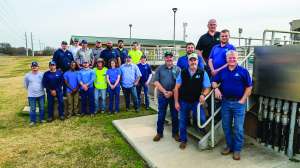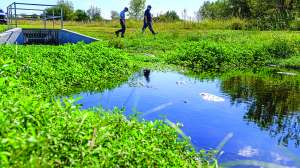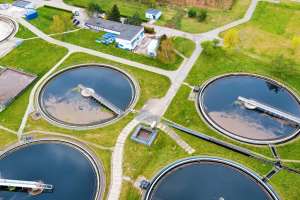
Between the thumb and pointer finger on the Michigan Mitten, Vassar is a town of 2,600 people that flushes about 0.4 million gallons of wastewater daily. The Vassar wastewater treatment plant is operated by two full-time operators, one part-time operator, and Joe Perroud, the plant manager.
Flushable wipes and rags have complicated wastewater operations nationwide for decades. Vassar WWTP is no exception.
Running ragged
“When I started this job, I wondered why it was such a big effort to clean the digestors. Then I saw that they [rags] were everywhere,” Perroud says. “Wet wells, clarifiers, grit chambers, gate valve stems. And we had to clean them out manually.”
Wipes and similar items wreak havoc on WWTPs, clogging pumps, setting off late-night alarms, and inciting premature maintenance. With only eight operating hours per day, Vassar’s staff spent more time than they could afford removing rags from pumps, clarifiers and digestors. Also, biosolids quality was under scrutiny as the city transitioned from subsurface injection to drying biosolids prior to land application or disposal.
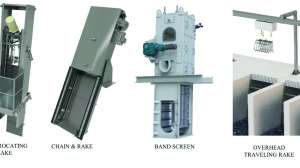
Vassar WWTP’s influent channel featured a manually raked, 1.5-inch opening bar screen paralleled by an overflow channel. This wide spacing regularly allowed rags into the treatment process, where they clogged equipment. The plant needed a cost-effective solution to remove non-dissolvable solids, but traditional screens were expensive and oversized for their 23-inch by 20-inch influent channel.
“We didn’t need a large bar screen, just something that submerged,” Perroud says. “We also wanted a screen that didn’t need much work.”
Dual auger system
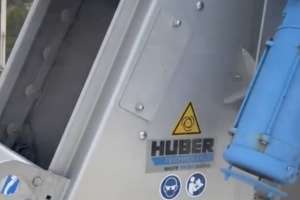
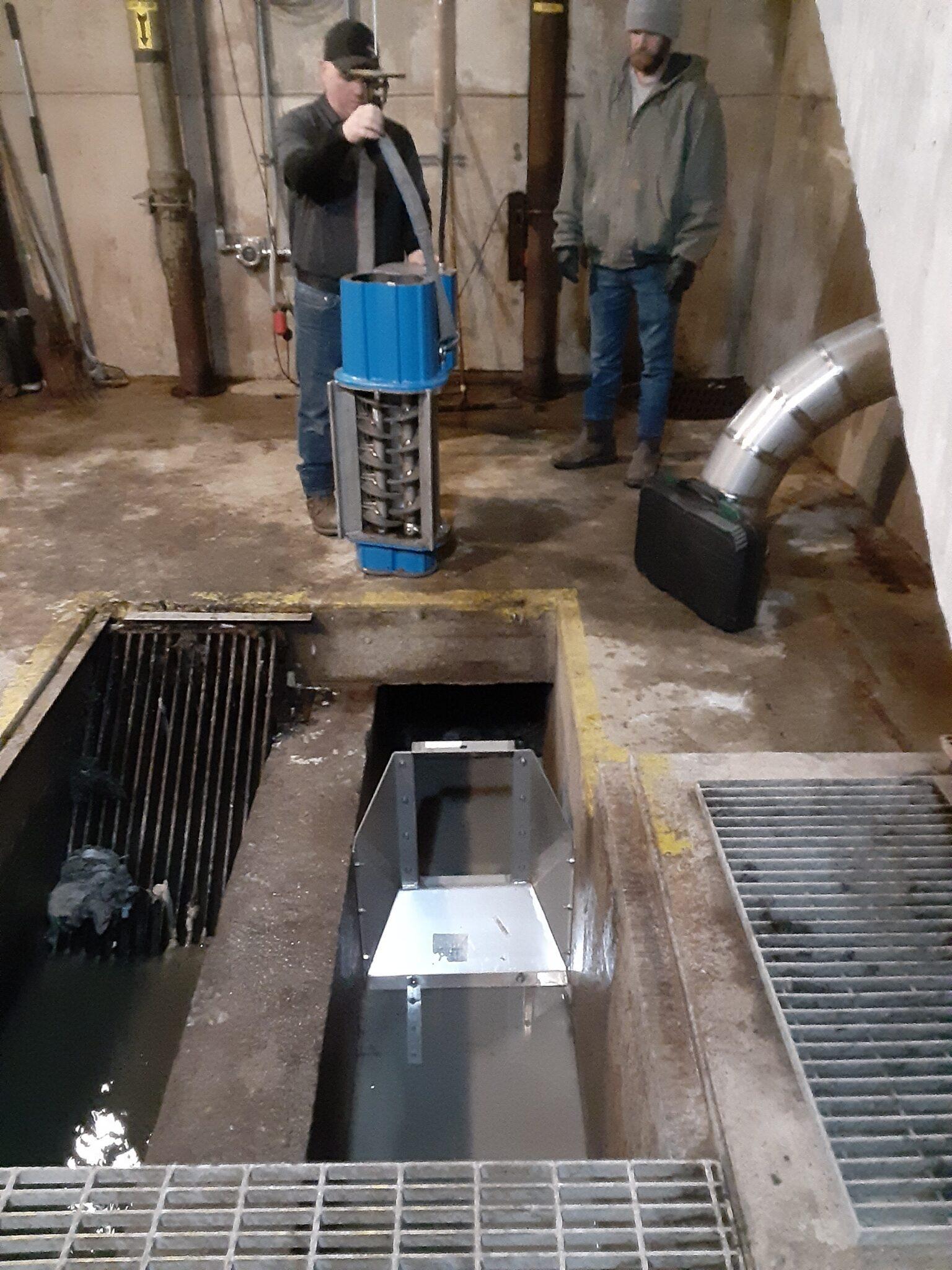
Duperon’s Dual Auger System (DAS) captures, dewaters, compacts and conveys solids in a single system to remove rags where they enter the collections system, such as in manholes, wet wells, and septage receiving stations, before downstream equipment can be impacted.
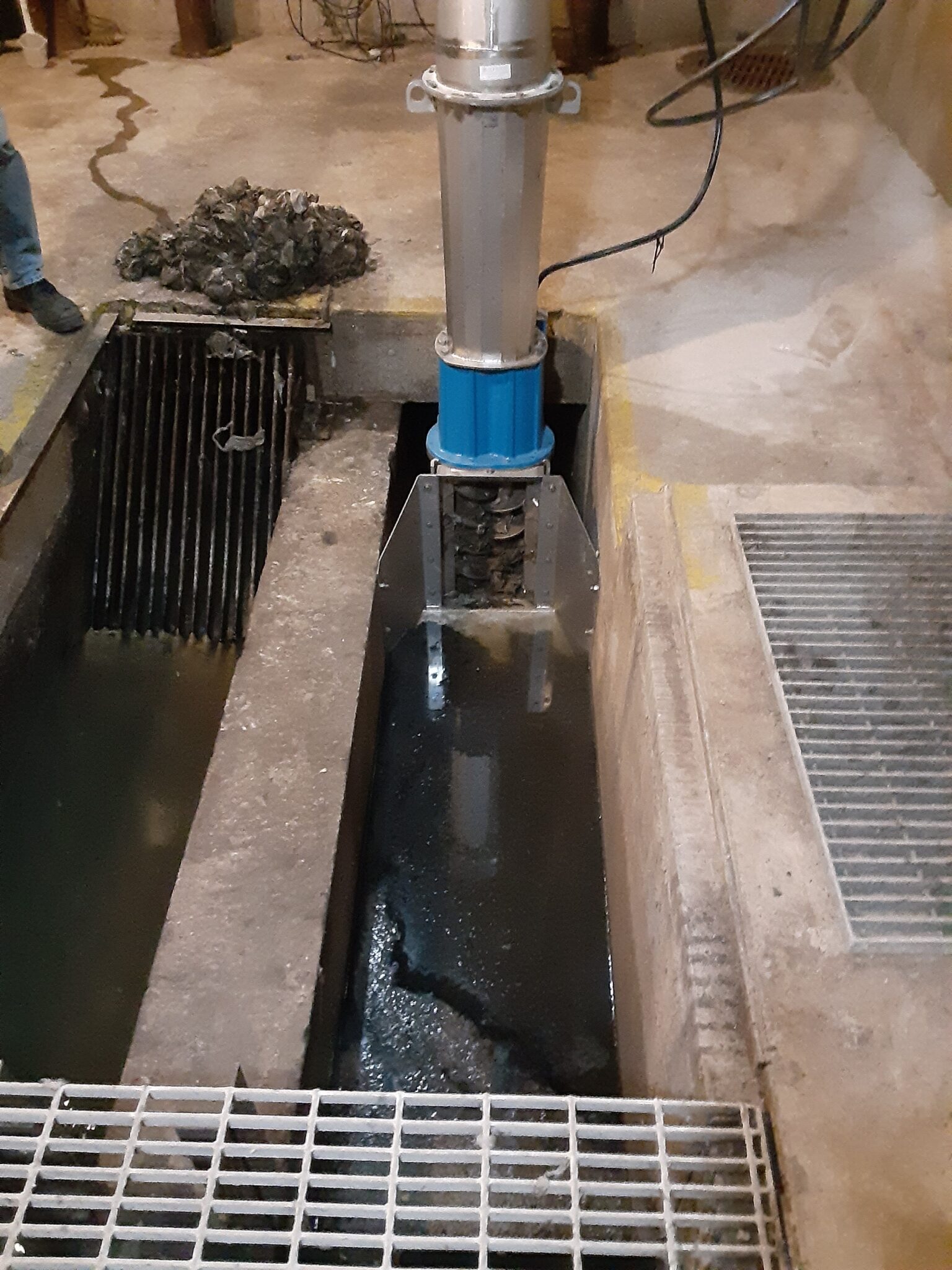
Using pressure eliminates the need for augers that extend the length of the chute. Duperon’s short, brushless, vertical dual augers efficiently lift wipes and other debris at the source, followed by a flexible bar screen that captures debris and cleans itself without additional brushes or liners. A discharge extension chute conveys solids to the surface, where operators can easily transport them for safe disposal. The innovative design simplifies cleaning and reduces maintenance challenges.
DAS characteristics include:
- Deployable as small as 17 inches
- Fully submersible
- Low flow application (2 mgd maximum)
- Built-in bypass
“We requested a few changes to the standard model, and working with Duperon to customize the DAS was very simple,” Perroud says.
Measurable results
The custom Duperon system was installed in December 2023. The screen features 5/16-inch openings that remove half a cubic yard of rags, greaseballs and more every day.
“Rags used to collect in just a few days, but now we can go several weeks before needing maintenance,” Perroud says.
Vassar WWTP now confidently operates its solids handling process with the assurance that minimal non-dissolvable materials end up in their biosolids. And once operators were spending less time deragging equipment, the crew had time to repair rag damage to the plant’s grit removal system.
As more systems like this are implemented, the long-term savings — such as the $40,000 saved at the Drake Pump Station in nearby Saginaw — continue to prove the value of the DAS.