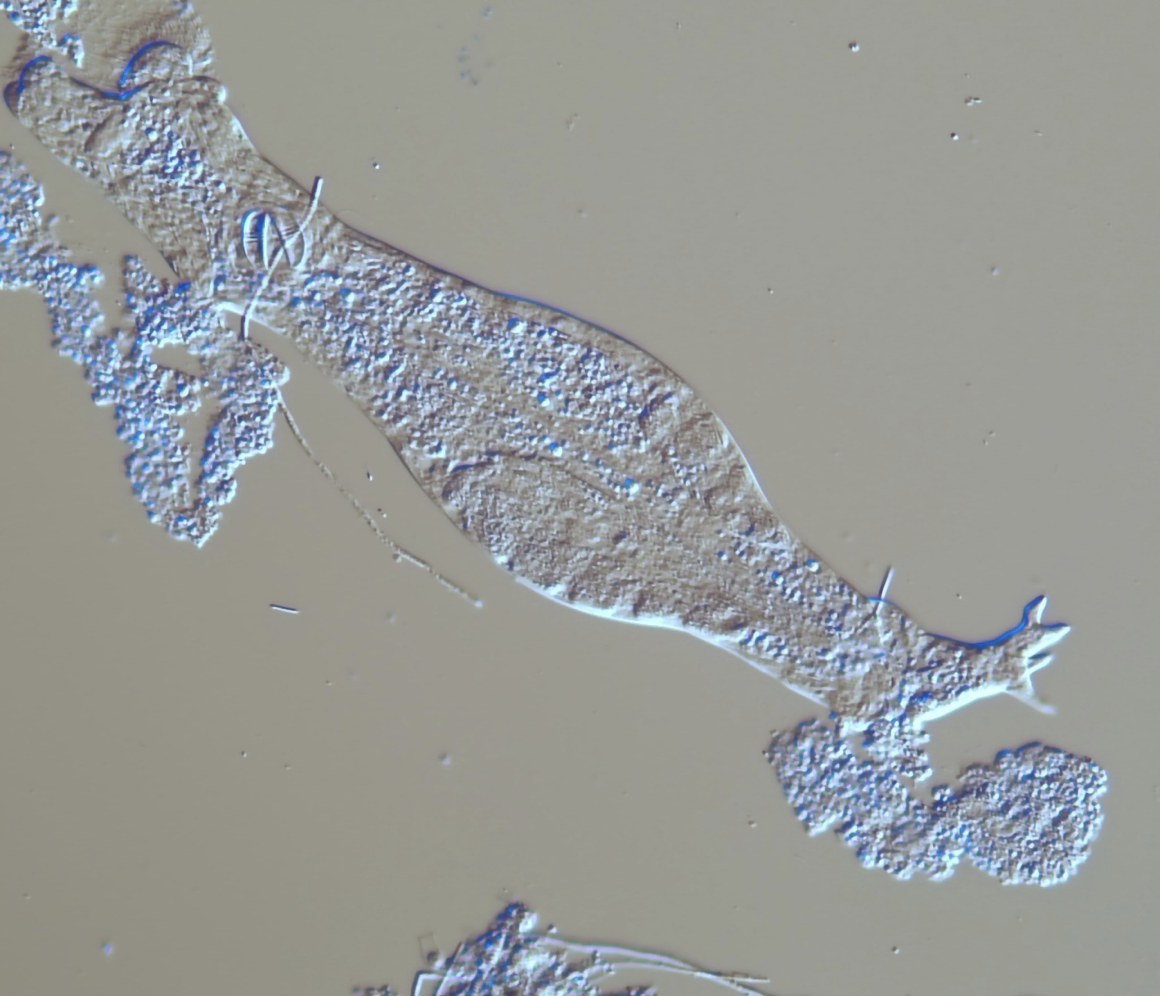
As wastewater professionals it is generally fun to enjoy watching stalked ciliates, rotifers and other higher life form organism types under the microscope. They’re large, relatively easy to identify, and many of them are motile and we can often watch them preying on substrate or swimming around in solution.
The intention of this article is a quick summary of higher life form organisms and hopefully a useful guide for considerations to take into context in these observations.
Background
The significant majority of biological treatment in wastewater treatment processes is accomplished by bacteria. Higher life form organisms are not bacteria, but rather more complex organisms such as protozoa and metazoan. There are many treatment systems that consistently produce high quality effluent that have low or insignificant higher life form organisms present. In summary, good treatment may occur with or without the presence of higher life form organisms.
While there have been many attempts to correlate higher life form organisms with various food to microorganism ratios and sludge age values, higher life form organisms are not always the most reliable guide for these conditions. The simplest way to envision this concept is that higher life form organisms exist if there are the proper conditions for them to gain competitive advantage.
Disclaimer
Of note, the mix of higher life forms can change rapidly depending on the conditions present. For process control, however, traditional calculations and more in-depth microscopy — such as assessments of floc structure, the abundance and types of zoogloea bacteria, the rank and abundance of dispersed growth, and the rank and abundance of various filamentous bacteria — generally do not fluctuate as quickly. These observations not only provide a “snapshot” of current conditions but also offer context about the general state of the system over the previous one to two sludge cycles.
Implementation
There are certain correlations that are generally highly reliable. Predominance of flagellates and naked amoebae are very consistently correlated with conditions in which there is readily available substrate remaining. Testate amoebae occur over a wide range of sludge age values and generally prefer particulate substrate. In many instances this is the nature of the influent wastewater composition, and in some but not all instances, testate amoebae may suggest looking deeper for various stresses (i.e., microbial death, which results in particulate substrate).
It is not recommended to jump directly to a diagnosis of stress when testate amoebae are predominant, but it may warrant deeper investigation into the surrounding microbes viewed.
Stalked ciliates and free-swimming ciliates occur over a wide range of sludge age values and generally are predominant when there are moderate to low amounts of dispersed growth to prey on.
Rotifers generally prey on small particles. Rotifers may grow in sludge age values as low as three to four days and are often poorly correlated with sludge age. It is generally accepted that rotifers do compete well in older biomass due to pin floc and cellular material from endogenous activity. However in many systems, especially industrial treatment systems, rotifers often proliferate when there is floc break up and/or small floc fragments to prey on.
Nematodes typically enter treatment systems with the incoming wastewater or live on surfaces like clarifier walls. Because they mainly feed on already-consumed material, they are usually considered incidental rather than essential to the treatment process.
Gastrotrich, Water Bear (tardigrade) and crustaceans are generally fairly reliable clues of higher sludge age values. Bristle worms appear to often favor areas of septicity; however, they are not recommended to be taken in significant context with microscopic evaluation.
Summary
Higher life form organisms are an important factor in wastewater microscopy. However, they are only a small piece of the puzzle, and additional information such as process control calculations and in-depth microscopy are recommended to help determine the most probable context for baseline conditions, process control decisions and troubleshooting. The vast majority of higher life form organism types encountered in biological treatment processes have previous in-depth articles which are available as online exclusive Bug of the Month articles on Treatment Plant Operator.
About the author: Ryan Hennessy is the principal scientist at Ryan Hennessy Wastewater Microbiology. He was trained and mentored by Dr. Michael Richard for over 10 years in wastewater microbiology, and serves as a microbiology services consultant. Hennessy is a licensed wastewater treatment and municipal waterworks operator in the state of Wisconsin and fills in as needed for operations at several facilities. He can be reached at ryan@rhwastewatermicrobiology.com. Hennessy's new book Wastewater Microbiology: Filamentous Bacteria Morphotype Identification Techniques, and Process Control Troubleshooting Strategies is now available on Amazon.