F:M ratio calculations involve the proportion of food (pounds of BOD) against the proportion of mass (or microorganism) in the complete aeration basin. This is a straightforward and often practical measurement.
However, in real plug flow applications, a good way to think of F:M is the amount of food in proportion to microorganisms at given points throughout the system. In essence, think of F:M as a gradient with the highest amount of available food at the front end of the basin and generally the least amount of available food at the end.
Not all ‘F’ is the same
There are many different fractions of BOD, including particulate, soluble and BOD in the form of volatile organic acids. A good analogy for this extends to nutrition and the difference we experience eating “oatmeal” versus drinking Kool-Aid. Oatmeal is complex and there are many enzyme reactions that need to occur before it can be taken up in our mitochondria, whereas if you provide Kool-Aid to children at a birthday party, the impacts on their energy levels may often be seen within minutes (as chaos ensues!).
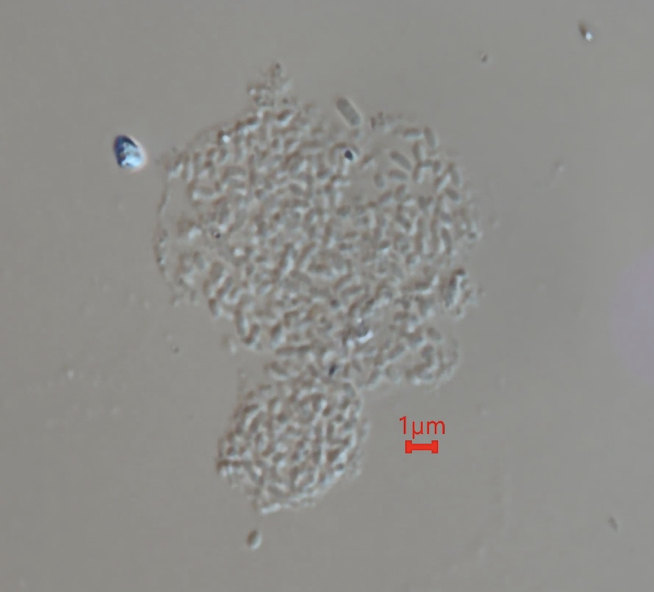
A good visualization technique for this concept is to picture the “mouths” of bacteria (their cell membranes) as a kind of filter. Food that is small enough to pass through this filter immediately enters the cell (absorption), while larger pieces adhere to the outside of the cell membrane where biochemical reactions occur to process the food to where it can enter the cell. The smaller the pieces of food, the higher the actual F:M ratio is in the initial contact zone of the aeration basin.
Septicity/fermentation impact on availability of substrate
A simple way to look at fermentation reactions versus complete treatment of BOD is based upon the availability of an oxygen electron receptor (free or combined). When there is an oxygen source available, this is used, Krebs cycle reactions occur, and end productions of new cell mass, carbon dioxide, and ATP (energy) are produced. When there is no oxygen electron receptor available, full treatment doesn’t occur, but rather larger pieces of food are converted to smaller pieces (think incomplete anaerobic treatment, formation of volatile acids).
Substrates such as acetic acid are immediately available in the aeration basin and generally either oxidized or stored by bacteria within 15-30 minutes of treatment (Richard, 2022). Therefore, the more septicity that occurs prior to the aeration basin, the more readily available substrate, and the higher amount of readily available F there is to meet the RAS at the front of the aeration basin. Note that the BOD concentration itself may not have changed as fermentation occurs, but the food becomes more readily available once it is exposed to septicity.
The race in the initial contact zone
The initial 15-30 minutes of aeration appears to have significant impact in which bacteria gain competitive advantage due to their various kinetic growth rates, storage capabilities, morphology and other conditions. This small section of the aeration basin is only represented by a sliver in the overall F:M calculation. However, it is vital for which bacteria ultimately gain competitive advantages
Extended aeration processes
In systems with high hydraulic retention times, there is often a prolonged period on the back end of the aeration basin in which there is low food availability, or often endogenous activity (think aerobic digestion/cannibalism). In these systems, it is possible for conditions on the back end as well as the front end, or initial contact zone, to have a significant impact on the bacteria which are selected. Dr. Richard described these systems as “dual sludges.” In these systems, the F:M ratio often appears low on paper, but it is possible for microbes that gain competitive advantage in the initial contact zone to also play a major role in biomass conditions.
Due to the complexity of many emerging treatment schematics, the F:M ratio is further impacted. Examples include reactions in anoxic and anaerobic selectors as well as carbon availability in areas such as post-anoxic zones. In systems such as selectors, internal cellular storage may be promoted wherein soluble BOD may be taken up into the cells but isn’t yet oxidized.
Many bacteria also can store substrate in aerobic zones (i.e. PHB granules) in which they can gain competitive advantages over other bacteria when there is a high actual F:M ratio (in terms of high amounts of readily available food).
The ‘M’ component
The actual amount of available food is only part of the equation, and many of its complexities are explained above. Factoring in “M” (microorganisms or mass), there are further considerations including inert fractions, fractions of MLSS concentration that are polysaccharide, fractions of MLSS concentration that are protozoan, metazoan etc., and the actual percentage of bacteria that are viable. Please note that MLVSS is a better representation of separating inert fractions and does not distinguish between viable and non-viable bacteria.
This blog goes in to further detail on understanding MLSS and MLVSS.
Summary
Overall, process control calculations are useful, but they often involve complex factors that must be taken into consideration for optimizing them as tools for us to use. Most often, process control calculations are most successfully implemented in correspondence with in-house testing and supporting microscopy.
About the author: Ryan Hennessy is the principal scientist at Ryan Hennessy Wastewater Microbiology. He was trained and mentored by Dr. Michael Richard for over 10 years in wastewater microbiology, and serves as a microbiology services consultant. Hennessy is a licensed wastewater treatment and municipal waterworks operator in the state of Wisconsin and fills in as needed for operations at several facilities. He can be reached at ryan@rhwastewatermicrobiology.com. Hennessy's new book Wastewater Microbiology: Filamentous Bacteria Morphotype Identification Techniques, and Process Control Troubleshooting Strategies is now available on Amazon.