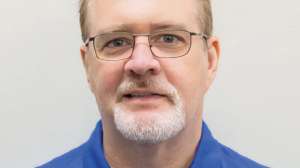
David Milano wasn’t the first person offered the assistant superintendent job at the town of Cheshire Wastewater Treatment Plant.
“The job was offered to people before me, and they turned it down based on what the plant looked like,” says Milano. What it looked like when Milano came on board on April 1, 2022, was a plant in disrepair.
It had been under a Notice of Violation from the Connecticut Department of Energy and Environmental Protection since late December 2020. Effluent TSS was running in the neighborhood of 200 mg/L. Phosphorus discharges exceeded the permit limit of 4.06 pounds per day (annual average). Mixed liquor suspended solids were at about 10,000 mg/L.
Milano and his team went to work. By September the plant was meeting its permit and the Notice of Violation was lifted. “I looked at the glass as half-full,” Milano says. “When I first saw the plant I said to myself, ‘I don’t know if I can do this.’ But when you tap into your experience and all the things you’ve seen, you realize you’re not going to fail. My father always told me, ‘There’s no failing if you continuously try to be better every day.’ That’s basically all we did.”
For his and his team’s effort, Milano received the New England Water Environment Association’s 2023 Wastewater Operator Award for Connecticut.
Vanessa McPherson, state director for Connecticut with NEWEA, observes, “David is a passionate operator who is highly collaborative and reaches out to fellow operators regularly to discuss optimizing his plant. By implementing new process controls, fixing deferred maintenance, and rebuilding morale with leadership and inclusiveness, he achieved a significant turnaround in plant performance.”
Milano, now plant superintendent, emphasizes, “The award really belongs to the team. Without them I couldn’t have implemented anything we did. I told them now that we have the numbers, maybe the plant can win an EPA award. I would like to do something like that for them. They worked hard and they deserve it.”
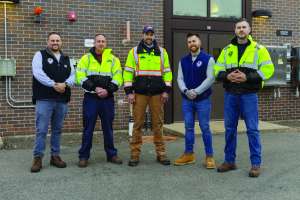
Team members are John Cronin, lab director, Class IV license; Mark Carusillo and Paul Christian, Class III operators; Robert Benigni, Class II operator; Mario Orsini, Class I operator; Jeffrey Cifarelli and Matthew Hannon, operators-in-training; and Greg Caldwell, electrician/mechanic.
Milano grew up in North Haven, Connecticut. After high school he earned an electrical certificate from Lincoln Technical Institute in Hamden. His 13 years in the clean-water industry include seven years with the town of Southington and a year at a privately owned treatment plant in Southbury.
The town of Cheshire plant was built in the early 1970s, expanded in the 1990s and upgraded in 2005 for nitrogen removal. The latest upgrade was in 2015 for phosphorus removal. When Milano arrived, the plant was in dire need of maintenance and repair. Among other things, the grit channel was full. Tanks were filled with sludge. The final clarifiers had 12-foot-deep sludge blankets. Pumps and other equipment were out of service.
“There was a lot of work to do,” says Milano. It was a matter of team members simply rolling up their sleeves and getting to it. They started by using a claw-style bucket to empty the grit channel and protect downstream equipment.
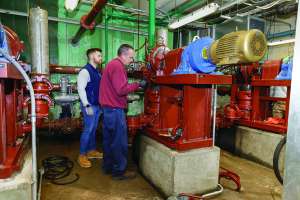
One by one, they shut down the primary clarifiers, performed maintenance on them, cleaned them, removed settled grit, changed oil and rehabilitated motors. “Throughout that time, we started wasting more,” says Milano. “We had to waste at least 50% of our inventory of solids, going from 10,000 mg/L MLSS to 5,000.
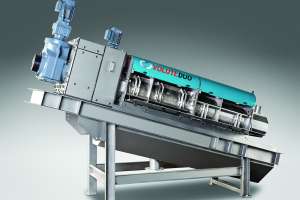
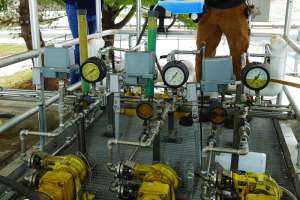
“We’re a small plant, and we haul our own biosolids. We had to work double shifts for a while in summer to make a dent in our solids inventory. We put new belts on our belt filter presses. We installed new pumps for the rotating drum thickeners.”
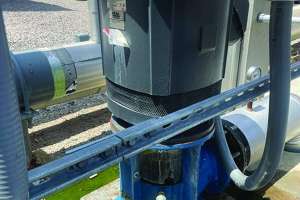
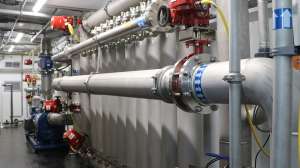
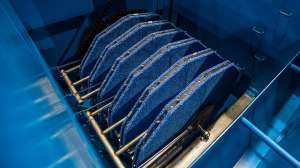
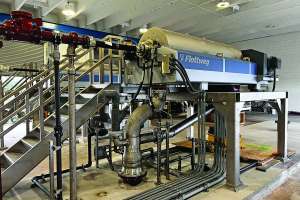
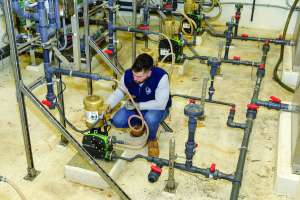
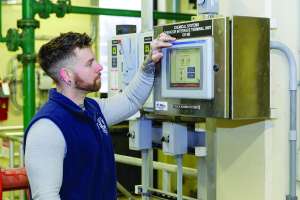
Team members adjusted loading to the anaerobic digesters. They replaced lamps and ballasts on the UV disinfection system. They rebuilt or replaced the pumps on the rotating disc filters used for phosphorus removal. Veolia Water Technologies serviced the filters, installed new screens and replaced three backwash pumps.
The plant turnaround began with the town’s leadership, including the town Water Pollution Control Authority, a seven-member elected body that oversees the wastewater department. Milano observes. “When I started, I told them I could fix it, but it was going to cost money and a lot of trust.
“They were very receptive. They didn’t want to look like they didn’t care about the environment or the town. It took a team effort from top to bottom. I have a meeting with the WPCA once a month, and I tell them the support I need. Then they talk to the town council and the town manager.”
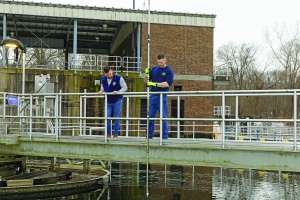
Milano notes that his team members have diverse skills that came into play in restoring the plant. He leaned on Fran Gervais, an operator who had just months left before retirement, to lead the project’s mechanical components. Working closely with him was Greg Caldwell, a certified electrician. Milano and lab director Cronin dealt with the process; the other operators pitched in wherever needed.
“It was nice for the newer guys to come in at the tail end of it,” Milano says. “We showed them everything that we replaced. We showed how bad things can get if you’re complacent, if you ignore things. It was a learning experience for all of us, and I include myself.
“It was great to have the older operators on board. They were like the pioneers in the field. They knew how to fix things. Years ago you fixed everything in-house. I was lucky to have Fran and other operators who knew how to do all those things. I could tell them to switch out a pump and they knew how to do it. It was a lot of work, but we had the right staff.”
A key to motivating the team was “making friends with everybody,” Milano recalls: “Morale was low. I let them know I wasn’t here to be a boss. I was here to help. Most of our team members are close to retiring. I showed that I wasn’t some young kid who thought he knew better than everybody. I wanted them to be able to retire and say, ‘Hey, we fixed this.’ They rallied behind that idea.
“I wasn’t there to degrade them and ask why things became so bad. I didn’t care about why. I cared about now. Anybody can sit in a room and point fingers. My approach was: Let’s figure out a plan of attack to get this plant back to being good.
“I didn’t want to work that hard every single day, and when you have a failing plant, that’s what you do. I told them once we got everything sorted out, we would reach a point where it was all just planned maintenance. You don’t want to worry every single day what is going to break. You have to get into a proactive instead of reactive state.
“They really did come along. They’re a good group. Yes, I’m the superintendent, but we’re all friends. When we have to work, we work hard. When we have downtime, we don’t avoid each other. We talk about family, grandkids, who’s doing what for the weekend.”
Now the plant is running smoothly and in compliance. “The belt presses are putting out 20% solids,” Milano says. “We’re down to doing hauling maybe three truckloads of biosolids a week. The digesters are healthy again. We went all of 2023 with a full pathogen kill. We met our seasonal phosphorus limit for the first time in three years.”
The plant uses a conventional activated sludge process to treat an average of 2.8 mgd of mostly domestic wastewater. Industrial users include a large brewery nearby. Wastewater is delivered through a 120-mile collection system that includes 10 pump stations. It first goes through a Muffin Monster screen (JWC Environmental) followed by the aerated grit channel.
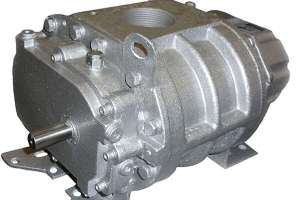
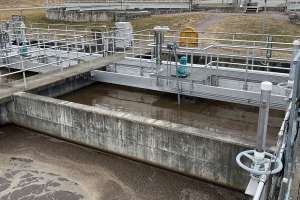
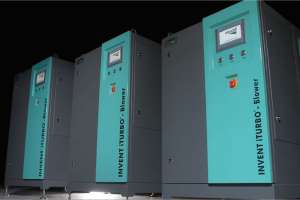
The flow then passes to four primary clarifiers. Primary sludge is either pumped directly to the primary digesters or to the belt presses. The primaries are followed by five aeration tanks with air delivered by turbo blowers (Sulzer) and fed via fine-bubble diffusers (Sanitaire, a Xylem brand).
The flow then passes to two final clarifiers. Waste activated sludge is sent to rotating drum thickeners and then to the digesters. Clarifier supernatant flows to a denitrification building with upflow media filters (Veolia Water Technologies), where methanol is added as a carbon source. Tertiary treatment for phosphorus removal is provided by the rotating disc filters (also Veolia Water Technologies). Filtered effluent is UV-disinfected (Trojan Technologies), re-aerated and pumped to the Quinnipiac River.
The plant is staffed on the day shift Monday through Friday; on-call operators do weekend checks. A SCADA system designed by Knapp Engineering with WIN-911 alarm software (SmartSights) monitors the facility. An in-house certified lab handles compliance and process control samples.
A major project on the near-term agenda is reducing I&I, much of which enters through old clay pipes in the collection system. Rain events of 2 to 3 inches can double or triple influent volume; Milano has seen flows as high as 12 mgd. An I&I study is now in progress.
With the process back on track, Milano focuses on boosting operators’ skills and licensing levels. When he arrived he was the only Class III licensed operator. Now two operators have attained Class III.
Training has been accelerated. Team members attend courses and conferences sponsored by NEWEA and the Connecticut Water Environment Association; Milano is a member of both and is part of the NEWEA Young Professionals group. He signs up younger operators for classes he considers valuable. Those include free online courses offered by Veolia Academy.
Milano looks back with pride on his tenure with the town of Cheshire. “I’m a firm believer that we should be giving back to the environment,” he says. “I take that pretty seriously. I don’t want to be polluting the earth and the rivers. We’re better than that now. It’s 2024 and we have the technology to prevent that. That’s why I like this field. You’re in personal control of being able to make a difference for the earth.”