
The boom in wastewater recycling means big opportunities for water treatment professionals.
That’s according to Peter Annin, author of the book, Purified: How Recycled Sewage is Transforming Our Water.
Annin spent five years learning about the stresses on water supplies, most acute in the dry climates of the West and Southwest, but also significant in some states with abundant rainfall — Florida and Georgia among them.
The book describes how communities increasingly look to direct and indirect potable reuse of wastewater as an essential part of the solution to constrained water supplies. The book describes the benefits and in fact the necessity of water recycling, along with the challenges of winning acceptance from the water-consuming public for reuse programs.
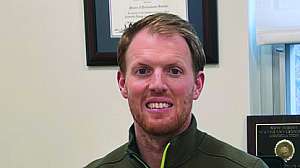
Annin isn’t a newcomer to water topics. He’s director of the Mary Griggs Burke Center for Freshwater Innovation at Northland College in Ashland, Wisconsin, and the author of The Great Lakes Water Wars, a book describing battles over the diversion of water to areas outside the lakes’ watershed.
In Purified, he profiles communities’ successes and failures in carrying out ambitious water recycling plans and demonstrates the folly of massive diversions as a solution to water-supply issues in arid and otherwise water-stressed regions. In an interview with Treatment Plant Operator, he also pointed out that growth in water recycling, and the advanced technologies involved, means an exciting future for the people who operate treatment facilities.
TPO: What inspired you to write this book?
Annin: I’ve been writing about water and climate for more than 20 years. It was clear when I started this project that there was going to be a water crisis in the Southwest, and I knew about water tension in other parts of the country. Not very many people are familiar with water recycling, so seeing a climate-driven water crisis coming, I decided to fill that knowledge gap. I set out to write a book that average citizens could quickly read to understand what potable water recycling is, why there is so much demand for it now, and why it’s safe.
TPO: What has changed since The Great Lakes Water Wars was published five years ago?
Annin: The water crisis has gotten worse. The geography of water tension has spread in the U.S. and around the world. Some communities are running out of water and some actually have run out. People increasingly are living the water crisis. It is no longer a theoretical conversation. It’s up to us who follow water issues to help the broader community understand how serious this is, and that we can’t take water, including sewage, for granted anymore.
TPO: Why is long-distance diversion of water to dry areas no longer an option?
Annin: Long-range, large-scale water diversions are unsustainable. There has been talk about diverting water from the Mississippi River to Arizona. The carbon footprint of that is mind-boggling. So are all the other environmental implications, and the timing couldn’t be worse, because the Mississippi is suffering historic lows right now, to the point that saltwater is reversing up the river from the Gulf of Mexico. The idea of robbing water from one climate-hammered watershed and sending it to another is ridiculous. That is the last century’s way of doing things. This century’s and the next century’s way is potable water recycling. Desalination needs to be on the table for communities near the ocean, but water reuse is the lower-hanging fruit. The lowest-hanging fruit is conservation.
TPO: Why does this mean such a great opportunity for water treatment professionals?
Annin: It’s amazing and exciting how much activity and investment there is in water recycling today. There is a concern in the industry that there may not be enough qualified operators to run the new high-tech treatment facilities. Demand for highly trained and experienced operators is only going to grow. Many of these operators will need both wastewater and drinking water certification.
TPO: How did you decide which potable reuse programs to explore in depth?
Annin: I traveled the Sunbelt to find the water recycling programs that were the most fascinating and had the most fascinating characters, but that also fit the broader narrative of the book, about where water recycling started, the highs and the lows. The story ends on a high note with all the investment that’s happening today, and arguably the highest note is that former Los Angeles mayor Eric Garcetti in 2019 embarked on a plan to recycle 100% of that city’s sewage by 2035. That is quite an endorsement of the technology.
TPO: What would you say is the most successful potable reuse program in the U.S.?
Annin: By far the most successful program in the U.S. and arguably the world is in Orange County, California. They’re making indirect potable reuse part of the water supply for 2 million people. They were a trailblazer starting in the 1970s, sending that treated effluent through their potable water recycling system and then discharging it into the groundwater. They have served as a role model for emerging water recycling programs around the country, and they have been really gracious about sharing their knowledge and expertise with other utilities.
TPO: To what extent are there technical or technological barriers to potable reuse?
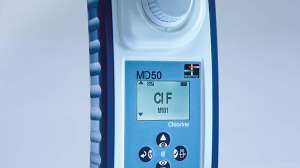
Annin: We have the technology to turn sewage into drinking water. Above and beyond the technology to treat the water, we also need real-time monitoring of the water as it passes through the various stages of treatment. One emerging technical challenge is real-time monitoring in the sewer system, so that the utility can detect any illegal and potentially dangerous discharges long before they get to the wastewater treatment and potable water recycling plants. The sooner utilities know about these illegal dumpings, the better it is for the plant operators.
TPO: How heavily do factors like real-time monitoring and redundancy play into public acceptance of potable reuse?
Annin: Real-time monitoring is huge, and so is public understanding of the numerous layers of technology involved. El Paso, for example, is stacking reverse osmosis on top of UV, on top of granular activated carbon, an extraordinary series of layering. Some engineers may see that as overkill. It may be more expensive but it really helps with public perception and acceptance.
TPO: To what extent is the cost of potable reuse a potential barrier to its acceptance?
Annin: There is no doubt that water recycling is expensive. It’s fascinating to look at how it compares to other options, because that depends on where you are and what your other options might be. In San Diego, for example, desalination is more expensive than water recycling. In El Paso, which is far from the ocean but sits atop brine-tainted aquifers, desalination of that groundwater is cheaper than wastewater recycling. The cost-benefit analysis depends on what options you have, the cost of those options and most of all the reliability of those options. In terms of reliability, sewage is always going to be there. The volume may decline with water conservation, but it’s a supply that utilities can count on in perpetuity.
TPO: In your research, what did you learn about the importance of public outreach and communication?
Annin: It’s really important for a utility’s communication program to be as top-notch as the water treatment technology. When you’re trying to convince average citizens that it’s safe to turn sewage into drinking water, you have to be proactive, assertive and even aggressive in connecting with and being transparent with customers. It’s a nonstop exercise. Orange County, even after doing it for decades, still has a robust outreach and communication effort.
TPO: How much more difficult is public acceptance for direct versus indirect potable reuse?
Annin: We’re just starting to find that out. We have Orange County, which is the most successful indirect potable reuse program. And now we have Los Angeles, El Paso and others talking about direct potable reuse. So far it’s OK; there is no real opposition at all. But we have seen through history that as projects get closer to coming online, especially when there hasn’t been a robust communication outreach, that can change. Some sources I spoke to are worried about a backlash against direct potable reuse.
TPO: What would you say is the single most important characteristic of a successful public outreach program for potable reuse?
Annin: Everybody involved in the process on the wastewater and drinking water sides needs to go through extensive and repetitive communications training. In some cases communication is limited to higher levels and the people in the treatment plants aren’t brought on board. When utilities fail to help the entire team understand what the upper-level employees are trying to communicate to the general public, it just doesn’t work. In some cases, utilities go through communication training once, and they think they’re done. Unfortunately, the marketplace changes. Children grow up to be adults. New customers come in. Employees change. There must be an emphasis on how to communicate, and the whole team must be on board, especially those responsible for external communication.
TPO: Why in the book do you often use the term “purified sewage” for the end product, instead of more accepted industry terms like “recycled water” or “reclaimed wastewater”?
Annin: In the water recycling community there is a debate about how blunt or how euphemistic you should be. I road-tested these terms with a number of sources. Several said that “purified sewage” is what we’re talking about: The starting product is sewage and the end product is purified water. As a journalist who’s trying to help average citizens understand the process, I didn’t want to be in a position where they would think I was being evasive, or I was spinning. If they got the sense that I was spinning it, the book would be less believable.
TPO: What do you see as the outlook for potable reuse and the role of operating professionals within it?
Annin: The water crisis is here. It’s knocking on our door, and we need to act. It’s exciting to see people taking another look at sewage and how every stage of the process can be made more sustainable and efficient. Wastewater and drinking water treatment plants can’t be built in a couple of days. They are long-term capital investments. And then we need the right people to operate those facilities. It’s a crucial role, and it’s completely overlooked, misunderstood, and not appreciated by average citizens, and by policy makers in some cases. It’s fascinating to think about where all this is going, It’s an exciting time to be in the industry your readers are in.