Effective data management is essential to process control in clean-water and drinking water plants.
Traditionally, plant personnel have accessed data from sensor networks from desktop computers or from SCADA systems in central control rooms. Today’s mobile technologies make it possible for them to monitor that data while in the field on tablets or smartphones.
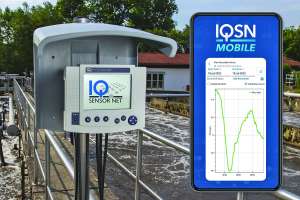
YSI, a Xylem brand, has captured that capability with its IQSN Mobile app, released in January. The app is an extension of the company’s IQ SensorNet system, a network-based monitoring and control technology for small and large treatment plants.
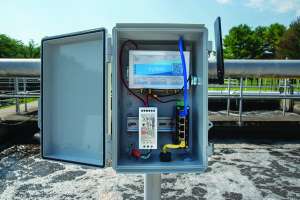
Instruments in the IQ SensorNet enable users to monitor multiple parameters on a single network and thereby optimize processes, increase efficiency, reduce energy usage and simplify compliance reporting. The modular system of controllers and sensors that can be customized and expanded to meet facility needs.
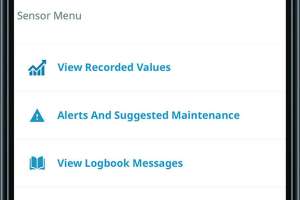
IQSN Mobile extends that technology’s utility and flexibility, giving operators information about sensor health, event notifications, maintenance reminders and more. Justin King, product manager for process with YSI, talked about the technology in an interview with Treatment Plant Operator.
TPO: What was the reason for creating this mobile application?
King: We wanted to enable plant personnel to see their data on demand, wherever they are, from throughout a whole municipal plant or across multiple plants all on one clean platform. Then we added features that include better data analysis and better management of the actual physical sensors.
TPO: How has sensor management been improved by this platform?
King: We added a diagnostic feature that reports the state of the sensors or the sensor network using a color-coded indication. It tells operators if the sensors are in the optimal state for measuring. It provides a reference other than a physical check to ensure that they are receiving accurate and reliable data.
TPO: What specific information is provided about the sensors’ status?
King: It has a green check mark indicator that the sensor is operating properly. It tells you if a sensor is not measuring, or if it is operating in a pH or temperature outside the recommended range. In those events it also provides troubleshooting tips. It also tells you if a sensor has been put in a maintenance or calibration mode. As technology advances, we hope to advance the app to provide more specific information.
TPO: What would be an example of future capabilities that might be added?
King: We would like to add predictive diagnostic capability, incorporating algorithms and possibly artificial intelligence. So for example, suppose you have a pH sensor in the process and the app has noticed that over the last few days the pH is slowly drifting up. It then could look at the calibration data and determine that this sensor hasn’t been calibrated in a month. It could then push out a message saying the measurement has been drifting and it might be time to calibrate the instrument.
TPO: Which team members in a plant would benefit by using the mobile app?
King: Everybody from the operations and maintenance staff on up to plant supervisors and managers can use it. And if they have a service contract, the service company’s personnel can be given access so they know when to come out and service the sensors. Different accounts and permissions can be set up. For example, the chief operator could be set up as the administrator and could delegate and send notifications to plant operators or maintenance personnel.
TPO: How do the notifications work?
King: The system sends push notifications based on user input by text or email, or both. It’s totally user-defined. Users can set maintenance reminders. For instance, the chief operator could set a monthly recurrence to calibrate a pH meter. Then a designated operator would get a message every month that it’s time to calibrate that sensor. The app also tracks and logs activity. So after that pH sensor is calibrated, the chief operator can see that the work has been done, and the exact date and time when it happened. They can set up streamlined maintenance protocols for all the sensors in the system.
TPO: How easy is it for operators to read and understand the data display?
King: The user interface is the key to the app. When they log in, they see a drop-down menu that asks what facility they want to look at. They click on that to see all the readings in that plant. If they want to look into one particular sensor, they can click into that and view the data in a graphic format if they wish. They can also remotely export data for the sensor or the system. They select the data they want exported and the app will send it to the email account they have selected.
TPO: What is the benefit of being able to export data directly from the app?
King: Maybe they’re not at the plant and they want to look at the data in a little more depth on the computer and run some analysis. Or maybe they need to do some troubleshooting issues. If there’s an issue with a sensor or a network of sensors and they can’t figure it out, they can export the data to our technical support. Then we as the manufacturer can analyze that data a little more thoroughly. They can have the data sent from the app to their email account, and then forward that email to us.
TPO: Is there a sweet spot in terms of facility size or type where this technology is especially helpful?
King: The ideal users are on two ends of a spectrum. On one end, for big plants with 30, 40 or 50 sensors or multiple IQ SensorNet networks, there’s a benefit to having every sensor and network under one application for viewing on a single screen. On the other end are smaller utilities that are decentralized, such as with multiple measuring points in a collection or distribution network.
TPO: Can IQSN Mobile operate with sensors from manufacturers other than YSI?
King: That is something we’re working on. A big benefit of IQ SensorNet in general is that users can add third-party sensors. We want to enable those sensors to be visualized on the mobile app. In general, we will continue to make improvements to the mobile app, adding features and benefits as time goes on. Wherever the app is today, it’s going to be better tomorrow and the next day.