Starting up a new wastewater treatment plant — a challenge in itself — included one problem Ottawa County (Mich.) Public Utilities operators had not faced before: dealing with significantly low influent flow for an extended time.
When the design engineers from Zenon (acquired by GE Water & Process Technologies in March 2006), project engineers from Prein & Newhof, and the Michigan Department of Environmental Quality (DEQ) learned that we would be operating our new membrane bioreactor (MBR) plant at 4 to 6 percent of capacity for years to come, they thought the biomass may collapse, or that we would be unable to meet many of our discharge limits.
Coming from more conventional plant experience, the OCPU operators weren’t sure it could be done either, but they were determined to find a solution. Keith Zahn, P.E., the Grand Rapids Water Bureau regional supervisor with the DEQ, remarked, “Our experiences with small and underutilized wastewater treatment plants haven’t always been good, but I felt the membrane technology was promising.”
Unfortunate timing
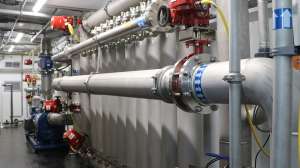
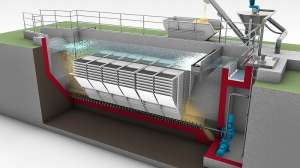
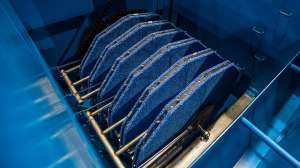
Built in 2005 and designed for 75,000 gpd, the Crockery Township Clean Water Plant in Nunica is equipped with two ZeeWeed 500B ultrafiltration hollow-fiber membrane trains, two 37,000-gallon aeration basins with fine-bubble diffusion, 2 mm fine screening at the headworks, and UV disinfection for final effluent.
The membranes are designed for a flux rate of 10 gal/ft2/day) at a maximum solids concentration of 12,000 mg/l. Timing was the only unfortunate feature of this well-built plant. When it was ready to receive its first gallon of wastewater in January 2006, the local economy and the real estate market were in full decline.
The plant was built to receive waste in a rural area where its first customers would be owners of newly constructed homes in a new development. However, only a fraction of the homes were built, and now, more than three years into the plant’s operation, the flow is still at only 6 percent of design, and revenue is equally below expectations.
Initially, options included:
• Mothballing the plant and pumping and hauling the wastewater out of the main lift station to another treatment plant.
• Using a smaller portion of the aeration basins so as to shorten the detention time while increasing the F/M ratio.
• Supplementing the biomass with nutrients using methane (among various ideas, someone even suggested adding dog food).
OCPU operators ruled out those options because they would prove too expensive or labor intensive, or would become operational nightmares. They needed a sustainable operations plan so the plant could run with minimal labor and expenses and still meet all permit limits.
To make things more complicated, the original design did not include a turn-down procedure, and the PLCs were not programmed for turn-down operations. As a result, the operators had to write an entirely new operations procedure.
Seeking answers
After consulting with design engineers and with John Barzewski, an experienced consulting operator from Fishbeck, Thompson, Carr and Huber, we decided to take the plant in a unique direction. We first decided to build the biomass to the maximum sustainable level, once we determined that there would be no extra electrical costs just to maintain the biomass with a low oxygen uptake rate.
That decision meant allowing the biomass to move into extreme endogenous conditions to minimize sludge production (Figure 1). In the first year, with 2.6 percent of design flow, the MLSS grew to 2,400 mg/l with 56 percent VSS without sludge wasting, yielding an F/M ratio of 0.01.
Next, we decided to employ a sequencing batch reactor technique, discharging only on one day every two weeks by using the volume of both aeration basins for storage room. When discharging, one basin is completely emptied, and the solids are concentrated into just one basin. This then saves the laboratory costs of daily analytics, labor, and the electricity needed to run two membrane air scour blowers continuously.
During these discharges, both membrane trains are run at the design maximum flux rate with a trans-membrane pressure (TMP) of -1 to -3 psi. (TMP is the suction or pressure required to pass water through the membrane fibers.)
These manual turn-down changes in the first year had an immediate effect on operational costs, which included an 85 percent reduction in laboratory costs and a 50 percent reduction in labor. This amounted to a 48 percent savings overall in the budget. By the end of the third year of operations, the savings has grown to 62 percent over what would have been spent. In three years of inventive turn-down operations with some air optimization, the facility was able to save $205,000.
During the second year of operations, the flow climbed to 5 percent of design, the MLSS climbed to 9,350 mg/l with a 57 percent VSS, and the F/M ratio was only 0.004. Effluent quality as this time typically showed non-detects in CBOD5 and TSS, and turbidities were near 0.12 NTU to only as high as 0.48 NTU. Since effluent quality continued to be exceptional and TMP did not change, the staff decided to stay the course.
The next challenge
Another challenge was finding the right balance of alum to precipitate the phosphorus and maintain it in the mixed liquor for the extended hold times with an effluent total phosphorus limit of 0.15 mg/l.
Through some trial and error, the staff found it necessary to increase the alum feed to as high as a 3.2:1 (Al:P) molar ratio for controlling spikes and a 2.5:1 molar ratio to safely maintain effluent concentrations below 0.15 mg/l. This makes the alum concentration 160 to 260 mg/l.
They also performed periodic testing of the mixed liquor to determine the quantity of phosphorus accumulated therein and how much precipitated phosphorus the membranes were rejecting. The concentrations found were astonishing, from 63 mg/l in 2006 to a high of 220 mg/l in 2008.
Finally, in the third year, the flow reached 6 percent of design and 12,000 mg/l MLSS with 60 percent VSS, and it stabilized at that level for nearly five months with an F/M ratio of only 0.004. At 820 days after startup with a 13,000 mg/l MLSS, operators performed a sieve test on the mixed liquor to measure influent screening effectiveness.
This test can help determine if any raw influent is bypassing the headworks screen or if any material larger than the screen perforations is being allowed through. This test also helps determine the quantity of fibrous material in the mixed liquor, as that material can catch on the membrane fibers and cause damage by twisting and pulling on them.
This test consisted of pouring a known quantity of mixed liquor through three sieves: 2 mm, 0.84 mm, and 0.6 mm. The results revealed that no hair or fibrous material was present and that no solids larger than 2 mm were in the mixed liquor. Also, the total concentration of solids larger than 0.6 mm was only 18 mg/l, or 0.13 percent of the MLSS.
Wasting the system
Plant and membrane performance continued to be excellent, but ultimately the staff decided it would be prudent to waste so as not to exceed the maximum membrane solids concentration and possibly cause an unrecoverable fouling of the fibers.
Solids were wasted after 942 days of operations, reducing the concentration by 40 percent to 7,200 mg/l. Interestingly, before wasting, they observed indicator organisms under the microscope that reflected a biomass more associated with a 20-day sludge age, not the sludge age of more than 900 days.
Predominant organisms found in the biomass were flagellates, free-swimming ciliates, some stalked ciliates, and a few rotifers. In addition, there were no filamentous bacteria present. Also, just before wasting, the staff lifted out and inspected one of the membrane trains for the first time and found the fibers to be in excellent condition.
After performing a normal recommended cleaning procedure, they put the train back into operation, where it performed like new. The second membrane train is scheduled to be inspected and cleaned in the winter of 2009.
Undoubtedly, the membranes give us the flexibility and ability to stretch the sludge age without being concerned with settleability, SDI or SVI. As influent flow and biomass growth rate increase in the coming years, the staff will need to waste more frequently to control the MLSS concentration, but we expect to be able to keep the MLSS high while remaining under endogenous conditions to minimize sludge production.
Ken Zarzecki, P.E., Ottawa County director of utilities remarked, “The Crockery Township Clean Water Plant situation has presented our department with unique and nearly overwhelming circumstances. The low wastewater flow operating challenge parallels the low-revenue challenge faced by township officials and county utilities management to pay operating, capital improvement, and debt expenses to keep this facility both operationally and financially viable.
“Fortunately, township government, the county public utilities department, and the housing developer have cooperated to address these revenue constraints and have implemented a financial management plan that complements this facility’s extraordinary operational success.”
About the author
Joe Hebert works for the Ottawa County Road Commission, Department of Public Utilities, and has worked in wastewater treatment, wastewater collections and water distribution for 20 years. He holds licenses in water distribution, wastewater treatment, and industrial treatment.
Hebert has been a member of WEF and AWWA since 1990 and is on the Michigan Water Environment Association process committee. His agency operates two wastewater treatment plants, a lagoon system, a landfill leachate treatment plant, 16 lift stations, and seven water distribution systems throughout Ottawa County. He can be reached at 616/842-5400 or jhebert@ottawacorc.com.