Background and challenges
The Brier Fork Wastewater Treatment Facility in Meridianville, Alabama, is operated by Integra Water and serves a growing service area in Madison County. As part of a planned wastewater infrastructure project, Integra Water introduced advanced treatment processes at the facility with a strong emphasis on operational reliability, environmental protection, and long-term regulatory compliance.
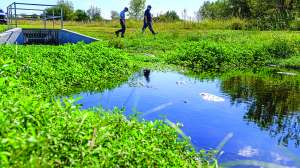
This facility discharges treated effluent into Brier Fork Flint River, part of the Flint River watershed. Recognizing the importance of protecting receiving waters, Integra Water adopted a precautionary design approach, incorporating treatment processes intended to deliver consistent effluent quality under both average and peak operating conditions. The project team placed particular focus on the reliable removal of residual suspended solids prior to discharge. This approach improves overall treatment efficiency and provides an added measure of environmental protection.
To support these objectives, advanced treatment processes were incorporated into the facility design, including tertiary polishing downstream of secondary treatment. This approach reflects Integra Water’s commitment to applying robust, proven technologies to safeguard water quality while supporting continued growth in the service area.
Solution provided by HUBER Technology
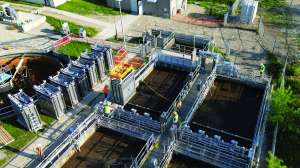
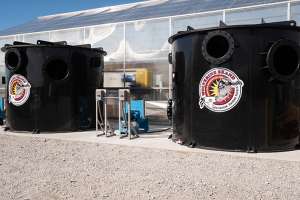
Integra Water selected the HUBER Disc Filter RoDisc as the dedicated tertiary polishing solution downstream of secondary treatment. The RoDisc was configured to reliably remove suspended solids while accommodating both immediate treatment needs and future capacity expansion. The installed filtration system consists of a RoDisc 2200 equipped with sixteen active filter discs (approximately 7.5 feet in diameter) and six blinded discs. This configuration supports an initial treatment capacity of approximately 4.0 mgd and allows expansion to a full 22-disc configuration for a future capacity of up to 6.0 mgd without replacement of the core filtration equipment.
The system was designed to treat secondary effluent with an average total suspended solids concentration in the range of 15-25 mg/L. Installed with 10 µm filter media sealed using a thermal welding process, the RoDisc removes fine solids effectively, supporting tertiary polishing to low effluent TSS levels, as low as < 5 mg/L. This configuration aligns with the facility’s focus on consistent effluent quality prior to discharge while providing a robust and proven filtration approach suitable for continuous operation under variable flow conditions.
The RoDisc was installed in a tank manufactured from 304L stainless steel. To maximize long-term durability and corrosion resistance, the tank and all stainless steel components were pickled and passivated in a full-submergence acid bath as part of the HUBER standard manufacturing process.
Implementation and execution
- Q1 2024: Civil works, concrete slabs, and site preparation
- Q2 2024: Installation of HUBER RoDisc 2200 / 22 and integration with mechanical and electrical connections
- Q3 2024: Commissioning, operator training, and system optimization
The HUBER engineering team collaborated with plant operators to ensure seamless integration with minimal downtime.
Results and benefits
The implementation of tertiary disc filtration at the Brier Fork WWTF provides a range of operational and treatment benefits aligned with the facility’s long-term performance objectives. The RoDisc delivers high hydraulic capacity within a compact footprint, allowing effective tertiary polishing without significant space requirements. Designed for gravity operation with low head loss, the system operates without the need for wastewater lifting, supporting efficient integration into the overall treatment process.
The RoDisc reliably removes fine suspended solids from secondary effluent, contributing to consistent effluent quality and dependable compliance with discharge requirements. At the Brier Fork facility, total suspended solids at the plant effluent were reduced by approximately 15-20 mg/L, supporting improved overall effluent quality. This reduction in suspended solids also contributed to improved E. coli removal through enhanced disinfection performance. By reducing and stabilizing suspended solids concentrations upstream of disinfection, the tertiary polishing step supports improved downstream UV disinfection performance. Lower and more consistent TSS levels enhance UV transmittance and minimize particulate shielding, contributing to more reliable and effective disinfection under varying operating conditions. Continuous filtration, including during backwashing, allows stable operation while maintaining consistent effluent quality.
The use of recycled filtrate for backwashing eliminates the need for an external wash water supply, further improving process efficiency and simplifying operation. Together, these benefits reinforce overall treatment train robustness and support Integra Water’s precautionary approach to protecting receiving waters.
Client testimonial:
“Since implementing the RoDisc, we watched our effluent clear up in real time before entering our UV channels which was amazing to see. While it is not a fix-all solution since you still need to have good treatment before the filter, it helps tremendously at filtering those last few solids that otherwise would pass through.” – Operations Team
Conclusion
The Brier Fork Wastewater Treatment Facility demonstrates Integra Water’s commitment to implementing reliable, advanced treatment solutions to support long-term operational performance and protection of receiving waters. By incorporating tertiary disc filtration as a dedicated polishing step, the facility adds an additional layer of treatment assurance focused on consistent effluent quality prior to discharge.
The HUBER Disc Filter RoDisc compact, gravity-operated solution integrates effectively into the overall treatment process while supporting downstream disinfection performance and overall treatment stability. Together, these benefits reinforce a precautionary and performance-driven approach to wastewater treatment, positioning the Brier Fork WWTF to meet current and future operational demands while maintaining dependable environmental protection.