The city of Cali is the largest in western Colombia and the third largest in the country, with a population of about 2.2 million. Located in the equatorial zone, this tropical area receives significant rainfall throughout the year; in fact, western Colombia is among the rainiest places in the world.
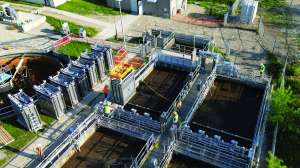
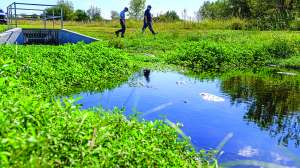
Emcali EICE ESP is a state-owned company that provides public infrastructure services in Cali and neighboring areas, including nearby sugarcane fields. The Cañaveralejo and Floralia pumping stations are part of the company’s sewage and stormwater system that treats wastewater before safely discharging it into the Cauca River, which is the second largest river in Colombia. The Cañaveralejo station operates at 1,585 gallons per second, and the Floralia station operates at 2,378 gallons per second.
The problem of plastic
Plastic waste has become a major contaminant in Cali’s stormwater flow. Due to excessive rainfall, lightweight plastic is often carried over land and through the stormwater network to the treatment plants. At the Cañaveralejo and Floralia pumping stations, 30-year-old screens with 2-inch screen openings were allowing debris, especially single-use plastic bottles, to move into the channel, where they would clog and damage pumps, bioreactors, clarifiers and other equipment.
Because the 2-inch screen opening was allowing in so much plastic, plant operators sometimes had to suspend operations and physically enter the channel to remove bottles, rags and other contaminants. Access to the lower area of the previous grid for maintenance work was complicated because there was no way to divert the inlet flow, so personnel had to work at hazardous heights and in confined spaces.
How Duperon technology removes more plastic and other debris
The Cañaveralejo pumping station installed Duperon screening technology in December of 2022, and the Floralia pumping station followed suit in February of 2023. In Cañaveralejo, the old 2-inch screens were replaced by 3/8-inch screens. Due to much heavier flow, the Floralia screens were replaced by 1-inch screens.

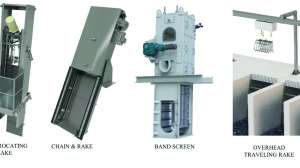
Designed with patent-pending sequence technology, the Duperon screens deliver exceptional debris removal. The scrapers have an enhanced tooth profile and unique collection geometry that effectively remove plastic bottles and other debris at higher speeds. Through flex/pivot action, the FlexLink multifunctional link system eliminates underwater sprockets that are subject to jamming. Large debris is managed without shutdown, and scrapers return to cleaning the screen field faster.
The site had two major challenges to overcome. First, to avoid a complete suspension of operations to install the new equipment, provisional systems had to be installed to divert wastewater until the new systems were up and running. Second, multiple units were installed in the same channel at both stations (three at Cañaveralejo and two at Floralia), which required a more precise final positioning.
Additional benefits and customer service
In addition to better debris removal, the Cañaveralejo and Floralia stations now experience far less downstream equipment damage and have improved safety for workers, who no longer have to physically enter the channel to remove debris.
The Duperon system is automated, which is a major improvement over the prior manual system. Plant operators are now free to focus on other tasks, improving staff efficiency.
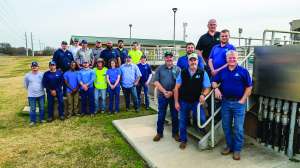
Duperon’s technical support, installation supervision and testing have provided a high degree of reassurance for the plant operators, who have been able to train on the new system with guidance directly from the manufacturer. This support has been a major reason for the project’s success.
Reduced operational costs are the icing on the cake
In addition to improved functionality and greater performance, the plants are expected to reduce operational expenses as well. These include:
- Lower costs of equipment maintenance, because the new equipment is not susceptible to corrosion
- Fewer unplanned interruptions in operation, thanks to better screening of bottles and rags
There are also environmental benefits that advance the company’s compliance efforts:
- A more effective wastewater treatment process downstream, which no longer has to contend with debris from upstream
- Increased energy efficiency by the screening equipment (from 2-5 hp per screen to 0.5 hp per screen)
- Fewer shutdowns can lead to water contamination