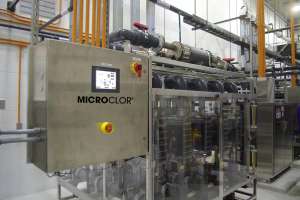
Hypochlorite generation has been recognized as an effective method for disinfection of water for more than 35 years. The Microclor system from Cleanwater1 is the latest innovation of the technology, making advancements in system safety and ease of operation.
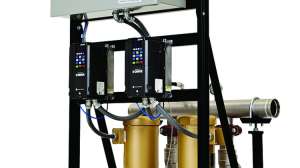
The system’s vertical cell arrangement is the most significant of the many features that distinguish it from the earlier generations of equipment. The electrolytic cells are configured in a vertical array and vented directly to the atmosphere. This prevents the chance of over pressurization by releasing virtually all hydrogen directly from each cell. Other systems use the storage tanks as hydrogen separators which can contribute to excessive cell pressure and vibration in the discharge piping.
“The vertical electrolytic cell was key to improving safety, efficiency, ease of maintenance and operation, and redundancy within each system,” says Haley Goddard, sales and business development engineer for Cleanwater1. “It was a total game-changer, and the market hasn’t looked back since.”
The hydraulic lift created by the hydrogen separation circulates electrolyte through the cell loop at 3 foot pounds per second. This reduces the requirement for cell cleaning and minimizes heat accumulation in the cell. The cell’s vertical orientation not only allows better hydrogen separation, but is also more compact, resulting in a more space-efficient footprint. The clear acrylic cell body supports the electrode array and eliminates the need for internal baffles and fasteners, reducing maintenance and repair costs over the life of the system.
Microclor’s hypochlorite solution is also below most hazardous material concentration thresholds — 0.8% versus 1%. “That means the solution is no longer classified as a hazardous material, and it greatly reduces the rate of degradation and prevents off-gassing,” says Goddard. The only raw materials required for the OSHG process are salt and water. This will reduce vendor deliveries by about 66% compared to commercial bulk hypochlorite, and result in a more sustainable and robust treatment facility better able to withstand the demands imposed by a natural disaster or health emergency, according to Goddard.
“Replacing the use of chlorine gas in any water and wastewater application is an opportunity to benefit the safety of operations staff and surrounding communities,” she says. “It is certainly the safest option when compared to chlorine gas and high-strength sodium hypochlorite, but it is also the most economical as well.”
855-669-3845; www.cleanwater1.com