Traditional water management takes a one-way approach. Treat drinking water and send it to distribution. Receive and clean wastewater and discharge it to a stream. Collect rainwater and pipe it out of town.
More current thinking envisions a circular water economy, where water is used and reused in the most efficient manner possible and is kept within the watershed from which it was drawn. One proponent of the circular water economy is Freshwater, a nonprofit organization based in St. Paul, Minnesota.
As demand for clean water grows regionally and globally, Freshwater works on ways to support water reuse and recharge by collaborating with technical experts, government agencies and local communities and utilities.
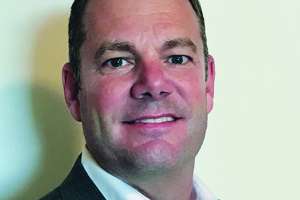
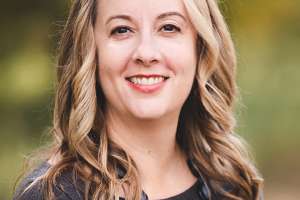
Executive director Michelle Stockness has 20 years of experience solving complex water quality and supply problems. Before joining Freshwater, she was a vice president at an engineering consulting firm. There she guided public- and private-sector clients through regulatory and environmental issues around drinking water, wastewater and stormwater.
As a civil engineer, Stockness understands water systems, leads a variety of cross-sector initiatives and was a board vice president of the AWWA. She talked about the circular water economy in an interview with Treatment Plant Operator.
TPO: In your previous roles, what did you observe about water management approaches?
Stockness: In my work as a consulting engineer, one thing I realized was that people didn’t talk across the different groups that work in water. Sometimes I was relaying information across departments inside cities or businesses: “Did you know this department is doing something you should know about?” I saw a need for more coordination across different silos.
TPO: How would you describe Freshwater’s role and scope?
Stockness: We work in Minnesota and the Great Lakes Region. Our mission is to inspire and empower people to value and conserve water. Our work revolves around water research, policy and education. The key to that is working across the public and private sectors and with state government agencies and communities. We look for gaps: What is being done well? And what maybe is not being done that we can help with? The circular water economy is one area where we can help because it requires a lot of cross-sector work.
TPO: How would you characterize the circular water economy concept from the perspective of people working in wastewater and drinking water treatment operations?
Stockness: It’s about valuing water in every form. We used to focus on getting water off the landscape, treating it and sending it away. The concepts of “away” and “waste” — we’re trying not to focus on that and to look at all water as a part of an interconnected system. So, for example, how can we use a discharge from a wastewater treatment plant as an input to something else in the watershed? It includes the beneficial use of byproducts and biosolids. It’s looking at our inputs and our outputs and how we can keep that resource in the watershed.
TPO: What would you say is a key to establishing a circular water economy?
Stockness: We traditionally do things based on cost and shorter-term thinking. Instead, we need to focus on longer-term thinking about what is best for our region, our watershed and what it takes to maintain safe, clean water for future generations. I often hear the private sector talk about the circular economy in terms of business risk and water risk and ways to mitigate the impacts of climate change. Water and wastewater utilities can think about that, as well as keeping water in the watershed and making changes in operations and partnerships to benefit circularity.
TPO: Practically speaking, what are some of your organization’s areas of focus?
Stockness: In Minnesota we use a lot of groundwater, so we focus on sustainable aquifer use or recharge. We also emphasize awareness and connections across groups, especially utilities, businesses, state agencies and economic development groups. They all should be talking about water use, especially if they are redeveloping or siting a new business. We see businesses come to Minnesota because of the water resources we have. We want to site them in places where they don’t cause adverse effects to existing water systems or groundwater. For instance, can we site them near a wastewater plant so they could use reclaimed water for their operations?
TPO: How does the circular water economy concept differ from the concept of One Water?
Stockness: They are different, but linked. We need One Water for circularity. In One Water we think of stormwater, wastewater, drinking water, industrial water and how they’re all related. The circular economy would link those together. So maybe a wastewater plant discharge can be a drinking water input, or stormwater can be an input to something else. It’s essential for high-functioning circular water economies to look on a watershed basis at all water sources and uses.
TPO: Why is it important for society at large to think in terms of a circular water economy?
Stockness: In the past it was considered efficient for all of us to work in silos: We were a wastewater utility, a drinking water utility, a city government, a business. We all did our own thing. But the world is increasingly connected, and maybe we don’t have the abundance of resources that we thought. The circular water economy helps us provide high-quality water to future generations and manage some climate change impacts, whether it’s too much or too little water in a given place. Managing on a watershed basis can foster more resilient communities.
TPO: For water treatment professionals, what are some opportunities for more efficient and sustainable water management?
Stockness: For treatment plants, it’s partly about having water-efficient operations. That includes reclaiming backwash and wash water, and being energy-efficient. It’s also about thinking beyond the fence line. Where is the water source from? Who else uses water in the watershed? How could we partner up to better match sources and uses? And it’s about forming partnerships with the private sector, economic development agencies and people looking to use water — getting to know who those parties are and opening lines of communication. For siting or redevelopment of large water users, those conversations need to start early in the process, because once you get to final design, it’s too late.
TPO: What can be done to improve coordination among various parties on water issues?
Stockness: One easy way to do that is with mapping. Who uses water? Where is there too much water? Where is there too little water? How can we connect the sources in the watershed? It’s about knowing who else is working in your watershed at the utility level and having a close relationship so you can work together, partner more effectively and avoid duplicating efforts.
TPO: What are some of your organization’s success stories?
Stockness: In 2021 we did a study on banking groundwater with the University of Minnesota. We’re doing another study with the university on groundwater recharge feasibility. We’re looking to work with economic development groups so that if we hear about a business, we make sure the city utilities know about it and can look at partnerships for water efficiency. This summer we are developing a new State of Minnesota Circular Water Economy White Paper, looking across all sectors, highlighting what is going great and what else we can do to keep the circular economy front of mind. Minnesota is the Land of 10,000 Lakes. Water is in our consciousness in everything we do. We need to be responsible water users and leaders.
TPO: What is your vision for a future world of a circular water economy?
Stockness: I would love to see water utilities perceived as anchors of their communities, and being good partners with businesses, state agencies and water users. They should be seen as a community benefit, keeping water in the watershed and helping manage supply and scarcity issues a better.
TPO: Stormwater in particular is typically collected and simply sent downstream. Do you see opportunities to do something better with that water?
Stockness: There are some very beneficial uses for stormwater, such as for irrigation or cooling water. In Minnesota, our soil and water conservation districts and watershed districts are interested in how we can do that. It requires a change from the way systems were designed in the past. It takes a more work, but there’s a huge opportunity.
TPO: Where can utility leaders and operations professionals get started toward fostering a circular water economy?
Stockness: Water circularity is not merely an academic concept. It is important for operators, and a good place to start is by communicating with other departments in the community — stormwater, wastewater, drinking water, economic development. See what they have plans for and see if you can link sources and uses, especially paying attention to new developments and redevelopments. And see if you can create more water efficiencies and conservation measures in those new projects.