Wastewater remains a traditionally male field, but women have joined the ranks through various avenues. There are as many different “how I got here” stories as there are women to tell them.
Women in wastewater are just as likely to love their jobs as men. And because the field isn’t crowded with women, there are many opportunities for them to move up the career ladder. As in many fields where women are underrepresented, female operators often reach back to help those coming after them.
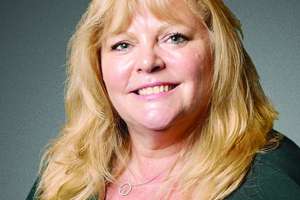
Donna Grudier is one such woman. She has helped pave the way with her mentorship and her own significant achievement. A bit late to the game, Grudier entered the profession in a midlife career change but quickly made up for lost time.
Through a can-do attitude, working through challenges and a knack for management and organization, she quickly excelled in her field. She is now president of the New York Water Environment Association and senior operator at the Village of Northport Wastewater Treatment Plant. She talked about her career in an interview with Treatment Plant Operator.
TPO: How did you get your start in the wastewater industry?
Grudier: I was working for Northport as deputy clerk in accounts payable. I wasn’t really thrilled with the job. One of the plant people left, and soon after I was chatting with Erica Reinhard, the senior operator. She said I should take his place. I thought she was out of her mind. She asked me to take a tour. It wasn’t what I expected; not a filthy job. But I was worried how it would look: Do I really want to be a laborer at a sewer plant at 43 years old? But the money was so good. I felt like I had to try it. So I dove in.
TPO: You started as a laborer. How did you work your way up the rungs?
Grudier: We’re a very small plant. There are only four of us here, and the woman who asked me to tour the plant Erica told me, “You’ll run this place someday.” It takes a particular kind of person to be in charge of things; one who’s comfortable managing people and paperwork, dealing with the village leadership.
TPO: How did you get involved with NYWEA?
Grudier: My stepdad introduced me to NYWEA at their annual meeting. It’s a phenomenal show, with vendors, engineering firms and operators, just a wonderful place to network and learn. I thought, ‘My goodness, this takes what we do and makes it exciting!’ There I met Tom Pfersching, a member of our Long Island chapter who said, “You should join our Operations and Maintenance Committee.” I moved up to secretary and then chairperson.
TPO: How did you rise through the officer ranks within NYWEA?
Grudier: I was in charge of operator training, the O&M Committee’s primary focus. Then I got very involved with the Operations Challenge at my first spring meeting, and it just blew me away. So I helped our local team, the Brown Tide, as project coordinator. Then our operator representative to the state board of directors completed his term, I took his place for five years. Then I moved on to the state-level executive board of directors and was on a five-year track to become president. That’s where I am today.
TPO: What are the benefits of being so active in the organization?
Grudier: I’ve made many friends and had incredible networking opportunities. Folks in this industry are the salt of the earth: warm and inviting, hardworking and dedicated. People don’t think about us as water heroes, but we are. I got to meet my husband Dale through NYWEA, and I can’t ask for anything more than that!
TPO: What hurdles did you encounter as a woman in the industry?
Grudier: I didn’t have too many obstacles. We all deal with some “boys will be boys” nonsense. One boss loved to refer to me as Blondie. A lot of people in this industry have been around a very long time. You have to gradually guide them into thinking correctly and speaking to you properly. There’s the perception of, “You’re a woman. You can’t be in charge. What can you possibly know?” But overall, it hasn’t been bad. Being so active in NYWEA probably helped me. It doesn’t matter if you’re a man or a woman. When people see you are seriously committed to improving the industry, that’s how you gain respect.
TPO: Is overcoming assumptions one of the biggest challenges?
Grudier: That was one of the bigger points I struggled against. Even worse than being a woman was being a woman operator and looking for respect. As an operator, you fight hard to get respect from the engineers and even the vendors. Some think we’re just turning a monkey wrench all day, we don’t understand things. The smart ones understand that we know probably more than they do because we work with this every day.
TPO: Tell about your experience with the United Nations program called the Water Woman Summit.
Grudier: It was held as part of the UN’s 50th anniversary Water Summit, and it was about empowering women, trying to bring more into the industry. Quite honestly, issues with water in our world are mainly borne by women. In emerging countries, it’s the women’s job to get water. Women representing different countries talked about their jobs in water, how they were working on new infrastructure and new ideas. There were middle school children in the audience. To see a new generation excited about being environmental warriors was really neat.
TPO: You’ve described your work role as “the mom of the plant.” What do you mean?
Grudier: My job is to keep the bacteria happy. I keep them warm, safe and fed. When we’ve got some bad ones, we get rid of them to protect the good ones. We do all the things a mom does. And that’s how I’m taking care of my itty bitty, tiny kids.
TPO: What are some big misconceptions about careers for women in this industry?
Grudier: I feel the biggest misconception is that potential women operators expect that it’s a filthy, disgusting job, being in hip waders and shoveling sludge. It’s occasionally that, but usually it’s not. If I go home with a splatter on me once every six months, that’s a lot. As long as you work clean, you stay clean. And there are other ways to be part of this career: be a lab tech, work in maintenance, all kinds of things. Another misconception is that wastewater workers are unskilled or uneducated. We’re not. We have to go to school, learn microbiology and chemistry, hydraulics. It’s not something just anybody off the street can come in and do. It’s a much more enriching job than people generally understand.
TPO: What are you personally doing to promote that understanding?
Grudier: I’ve kind of just put myself out there. I bang the drum on behalf of the industry and talk about what we do, why we do it, and why it’s exciting.
TPO: What is NYWEA doing to encourage women to enter the water professions?
Grudier: NYWEA has really gotten on board with this in recent years. We have an incredible Diversity, Equity and Inclusion Committee. They have championed the InFLOW Program where high school and college students participate in our meetings. They sponsor kids from the area to work in treatment plants as a summer job in our internship programs.
TPO: What is your area of focus as NYWEA president?
Grudier: Each president gets to have a theme. Last year the president called his “The Year of the JEDI: Justice, Equity, Diversity and Inclusion.” We focused on including everyone: women, minorities. My focus for the year is bringing more operators into our fold under the theme of “Elevating Essential Workers.” I can tell you the percentage of operators who are NYWEA members is low. I reach out to them, so they can shine in the industry a little more. I am part of a committee that awards an annual Grit Scholarship. You don’t have to be an academic wunderkind. You just need to be working toward something you’ve struggled to get to.
TPO: In which areas do you feel women can make a huge impact in the industry?
Grudier: Every single one. When you have more ideas, more ways of thinking about things, you’re going to do better. Women offer different ways of thinking, can give different perspectives, and can reference different experiences. Wastewater is an industry where we have a place everywhere.
TPO: What would you tell women who might be considering wastewater as a career?
Grudier: Do it. Absolutely, do it. It’s not what you think it is. It’s going to be so much better than you ever imagined. If you jump into it with passion and excitement and care about your job, you’re going to get so much out of it.
TPO: Where do you see the biggest opportunities for women? As operators?
Grudier: Yes. There are so few of us. It’s the best chance to move yourself up the ladder, and not just for municipal. If you start out in municipal work and get all those certifications, and you find you don’t like working for government, you can take all that experience and education and go into the private sector. There are hundreds of private plants. Once you get your license and understand what you’re doing, the sky’s the limit.
TPO: What do you envision for yourself and other women in the field?
Grudier: I’d like to see it go to a 50/50 male/female split someday. Do I see that anytime soon? No. But when I first joined the NYWEA board, there were myself and one other woman out of 25 or so people. Now, I believe women outnumber men, and this is within a 10-year span. So the industry is changing rapidly. I see more women becoming operators. I can only hope the more of us there are, the more there will be. The word will get out. People will understand that it’s a great career path and a wonderful way to support yourself and your family.