Background and challenges
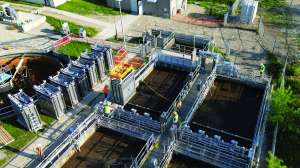
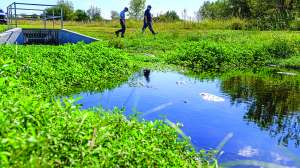
The Celina Ohio wastewater treatment plant discharges into the Beaver Creek in Mercer County Ohio. The existing WWTP went online in 1991 and replaced the 1940 WWTP (upgraded in 1962). The existing WWTP has a design flow of 3.0 mgd and serves the city as well as East Jefferson Township. The plant utilizes aerobic digestion for further treatment of its produced sludge and then dewaters using two HUBER Q-PRESS screw presses. The sludge is land applied currently.
Solution provided by HUBER Technology
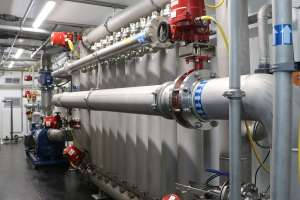
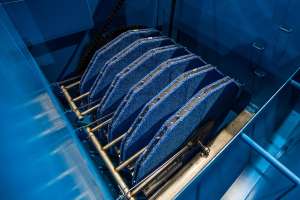
The HUBER Q-PRESS 440.2 screw press is a high-performance dewatering system designed for low energy consumption and maximum solids capture. Key advantages of the solution include:
- Low energy and polymer usage: 20% lower power consumption compared to traditional dewatering methods
- Fully enclosed and odor-free operation for improved plant staff working conditions
- Automated and continuous operation: Reduced manual intervention and increased efficiency allowing 24-hour operation unattended as needed
Implementation and execution
- 2019: Initial pilot test
- 2020: Selection of screw press technology and bid awarded
- 2021: Commissioning, operator training, and system optimization
Results and benefits
Performance improvements:
- Dewatering during all weather conditions
- Lower energy use, leading to operational savings
- High capture rate, lowering plant treatment costs and increasing plant capacity
Operational and environmental gains:
- Consistent, automated dewatering, freeing up operators for higher-value tasks
- Odor control and improved workplace environment with enclosed system design
- Lower carbon footprint, aligning with the plant’s sustainability goals
Maintenance gains:
- Over 10,000 hours of operation on each HUBER Q-PRESS since March of 2021
- Collectively, over 24,000,000 gallons of sludge dewatered since March of 2021
- First maintenance being performed in 2026
Client testimonial:
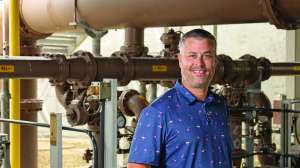
The two HUBER Q-PRESS makes our life easier with their ability to dewater unattended. We are able to run how we desire, when we desire. We have over 10,000 hours of runtime on each HUBER Q-PRESS and are just now performing our first major maintenance since their startup. — Kerry Duncan, Celina WWTP superintendent
Conclusion
The installation of the two HUBER Q-PRESS 440.2 has dramatically improved the handling and efficiency of biosolids disposal at the Celina wastewater treatment plant. The City of Celina is able to effectively handle their biosolids storage and disposal year-round accomplishing the main goal of this project.