In biological nutrient removal systems, conventional primary treatment is typically used to settle out between 40% and 60% of total suspended solids and reduce biological oxygen demand by 20% to 35%. Advanced primary treatment is defined as achieving greater than 80% and 45% TSS and BOD removal, respectively. Historically, the industry has performed advanced primary treatment by adding coagulants and polymers to increase settling and/or flocs, which adds to operating costs and sludge production.
Recent advancements in filtration allow advanced primary treatment to be achieved without coagulant addition. By using pile cloth media filtration (PCMF) systems, advanced primary treatment can significantly increase settled solids without the use of chemical additions, all while reducing capital and operating costs, ensuring more consistent effluent, and increasing flow capacity.
How advanced primary treatment works
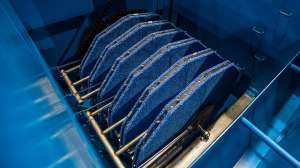
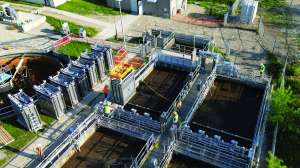
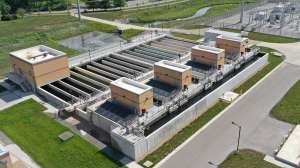
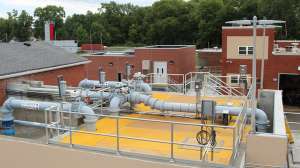
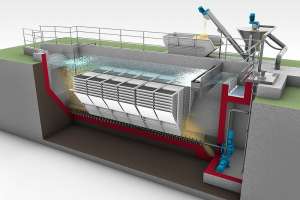
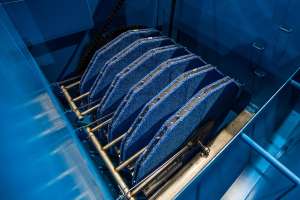
Advanced primary treatment leverages fully submerged PCMF disks in a specialized configuration. This system removes solids in three distinct ways. First, large, dense solids are allowed to sink down into a settled solids sludge specially designed removal zone. Second, floatable scum, such as fats, oils and grease, is collected on the surface. As the water level rises, the scum flows over a removal weir based on operating setpoints. Third, the remaining solids are filtered through the cloth media by gravity on the disks. Filtrate collected in the disks and hollow center tube is discharged over an effluent weir. Meanwhile, as the media blinds, an automated backwash kicks on based on headloss. Backwash shoes make direct contact with the cloth media and remove solids using vacuum, which results in the water being filtered to be pulled back through the cloth for cleaning. The backwash waste can be pumped back to a waste-handling facility, such as a thickener or the head of the plant in wet-weather treatment applications.
The physical barrier of cloth media filtration and other solids removal processes within the overall technology result in 80% TSS removal and upward of 50% BOD and chemical oxygen demand reduction. In addition to this, advanced primary treatment using PCM offers a number of other significant benefits.
Improved effluent consistency
While clarifiers are a long-established and successful technology, their primary downside is performance during high flows, particularly peak wet-weather flow conditions that facilities experience due to changing climate. Hydraulic overload, turbulence and short circuiting can reduce the amount of solids settling, which can impact the effectiveness of downstream processes, especially in secondary treatment. The result is upset conditions and inconsistent effluent quality.
Advanced primary treatment with PCMF avoids this because of the physical barrier. In addition, if high flows cause less settling, those solids will still be captured on the media and removed during the backwash. This ensures consistent removal rates regardless of solids content and flow rate. The use of PCMF also helps significantly reduce the particle size of solids sent to secondary treatment. Unlike primary clarification and other screening technologies, the pile cloth media filters create a complex pathway through the fibers, which not only captures more particles but also ensures that only the smallest are able to slip through. With advanced primary treatment with PCMF, particles entering secondary treatment are generally under 50 um in size, with most being under 10 um. These smaller particles are easier for the secondary treatment biology to process (break down) and use in CAS or BNR processes, which improves the effluent quality and consistency.
Reduced operating costs
Overall, aeration is one of the largest costs in any wastewater treatment plant. By reducing BOD and COD by 50% or more, advanced primary treatment can significantly reduce energy consumption associated with aeration processes. The smaller and more consistent particle size also means that less time and energy are spent adjusting blowers due to increases in TSS, which again adds to savings. Advanced primary treatment with PCMF does not required chemical addition, resulting in savings if a facility is using chemical addition for advanced primary treatment.
Smaller footprint
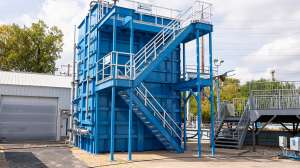
In the PCMF advanced primary treatment system, settling, floc removal, and filtration all take place in the same tankage. This combination means that influent does not need to be stored for long periods of time to allow for settling. Similarly, scum removal occurs automatically when the fluid reaches the level of the removal weir, which eliminates the need for additional mechanisms. As a result, the PCMF system uses just 15% to 20% of the footprint of traditional primary clarification treatment. This offers a tremendous opportunity for WWTPs that are struggling to increase capacity but are locked into an existing land space.
Lower environmental impact
In addition to having a smaller footprint and lower operating costs, advanced primary treatment can reduce the environmental impact of operations in three ways:
- Energy consumption is reduced due to less aeration requirements as a result of lower TSS, BOD and COD as well as smaller particle sizes.
- Improved effluent helps mitigate the risk of permit violations and potential resulting ecological effects.
- Primary solids removal for use in operations that generate biogas is increased.
- The small footprint results in less GHG emissions due to less concrete during construction.
Rising interest
Advanced primary treatment has been around for nearly a decade, but recently there has been a significant shift toward acceptance and adoption. At WEFTEC 2023, the technical session on advanced primary treatment drew a full audience, with many showing strong interest in its ability to address issues like reduced footprint and increased daily load handling. It also provides an advantage for those WWTPs that struggle during wet weather conditions and other peak flows that traditional primary clarification struggles with.