Energy efficiency and sustainability have long been at the forefront of Four Rivers Sanitation Authority’s (FRSA) mission, guiding its pursuit of advanced technologies over the past few decades. A pivotal step toward these goals was establishing a formal partnership in 2011 with Aqua-Aerobic Systems, Inc. (AASI) to conduct onsite research and development of innovative wastewater treatment solutions. This collaboration was mutually beneficial: FRSA could reduce technology assessment costs, while AASI gained a valuable testing environment to evaluate the performance of its systems under real-world conditions.
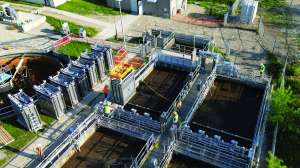
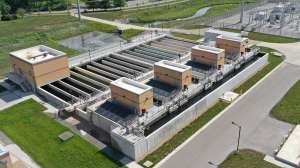
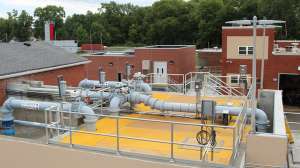
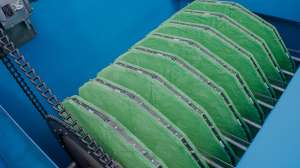
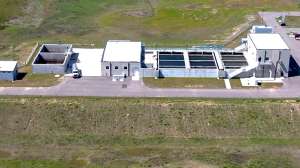
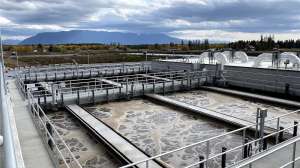
FRSA, located in Rockford, Illinois, serves a vast area of approximately 110 square miles, supporting over 277,000 residents across 77,000 active user accounts. Operating since 1932, the facility is rated for an average flow of 40 mgd, with a maximum daily flow of 80 mgd and a peak flow capacity of 130 mgd. In 2018, FRSA embarked on a new facility planning initiative, setting ambitious goals around nutrient removal, scalable capacity, resource recovery, and modernization of aging infrastructure. As FRSA transitioned to the implementation phase, insights from its robust research efforts enabled strategic investment in key areas, including the decision to adopt AquaPrime cloth media primary filtration. This choice allowed FRSA to enhance primary clarifier capacity without increasing the process footprint, aligning with their sustainability and efficiency targets.
Drawing on FRSA's extensive experience collaborating with AASI, the Authority proceeded with site-specific demonstration testing to refine design parameters and predict performance outcomes. In 2016, AASI conducted a feasibility study to compare the AquaPrime filters against the existing primary clarifiers. The evaluation assessed operational costs, footprint efficiency, and additional biogas production potential. The study concluded that replacing traditional primary clarifiers with AquaPrime filters would yield significant energy savings, driven by increased methane production and reduced aeration energy demands. This solution not only enhanced operational efficiency but also supported FRSA’s broader sustainability objectives.
Download the full case study to learn more.
Download Case Study