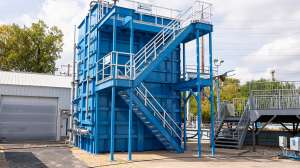
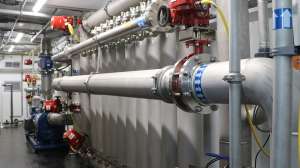
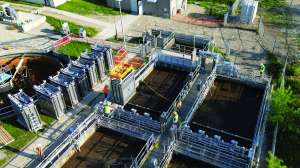
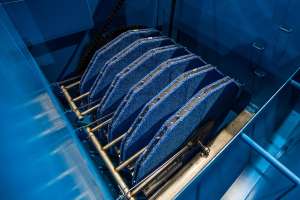
Wastewater treatment plants worldwide are grappling with a growing array of challenges, stringent nutrient limits, more intense and frequent wet-weather events, rising energy costs, and aging infrastructure. To meet these demands, utilities are increasingly adopting solutions that are compact, energy-efficient, and capable of delivering multiple treatment benefits within a small footprint. One such solution gaining momentum is pile cloth media filtration, particularly for advanced primary treatment and managing wet-weather flows.
Beyond tertiary: Evolving cloth media filtration applications
Originally designed for tertiary treatment, pile cloth media filtration has advanced to address upstream processes and peak flow scenarios. Today, these systems are being implemented to supplement or even replace primary clarifiers, increase secondary treatment throughput, and minimize capital investments tied to large storage tanks. They also support energy and resource recovery by enhancing solids capture and boosting biogas production – all while improving effluent quality and overall system robustness.
How the technology works
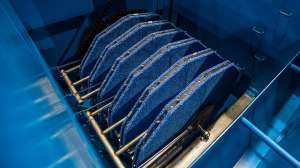
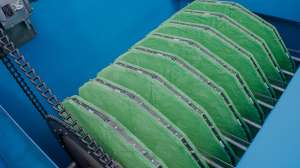
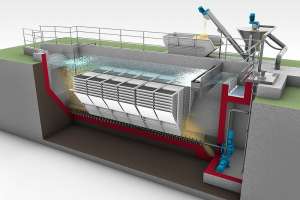
Cloth media filters are typically built in a disk format, using an outside-in flow pattern that creates three distinct solids removal zones, which are particularly vital when handling high solids in primary or wet-weather applications.
- The top or “floatable” zone allows fats, oils and grease to accumulate and overflow a scum weir, removing floatables from the system.
- The middle “filtration” zone captures solids on the cloth’s surface, forming a mat that adds resistance and causes the water level to rise. When a preset level or timer is reached, the disks rotate, and the backwash pump pulls clean water from inside the disk to flush solids off the filter surface. This process expands the fibers, effectively releasing solids trapped deep within.
- The bottom “solids” zone allows heavier particles to settle and be intermittently removed from the hopper via collection laterals and the backwash pump.
Advanced primary treatment: A tool for energy and resource gains
Using pile cloth media filters for advanced primary treatment offers a strong alternative to conventional clarifiers. Unlike sedimentation, these systems consistently achieve high total suspended solids (TSS) and biological oxygen demand (BOD) removals, without chemical additions, and with a much smaller footprint. This enables facilities to divert more carbon to anaerobic digesters, increasing biogas yields, and cutting aeration energy demands in biological treatment process.
Across various installations and pilot studies, pile cloth media filters in primary applications routinely remove over 80% of TSS and 45-65% of BOD, with exact performance depending on the wastewater’s characteristics and loading.
Download the brochure to learn more about this approach and to read two related case studies.
Download Brochure