The only foam that can be reliably diagnosed through visual observation alone is foam related to undergraded surfactants. The term “surfactants” is extremely broad, and it is important to note that surfactants can vary significantly in relation to their chemical properties as well as their potential impact on treatment processes.
Brief description of foaming mechanics
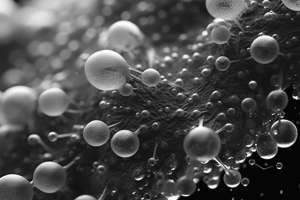
Surface tension values of less than 60 dynes per centimeter are often correlated with the presence of surfactants. Surfactants contain a hydrophilic (water-loving) head and a hydrophobic (water-repelling) tail which causes a decrease in the surface tension. At lower surface tension values, air easily disperses into small bubbles, which are then coated with surfactants, forming a thin elastic film on the air-water interface.
While pure water bubbles easily collapse as water drains between them, surfactants stabilize foam by encouraging coalescence, which slows down the drainage of liquid between bubbles as well as providing electrostatic and steric repulsion. In severe instances, surfactant foams may overflow areas such as equalization basins and aeration tanks if proper anti-foam/defoamer applications are not implemented and these materials are present.
Sources of surfactants
Common sources of surfactants in domestic wastewater treatment processes include household detergents, personal care products, fabric softeners and stain removers. Sources of surfactants in industrial wastewater treatment processes may include wetting agents, detergents, emulsifiers and softeners used in washing, scouring and dyeing fabrics (textile plants); de-inking, coating and bleaching processes (pulp and paper); oil recovery, emulsion breaking and cleaning of tanks/equipment (petrochemical plants); cleaning and sanitizing agents used in clean-in-place systems (food and beverage plants) and more.
Chemistry of surfactants
Surfactants may be cationic, anionic or non-ionic in charge. Different testing is required for categorizing surfactants such as MBAS method for anionic surfactants, DBAS method for cationic surfactants,and CTAS for non-ionic surfactants. Total surfactant testing involves sequential abstraction of MBAS, DBAS and CTAS.
Biodegradability and potential impact of surfactants to microbiology
For surfactants that are biodegradable, higher temperatures, higher MLSS values and higher sludge age values are often favored for full degradation. If a treatment plant experiences elevated effluent BOD values in the absence of elevated effluent ammonia and effluent total suspended solids together, it is possible that degradation of the surfactant has occurred during the five-day BOD test. In these instances, increasing the MLSS and sludge age often help to degrade these surfactants within the aeration basin.
Not all surfactants, however, are biodegradable and some have the potential to pass through biological treatment plants untouched.
The impact of surfactants on wastewater microbiology may vary broadly from inhibition and toxicity to low/insignificant. In general, cationic surfactants (which include quaternary ammonium compounds) are often most difficult for biological degradation. Nitrification, floc strength, health of higher life form organisms, and health of filamentous bacteria are most commonly impacted when surfactants are present at inhibitory concentrations.
Operational considerations
In many industrial wastewater treatment applications, addition of defoaming agents is standard practice and normal for operations. If a treatment plant experiences an episode in which surfactant foam is observed, it is good general practice to conduct a detailed microscopic evaluation of the mixed liquor to determine if there has been negative acute impact on the general health of the bacteria (check floc structure, dispersed growth, presence/absence of higher life form organisms, health of filamentous bacteria).
Standard operational practices vary often depending on trial and error for success. While some treatment plants respond to surfactants better at higher MLSS concentrations and higher sludge age (more buffer), this method is also not without risk as some surfactants bioaccumulate within the flocs and may create legacy toxicity/inhibition once certain thresholds or concentrations are reached.
For industrial wastewater treatment systems, it is good practice to have strong communication with production in regard to which chemicals are used, when they are used and if the addition of defoaming of neutralizing agents are necessary to ensure treatment goals.
In municipal systems, it is important to have good relationships with significant industrial contributors as they are often a good starting point to check for sources of surfactants.
Unfortunately, tracking down the source of surfactants has the potential to be challenging due to the variability of events, the testing considerations and methodologies and potential dilution impact of other influent wastewater streams. It is often good to start with microscopy to determine if the health of the system has been compromised as well as process control data to determine the severity of any surfactant-related impact on your system.
If investigating the source, start with the simple shake test of a raw influent sample to determine if surfactant bubbles form, go further downstream in the collection system and repeat. This methodology is crude, simple and not always effective, but certainly worth a try before more complicated testing is recommended. Managing surfactant related issues can be a complicated problem and the intention of this article is to provide an overall background.
About the author: Ryan Hennessy is the principal scientist at Ryan Hennessy Wastewater Microbiology. He was trained and mentored by Dr. Michael Richard for over 10 years in wastewater microbiology, and serves as a microbiology services consultant. Hennessy is a licensed wastewater treatment and municipal waterworks operator in the state of Wisconsin and fills in as needed for operations at several facilities. He can be reached at ryan@rhwastewatermicrobiology.com. Hennessy's new book Wastewater Microbiology: Filamentous Bacteria Morphotype Identification Techniques, and Process Control Troubleshooting Strategies is now available on Amazon.