Few would claim that clean-water and drinking water operators receive the credit they deserve or are held in the same esteem as people like police and fire chiefs and public works directors.
The New England Water Environment Association’s Water for Life Campaign aims to raise awareness of water professionals and the work they do by showcasing the ideas, people and projects that keep the region’s water environment safe and accessible.
That includes steps toward helping residents understand the work NEWEA and its members do and the contributions they make to the quality of life. The association launched the campaign in 2016 and is now looking to expand it. The plan is to raise awareness of water quality and share success stories throughout the region.
The campaign uses an advertorial and educational style. In the endeavor, NEWEA will partner with water industry professionals and with organizations and people outside the industry who support environmental protection and water resource quality.
Specific aims include highlighting career opportunities for diverse water industry professionals and the critical need for adequate funding of water infrastructure. Jordan Gosselin, NEWEA communications and public relations coordinator, talked about the campaign in an interview with Treatment Plant Operator.
What was the impetus behind the Water for Life campaign?
Gosselin: Our Public Awareness Committee wanted to reach out beyond our industry because people outside the water sector don’t necessarily understand what water professionals do for their communities. So in 2016 they partnered with a consultant who helped create a variety of marketing collateral to start the campaign.
What did these materials consist of?
Gosselin: They created banners and one-page ads. Ultimately, some of them turned into ads on the sides of Metropolitan Boston Transit Authority buses and trains, in MBTA stations and on a digital billboard over I-93. They also did interviews with well-known professionals within the NEWEA membership, including John Sullivan of the Boston Water and Sewer Commission.
What was done with the interviews?
Gosselin: They were published as articles on NEWEA website. We still have all these materials available. Some are being revamped and new interviews are being completed because we’re refreshing the campaign.
When did NEWEA decide to revitalize the Water for Life campaign?
Gosselin: NEWEA’s Executive Committee voted to create the communications/public relations coordinator position in 2018, and then I was hired to fill it. Before that the campaign was largely run by volunteers with support from the NEWEA office and the outside consultant. The Water for Life campaign and NEWEA’s other outreach efforts were a lot to manage on a volunteer basis. The communications and PR position created an opportunity to put more focus on the campaign. In the year or so after I came on, I worked with the Public Awareness Committee, exploring how we could continue this campaign and how we wanted it to look.
What audiences outside the water industry are the most critical to reach?
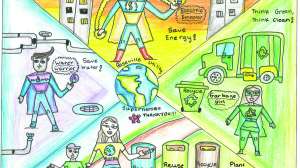
Gosselin: The most important audiences are the local communities and the ratepayers who support the water professionals and the services they provide. People don’t think about water industry work. They turn on their tap and water comes out, they use it and it goes down the drain. They don’t think about where it comes from, where it goes, and the huge industries that are behind keeping our water clean and available. Some of our materials were designed to make people aware that rain water flowing into the storm drains often flows back into our water sources, so we need to keep the storm drains clear of chemicals and pollutants.
What new direction is the Water for Life campaign taking now?
Gosselin: Right now our focus is on refreshing and updating things like our website and FAQ pages. We’re also putting together some Water Champion stories that highlight members within our organization. And we’re reaching out beyond our industry. We’d like to form partnerships with people and organizations that rely on clean water. The thought is that they would join us in building awareness of what the water industry is doing and how we support other industries.
What kinds of organizations might that outreach include?
Gosselin: Breweries and recreation-related businesses are two that we’ve been focusing on. Many recreation companies have corporate social responsibility departments because their business relies on a clean environment. As for breweries, there are many in the local communities, including some that we’ve worked with and have hosted events with. Some breweries have their own treatment systems, and it makes sense to have partnerships with organizations that already have close connections to clean water and water treatment.
What other communication tools are you developing?
Gosselin: We’re creating a series of Water for Life videos. It’s a three-part series. The first one is already published on our YouTube channel. We went to Upper Blackstone Clean Water and did interviews with professionals in all different positions, highlighting the work they do. The second video focuses on stormwater and combined sewer overflow projects around the region and how they are helping to keep the environment clean. The third one will be about innovation and how new technology is keeping our water clean and making us more efficient.
How will you promote these videos and other materials?
Gosselin: I worked with our Public Awareness Committee to create a publication guide that outlines who our target audiences are and what NEWEA’s publication schedule will be for each item. We’ll share that with our sponsors and encourage them to share the materials through their channels. The guide is also sent to our committee members, our executive committee and other companies and organizations within our industry, who in turn distribute it through their networks to give it a broader reach.
Have local utilities been able to make use of these materials with their customers?
Gosselin: We definitely encourage that, and we have done so in the past. One utility took one of our bus and train graphics and put it on the side of one of their utility trucks, so when they drive around the community, people see that. We also partnered with Think Blue Massachusetts to create an ad focused on stormwater pollution prevention and helped them get that out to MS4 communities as part of the educational requirement for their permits.
What do you see happening in Water for Life in the next few years?
Gosselin: We’d like to film our third video so we can get that out in spring. Then we’ll do a lot of work internally to update materials and create new Water Champion stories to use in reaching out to organizations about potential partnerships. That’s a great opportunity to get our messages out to a broader audience. There is so much important work being done in our industry. We would like to see a great deal more awareness of it.