Wastewater treatment is a complex business, especially if, like the Orange County Sanitation District, you run the third largest wastewater agency west of the Mississippi.
For more than 50 years, OCSD has treated and reclaimed wastewater generated by people living in central and northwestern Orange County, Calif. — a population that now exceeds 2.5 million. Its Fountain Valley and Huntington Beach treatment plants handle about 250 mgd.
All that takes a professional staff of more than 600, some 55 distinct processes, and a vast number of operating and maintenance procedures. To make life all the more complicated, the district is in the middle of a plant upgrade and expansion program that involves more than $2 billion in capital projects over multiple years.
That makes it a huge challenge to keep the district’s vital operation and maintenance manuals up to date. To address that issue, the district has undertaken a six-year initiative to digitize the manuals and make them available to all staff members on computers throughout the facilities.
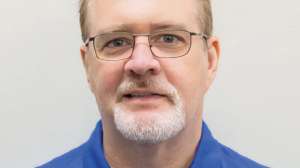
Leading that project is David Heinz, operations manager. Heinz sees digitizing as a wave of the future for treatment agencies and plants of all sizes. He spoke about the OCSD’s project — called E-OMM (for Electronic Operations & Maintenance Manual) — in an interview with TPO.
TPO:
What happened at OCSD that made the E-OMM program a priority?
Heinz:
When I hired in with the district in 1979, what we had for training manuals was pretty decent. They were reasonably well organized, and the plants were simpler back then — we were a 301H waiver facility, which meant we didn’t have to provide full secondary treatment.
But as our plants have grown and as we’ve been moving toward full secondary treatment in line with our new permits, the plants have become more complex. We’ve had a lot of rehab and capital improvement jobs, and along the way one piece that didn’t get taken care of very well was keeping our manuals up to date. We still had them, but the information was sort of spread around, not in a centralized location where it would be easy to find. Some of the information is no longer current.
TPO:
How would you describe the manuals you use today?
Heinz:
Historically the district has used hard-copy O&M manuals, mainly in three-ring binders. We have two large treatment plants with multiple processes at both facilities. At each plant we have an operations center, or control center. Within those are some library shelves that house the O&M manuals. We’ve got probably more than 100 binders, ranging from 1/2-inch to 3- or 4-inch. Each binder focuses on a certain part of a plant.
TPO:
What happened that caused the manuals to fall out of date?
Heinz:
When I hired in, we had a training division in operations. They trained our staff, and they also kept up our O&M manuals. But years ago we had staffing issues and went through some downsizing, and one piece that went away was our operations training group. When that happened, attention to our O&M manuals slipped.
TPO:
Why is it so important to have all these manuals and process documents?
Heinz:
First of all, our NPDES permit requires that we have an O&M manual for each facility. Then, as operations manager, I know my staff needs information. They need to be able to turn to the manuals, find the descriptions of the systems and design specifications, and just have good reference documents they can access to learn the details of the facilities. The manuals are there for training and general reference, but as we look down the road, we’re seeing a lot of other opportunities for using them.
TPO:
Do the manuals in part provide a defense against the loss of institutional memory as experienced operators reach retirement age?
Heinz:
Yes. One use of our E-OMM will be for capturing information from those who retire. People like myself, who have been here for about 30 years, are going to walk away with a lot of knowledge in their heads. Updating our operations manuals is a perfect way to capture that knowledge — and a timely way.
We are in the Baby Boom retirement phase. Over the next few years, we expect a lot of our people to be retiring. In operations alone, more than half our 92 staff members between our two facilities are eligible for retirement.
TPO:
When did OCSD decide to undertake this digitizing project?
Heinz:
The idea had been in the heads of many since the early 2000s. We’ve been talking about it since around the time of Y2K — the need to update all our operations manuals, centralize them, and get them into an electronic format. In 2006, the project actually was approved and started moving forward.
TPO:
How would you describe the process of going from hard copies to an all-electronic format?
Heinz:
The project has two phases. Over the past couple of years, we’ve been working on Phase 1. We hired a wastewater expert as a consultant to help us construct a platform on which to build the E-OMM on. Along with that, the consultant put together prototype operations manuals for four of our processes — two at each plant.
The thought was that the consultant would do the initial ones, and then we would learn from that process and use our in-house staff to do all the rest. However, we soon recognized that we didn’t have the staff in operations to write all that material. It’s a much bigger and more time-consuming task than we realized.
We gave it the college try, but we didn’t make much progress. We didn’t add any staff to support the effort, and furthermore that kind of work really takes people with technical writing ability and training.
As operators, we can write procedures for shutdowns and other basic procedures, but writing technical manuals that describe the facilities is quite a bit more difficult. Another part of Phase 1 is using the consultant to scan all our maintenance equipment manuals and put them in electronic format, too. We are now at the end of Phase 1.
TPO:
What happens in Phase 2? And when will that be completed?
Heinz:
If all goes well, we will be extending the contract with our consultant, who will complete the job of writing the O&M manuals. They’ll be working with us to capture all the rest of the information and put it in an electronic format. It will describe all our processes — not just the four prototypes that are already done, but the 51 other processes, too. In the next couple of months, that phase will kick in.
By early 2011, we’re looking to have Phase 2 done, at which time we’ll have a baseline for both facilities in place. It’s not going to be an effort that just ends then. It’s going to be a living docu-ment. We’ve got construction projects that will be going on from now to eternity, so we’ll be in a constant mode of updating and modifying and making sure accurate information is recorded in the E-OMM.
TPO:
How will the updates be handled?
Heinz:
Right now the plan is to bring on an in-house program manager who will work for operations and will be our E-OMM specialist. That person will know the ins and outs of the system and will help our staff update it, train our people to work with it, and make sure it stays current.
Printed manuals are really hard to keep up to date, especially with large facilities. If you’re not all over it, if you don’t have a ton of staff devoted to running around and updating the binders, it’s difficult. Electronic versions are easy to touch up.
TPO:
Besides construction, what kinds of things make it necessary to update the manuals on a continuous basis?
Heinz:
Construction is the biggest one, but in addition, our permits change over the years. A couple years ago we were still a 301H waiver facility. Since our last permit cycle, we’re in a construction phase that’s going to take us to full secondary treatment. Elements of our E-OMM will have to change to meet permit conditions.
On top of that, we make changes to our processes. In our primary treatment system, for instance, we may change the polymers, we may change the dosages for ferric chloride and the chemicals we add. Sometimes we change out small systems within bigger processes. Any changes like that need to be captured in our manuals.
TPO:
When it’s complete, how will team members get access to the E-OMM?
Heinz:
The operations staff will be able to get to the manual from their desk or from the field. They won’t have to go to the control center and find the binder that has information they need. They’ll be able to go to any computer and get the information quickly and easily. And it’s not just for operations. The system will be open to all 644 members of our staff.
We have computers throughout our facilities. There are two types of computer systems. There’s the SCADA system, through which we run the facilities. Then we have personal desktop computers in all the process areas. In the office areas, we have a PC on most desks. We have hundreds of computers around the plants. Some operators have offices, and all operators have access to PCs. They’ll be able to go into any process area, sit down at the process desk, and access the E-OMM system.
The system will be available to our maintenance staff, too, and there’s a lot of utility to that because they work very closely with operations. We’re looking at placing wireless laptops in our maintenance people’s hands. That means they’ll be able to access equipment manuals anywhere around the facility by taking a laptop with them.
They’ll be able to call up manuals for the specific location they’re working in, instead of trotting up to our centralized library and digging up hard-copy manuals. We’ve already scanned our equipment manuals. Now it’s just a matter of getting the laptops to our people so they can access those manuals from the field.
TPO:
What will the electronic manual actually look like?
Heinz:
It’s a pretty simple system. When you log in, there are multiple tabs at the top of the screen. Each tab represents a major process system. You click on whatever process area you’re interested in, and then you can drill down into the various areas of interest.
For instance, we have trickling filters. If someone wants information on the trickling filters, they would click into a secondary treatment tab, in which there would be a section on activated sludge and a section on the trickling filters. Then under trickling filters there’s a multitude of areas: an introduction to the system, a safety area, a basic maintenance section, theory of operations, equipment controls, consultant operating procedures, and standard operating procedures (SOPs).
One of the most useful pieces of the manual will be the SOPs, where we capture all the procedures we use on a day-to-day basis. Right now, a lot of that is in people’s heads, but it’s not captured on paper and it’s not captured electronically. With so many folks retiring and with new people coming in, it’s really critical that we get that information captured in our manual as SOPs.
TPO:
How will you go about capturing all that information about SOPs?
Heinz:
We’ve put together a table of contents that’s pages and pages long, listing all the different procedures where we need to put together SOPs. In Phase 2 of our process, our consultant will be tasked with taking care of the system descriptions, including the introductions, the theory of operations, the equipment controls, the safety material, and other areas.
The piece that in-house operations will focus on is putting together the SOPs. We know how to write basic procedures: This includes items such as how to start a pump, how to stop it, how to run it in a particular mode. We can do that pretty well and pretty quickly.
TPO:
If everyone has access to the manuals, how do you protect against unauthorized changes? Who has the authority to make or approve changes?
Heinz:
Only certain people have the rights to go in and modify the system. When changes are made, anything that is done is tracked, so that if someone goes in and tweaks a section, we can see how they tweaked it, when they tweaked it and what it looked like before they tweaked it. In the future, our program manager will authorize any changes. For now, that falls to me, and to our chief operators.
TPO:
What is the response to the E-OMM sections that have been completed?
Heinz:
All our staff have been trained on the basic system, and quite a few have been involved in writing up some of the system descriptions. On what we have completed so far, everybody likes it.
TPO:
How practical is this for other treatment agencies? Is it feasible for smaller treatment plants?
Heinz:
I think we’re among the earlier facilities stepping into this. It just makes a lot of sense to capture O&M information in a small space so that everybody can access it, rather than having all your information on one shelf, where people are competing for its use, and where things fall out of date quickly.
For smaller facilities, there may be pluses and minuses. They’re challenged because they probably have very limited staffs, but on the other hand they don’t have such large and complex operations. I think for small as well as large facilities, this is a good fit and probably is the way to go. I think it’s the wave of the future.