Arnie Bevins was among the early waves of wastewater treatment operators who joined the profession in 1971, soon after passage of the original Clean Water Act. Trained by the U.S. government, he recalls going to school full-time, six and a half hours per day, for six months before starting work.
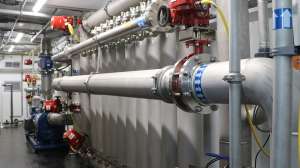
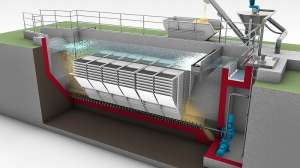
His first job was at the Town of Vernon (Conn.) Water Pollution Control Facility, and that’s where he remains. He worked his way up the ranks to assistant director of the town’s Water Pollution Control Department, and in that role he functions as plant manager for a 4.7 mgd regional treatment facility. The plant is one of few in the country that uses a Powdered Activated Carbon Treatment (PACT) process — for removing color imparted by dye mill effluent.
Along the way, Bevins has been an advocate for the industry, joining the New England Water Environment Association (NEWEA) in 1980, serving for three years as state director, then as Professional Wastewater Operator Representative, and ultimately moving up to president in 2007.
Today, Bevins is among the wave of long-time treatment operators nearing retirement. Looking ahead, he sees a critical need to attract young people to infuse the profession with new talent. One key to meeting that challenge, he says, is creating more respect and recognition for people in the field. He spoke about those matters recently in an interview with Treatment Plant Operator.
TPO:
In your opinion, why doesn’t the wastewater treatment profession get the recognition it deserves?
Bevins:
I think the biggest thing is that treatment plants are victims of their own success. That’s because if we do our job, ideally no one knows we are here. All we do is put clean water into the river. In the 1970s, the river used to run the color of the dye the local textile mill was running that day. Today, downstream of my plant, there’s a trout management area where we’ve got a natural holdover population of trout.
It also has to do with the way we ourselves refer to what we do. You can’t tell people you work in crap for a living if you want to be recognized as a professional — you just can’t do that. In my comments when I became president of NEWEA, I said we should stop speaking in hushed references to our influent and instead speak in glowing terms about our effluent quality. A lot of people in this business don’t do that.
TPO:
What do you observe about how people perceive wastewater treatment?
Bevins:
Especially to young people, the environment is what it is today. They don’t know where we’ve come from. They don’t know how much good work we’ve done and how much things have changed. One of the comments I make when I talk to groups is that when you work in a water pollution control facility, you do more environmental good in one day than most people do in a lifetime.
It’s amazing how many people I talk to who don’t realize that we discharge to rivers. I’ve had people say, “Don’t you take the water out of the river and treat that?” Well, no, not exactly. I’ve seen people amazed when we mention that we have a lab. “You have a laboratory in a treatment plant? What for?” Many people don’t understand what it is we do. As a consequence I think they don’t necessarily view our work as a profession.
TPO:
How hard is it to change those perceptions?
Bevins:
If I can get people to come through the plant, I’ve got friends for life. We were going through a construction project in the early 1990s. Our plant is 28 feet off the lot line of a 175-unit apartment complex. We had some issues with them related to the construction. We took members of their association through on a Saturday, and by the time the tour was over, they wanted to know when our budget hearing was, so they could come and support us.
One of the neatest things we ever did — we had a mayor who did a weekly public information show on TV. For one show, he did a tour of the plant during the construction. We gave him a microphone and a list of questions that we provided. He walked through the plant and interviewed my boss and me. We talked about what we were doing, how the process worked, and why we were changing it. I can’t tell you how many people saw that show and said, “I had no idea — that’s pretty cool stuff you guys do.”
TPO:
It’s well known that the industry is facing a shortage of operators. How has that affected your plant?
Bevins:
We have a very experienced team. My youngest staff person is in his early 40s. My second least senior operator is 51. I have an operator who at 57 put in his retirement letter last week. I have probably three more who will go this year or early next year. I have a total of eight operators, and I’m going to lose half of them in the next year and a half.
A lot of plants are also having trouble on the management side. In Connecticut, we have nitrification requirements. We have denitrification. We’re going to have phosphorus requirements. These plants are really huge biochemistry sets. You don’t walk in the door and learn how to operate a plant in one or two years.
The other big thing — when I started out, we were called operators. Now I’m sitting on a $58 million facility. We’re facility managers now. My budget line item for energy is $1.3 million. We have to try to manage electrical consumption and bring that number down. That’s another skill set that not necessarily everybody has.
TPO:
What are you doing at your facility to help replace the people who will be leaving?
Bevins:
One thing we’ve done, pending approval by our town council, is to create an operator-in-training position. We’ll require someone to have a state Class I operator-in-training certification in hand before we even interview them — that will tell us they’re sincere in wanting to come here. We’ll advertise for that position, as well as for a Class 2 operator. We recognize that we need to start bringing younger people in and start moving them up through the system.
TPO:
What is it about wastewater treatment that should make it attractive as a career choice for young people?
Bevins:
Usually the first thing that attracts them is the money. Salaries here are in the mid-$50,000s to $60,000 to start. It’s a great way for a young person to get a foothold financially. Also, in today’s world you absolutely have to stress that this job is going to be here in five years, in 10 years, and 20 years down the road — it’s just not going away.
Another thing, and I remember hearing this in class 38 years ago, once you get your license and certification, you can go anywhere you want. That has proven very true. I happen to have stayed here, but if I wanted to pick up and move to, say, California, my license probably would be recognized through reciprocity.
I also stress that this is incredibly interesting work. When I walk a young person through the plant, I get away from all the ‘humor’ the kids grew up with and sell the science and the engineering. The reality is that we are managing a huge microbiological population and putting it to work for us. Every day we use the tools and skills that kids are taught in school — the math, the computer skills, the science. We are a career path where they can use those skills every day.
TPO:
Beyond efforts at your own facility, what’s being done to attract people to the treatment profession?
Bevins:
We’re doing a lot to get the word out there. A couple of years ago, the operators association in Maine did a careers DVD. Our state operators association is talking about doing something similar and putting it on public access TV.
NEWEA has a Careers Outreach Task Force, and not too long ago they did a day-long Environmental Careers Day at Springfield (Mass.) Technical Community College, in conjunction with the New England Water Association. They had a panel with a public works director, an environmental scientist with a consulting engineering firm, a wastewater superintendent and a water facility superintendent. They invited teachers, guidance counselors and students from all around the region. At the end, they took a tour of the Springfield Water Pollution Control Facility. About 40 or 50 people attended.
Five years ago, the National Science Teachers Convention came to Hartford and NEWEA had a booth there, staffed by our public education committee. We participate in the Connecticut science fair every year. NEWEA judges water and wastewater projects, and some of those kids have gone on to become Stockholm Junior Water Prize winners.
TPO:
What’s being done to earn more recognition for the profession?
Bevins:
NEWEA holds a two-day planning session every year. One topic this year is professional recognition: How can the association promote the positive things we do, by way of the news media and other methods?
It seems the Teacher of the Year is always in the paper. That’s not so with us. The NEWEA annual conference always ends with an awards luncheon. Our media relations committee sends press releases to the recipients’ hometown newspapers. Sometimes they get published, but more often than not, they don’t.
When I was named NEWEA president, we sent a press release, and my local paper, they never published it. Yet I got a congratulatory citation from my local mayor and council, and from my state legislature. This is something we need to change.
TPO:
Are you optimistic that the profession will gain respect in the future?
Bevins:
Yes. With each passing year, what we do is going to become more and more significant. Just because of the number of people who are going to populate this planet and their need for water, we’ll ultimately start to get more attention.
People need to understand that they’re not making any more water. It’s not as if we can go to some big Poland Springs in the sky and get more of it. When people start to appreciate that, they’ll understand a little better what it is we’re doing.