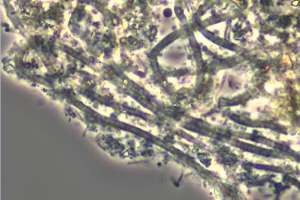
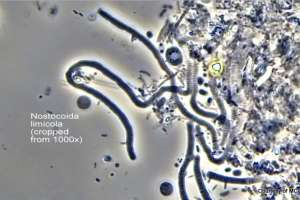
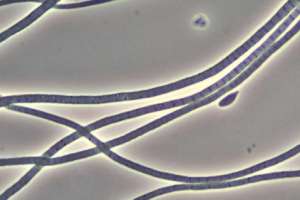
Eickelboom 021N filament types are commonly recognized to cause and contribute to sludge bulking in industrial and municipal wastewater treatment facilities.
The morphological characteristics...
Entries Tagged Bug of the Month
Online Exclusives
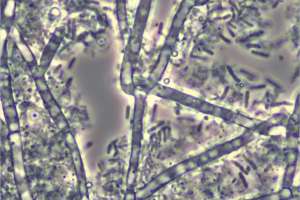
Bug of the Month: What To Do With Fungi in Wastewater Treatment
Fungi at low levels are common or insignificant and often incidental visitors to wastewater treatment processes, although at higher abundance fungi may indicate...
Online Exclusives
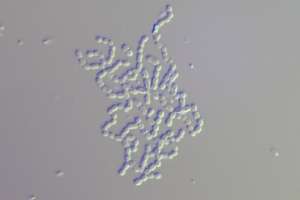
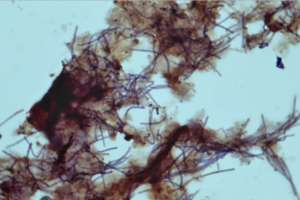
Bug of the Month: Filament Type 1863 and FOG
Eickelboom filament type 1863 is most commonly observed dispersed in solution or occasionally near the edges of the floc at 1000x oil-immersion...
Online Exclusives
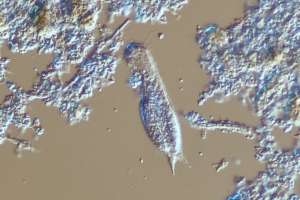
Bug of the Month: Gastrotrich, an Occasional WWTP Visitor
Gastrotrich are invertebrates occasionally found in wastewater treatment systems. Generally their presence indicates good overall health, and they tend to occur in...
Online Exclusives
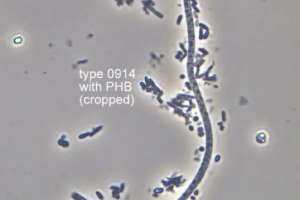
Bug of the Month: Filament Type 0914 and the Importance of Correct Diagnosis
Filamentous bacteria Eickelboom morphotype 0914 is one of the most common filament types observed in all activated sludge treatment processes. Morphological features to...
Online Exclusives
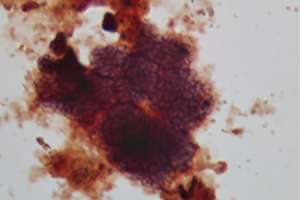
Bug of the Month: Glycogen-Accumulating Organisms and Enhanced Biological Phosphorus Removal
Glycogen-accumulating organisms (GAOs) are common microorganism phenotypes observed in wastewater treatment processes. Through microscopy, traditional GAO phenotypes may be viewed as “grape-like”...
Online Exclusives
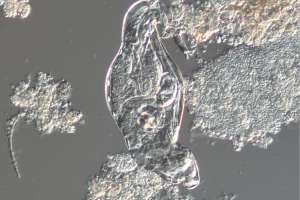
Bug of the Month: Rotifers, the Algal Predators of the WWTP Lagoon
Rotifers are more complex than protozoan (classified as metazoan) and exist in a wide range of shapes and sizes. The taxonomic classification...
Online Exclusives
Bug of the Month: Eickelboom Filament 0675/0041 and Bulking Events
In recent literature Eickelboom filament type 0675 and type 0041 have been combined as a single filamentous bacteria morphoptype. Note that the...
Online Exclusives
Bug of the Month: Filament Type 0092 and Wastewater Treatment
One way Eickelboom filament type 0092 is unique is that for morphotype identification purposes, Neisser positive staining characteristics must apply. Filament type...
Online Exclusives
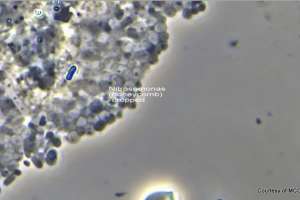
Bug of the Month: Nitrosomonas and Nitrification in WWTPs
Typically considered the predominant genus responsible for the first step of nitrification in wastewater treatment plants, the Nitrosomonas genus is recognized by...
Online Exclusives
Bug of the Month: Tetrasphaera and the Role of DNA Testing
The MiDAS field guide recognizes the genus Tetrasphaera as having 19 individual species that may be found in various wastewater treatment processes. Tetrasphaera...
Online Exclusives
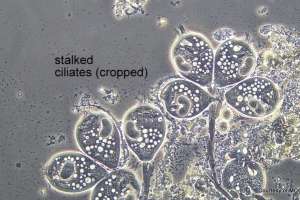
Bug of the Month: The Value of Monitoring Stalked Ciliates
Stalked ciliates are protozoa (higher life-form organisms) that are characterized by their cilia, which are hair-like organelles. Ciliates are eukaryotic and contain...
Online Exclusives
Bug of the Month: Filament Type 1851 and Bulking Events
Over the course of the previous 30 to 40 years, there has been strong correlation to various filamentous bacteria morphotypes and the...
Online Exclusives
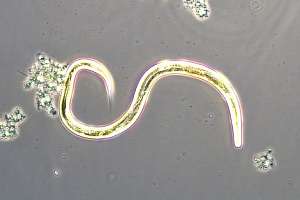
Bug of the Month: Nematodes and Wastewater Treatment Plants
Nematodes are a metazoan commonly found in wastewater treatment processes in small numbers. It is believed that nematodes typically enter wastewater treatment...