Jefferson County, Alabama, is the largest county in the state, serving more than 700,000 residents across nine wastewater treatment facilities. With a combined capacity of 259 mgd and peak flows exceeding 400 mgd, the county’s operations are vast, complex and data-intensive.
As with many utilities, the county relied on pen and paper, Excel spreadsheets, floppy disks, and fax machines to manage its data for compliance and operations. Each facility maintained its own records, while the central Barton Lab compiled results for submission to regulators.
The result was duplicated work, errors, lost files, corrupted disks and endless back-and-forth between operators, labs and IT staff. As Jonathan Gardner, superintendent of the Trussville and Leeds Water Reclamation Facilities, recalls, “It just wasn’t conducive for communicating data quickly or accurately.”
Tangible impacts of new software
Jefferson County turned a corner when it implemented Hach WIMS (Water Information Management Solution), a centralized platform for data entry, reporting and compliance. Instead of juggling multiple Excel files and manually submitting data, the platform enabled seamless data flow from SCADA systems, LabCal (the laboratory information management system), and plant labs into a single secure database. Reports such as Monthly Operating Reports and Discharge Monitoring Reports were automatically generated in state-approved formats.
For Gardner, the impact was significant. “What used to take 20 hours of chasing data now takes 25 minutes. And I know the numbers are correct, verified and defensible.”
For water operators, compliance isn’t just about submitting reports; they need to know that every number is accurate. Before modernizing its data management, Jefferson County’s reports were vulnerable to errors and lacked transparency. It wasn’t uncommon for operators to call labs or colleagues to confirm whether data was accurate, which was time-consuming and sometimes eroded confidence.
Unlike Excel, where numbers can be altered without a trace, the new system tracks every data point and reveals who entered the data, which methods were used in the lab, hold times, custody details and SCADA anomalies versus operator entries.
Gardner notes that he no longer has to “hunt down how that erroneous information got in there.” If SCADA misfires, he can see it instantly. If lab results look unusual, he can trace the method and confirm compliance. For operators accustomed to defending their work under scrutiny, this shift is liberating.
Gardner has another frustration with the old system. “Before WIMS, problems often surfaced at the end of the month, leaving no time to correct them before reports were due. We’d find out something went horribly wrong on the 28th of the month, and there was nothing we could do to fix it.”
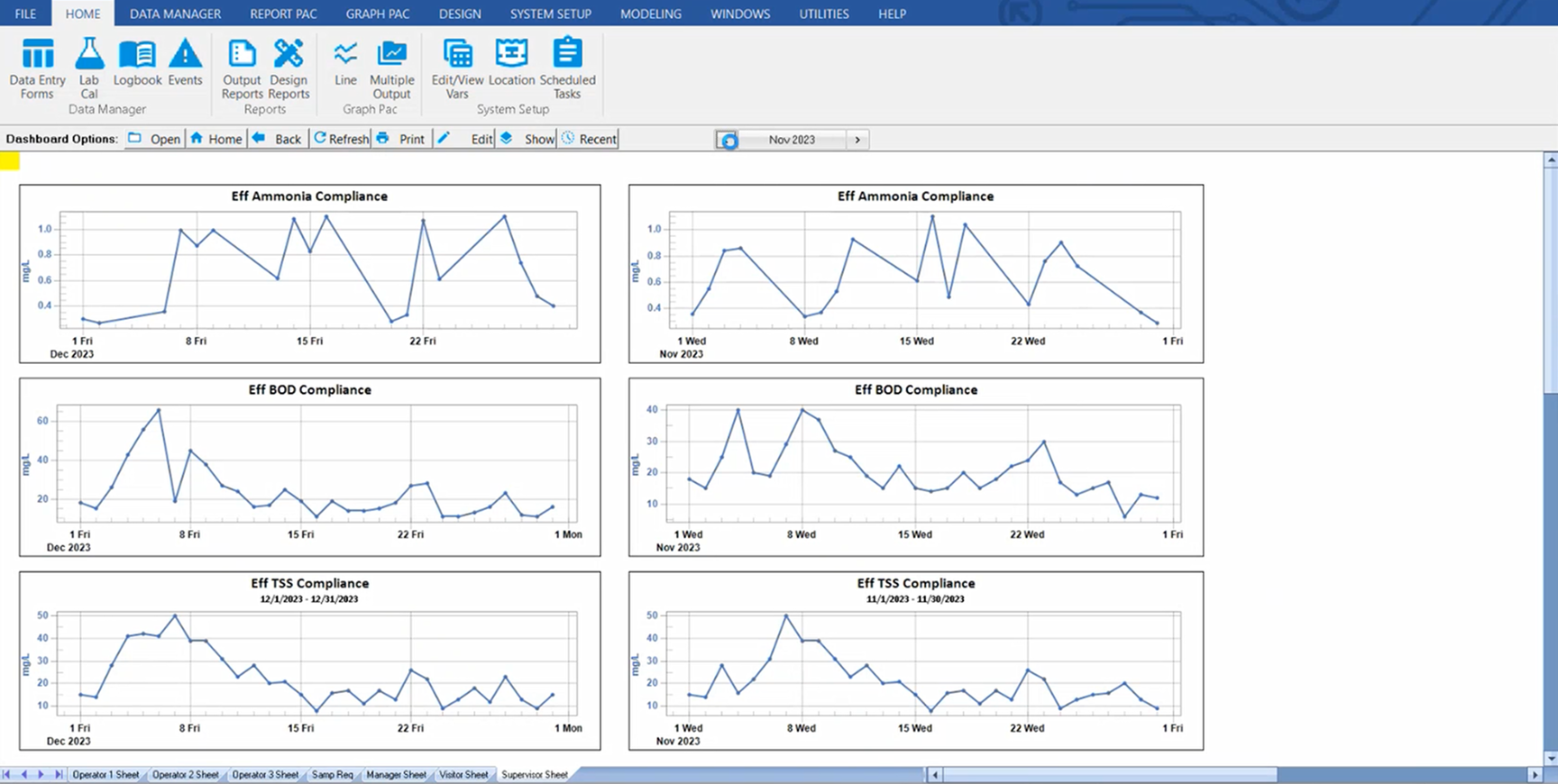
Using the program’s dashboards, operators now have real-time visibility into plant performance. They can spot trends mid-month, adjust chemical feeds, fine-tune aeration, and prevent compliance issues before they occur. This agility has given Jefferson County’s operators the confidence to be more strategic.
Real reduction in operating costs
Chemical optimization
Historically, the County’s chlorine feed rates fluctuated between 300–500 pounds per day, yet residuals remained the same. There were times when operators were essentially overfeeding chlorine without benefit. By analyzing graphs generated in the platform, Gardner identified the inefficiency and standardized dosing to around 150 pounds per day. The result was reduced chemical costs, stabilized disinfection and improved process control.
Alabama has new regulations that are tightening nutrient removal requirements, resulting in stricter phosphorus monitoring. Gardner has customized a dashboard to track phosphorus trends across multi-year datasets, quickly distinguishing anomalies from normal fluctuations. Alerts can be set to notify operators to make timely adjustments and ensure compliance while avoiding unnecessary chemical adjustments.
Energy efficiency
Energy consumption, particularly in aeration, is another major cost driver in wastewater treatment. Over-aeration can be just as problematic as under-aeration. Excess aeration wastes energy and can upset biological processes, but without data, it’s hard to know whether that is happening. Using dashboards in the platform, operators can now see when aeration is excessive and adjust accordingly. All this fine-tuning has reduced energy consumption.
Maintenance and reliability
In the past, unusual data often triggered a wild goose chase. “If there was an issue, we needed to investigate if it was an operator error, a lab mistake, or a SCADA glitch," says Gardner. "It could take days or even weeks to track down the source of an issue.”
The audit trails and dashboards in the platform now allow Gardner to pinpoint the problem area instantly and see whether data coming from SCADA, the lab or an operator is the issue.
“This has reduced downtime and minimizes operator frustration. If it’s from SCADA, it’s most likely an equipment issue, maybe a dead battery, or a malfunctioning pump or valve. The fact that we can see it in the data source takes the guesswork out of where to go and what we will likely need to make a repair or perform maintenance. The fact that we can track data efficiently and visually over time also means we can be more proactive on maintenance to address repeated issues before they become a problem."
By making the move to Hach WIMS, the county is now able to harness its data to improve compliance and operational efficiency, resulting in reduced costs.
For Gardner, the benefits are clear. “It simplified everything but also verified everything. I already know the data is real, giving our whole team confidence in daily decision-making,” concluded Gardner.

About the author: Jake Mickelson is an expert in water data management at Aquatic Informatics. He focuses on regulatory reporting, plant optimization, and helping utilities transform operational data into defensible, decision-ready information that drives measurable performance improvements.