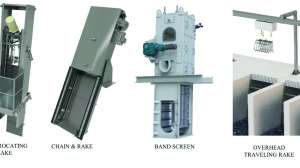
Capital investments for wastewater treatment plants carry a certain amount of risk. In order to manage that risk, it is imperative that operations staff and design engineers familiarize themselves with the products and processes that comprise the investment, as well as consider how the investment will be integrated into existing systems. This is particularly critical for technologies like fine screens and downstream systems, where site-specific variations and sizing challenges can significantly impact performance. These systems are often less forgiving of sizing or operational issues than simpler components.
Understanding pilot testing
For established technologies, decision-makers may obtain relevant data from published studies by experts, consultants who are familiar with the technologies, and even design engineers’ past projects. However, this data may have questionable site-specific applicability. For example, many types of fine screening technologies require precise sizing and design considerations to perform reliably. Moreover, the current speed at which technologies and processes are changing may make it unwise to rely on data that was generated long ago.
Pilot testing offers an opportunity to obtain the most current and relevant data possible. Additionally, pilot testing can be structured in a way that offers a range of benefits, including:
1. Risk mitigation. One of the most valuable reasons for pilot testing is reducing some of the inherent risks of making a capital investment. These might be grouped into human resource investment needs, space required for the technology, utility requirements, overall reliability of the process, environmental compliance issues, warranty, maintenance and replacement costs, and more. By assessing a technology’s performance under actual operational conditions, WWTPs can avoid costly mistakes that might stem from reliance on outdated figures or untested assumptions.
2. Data-driven decision-making. In addition to providing more accurate and site-specific data for current process conditions, pilot testing can also be designed to obtain data under simulated conditions of process upset, future process conditions, or other variables. Such data helps stakeholders make informed decisions about the best technologies to implement, ensuring that their choices are tailored to their specific operation.
3. Understanding water chemistry and/or contaminant composition. A properly planned pilot testing program may disclose vital insights into the quality of the influent or the types and volumes of target constituents present in the influent stream. This includes types of debris, particle sizes, and other constituents that can affect system performance. Having this information can lead to a better understanding of effective screening and treatment options. Partnering with a knowledgeable technology provider is particularly important to get the most valuable information from a pilot program.
4. Operational efficiency. Through pilot testing, plants or consultants can evaluate not only the performance of new equipment but also the operational adjustments required for optimal functionality. This may include assessing flow rates, monitoring for unexpected materials, and determining how well the new technology integrates with existing processes.
How to set up a pilot test
Ideally a pilot test program should emulate normal operating conditions. However, it should provide room for engineers and operators to adjust conditions in order to test specific variables. In addition, it is important to keep in mind what types of data different stakeholders will be expecting from the test. For example, plant managers may focus on operational costs, impact on permits limits, and potential return on investment. Meanwhile, operators will most likely be interested in day-to-day impact (e.g., how hands-on the technology is) and how it fits within existing workflows. Engineers and technical staff will focus on the technical specifications and performance metrics of the technology, such as treatment efficiency, influent characteristics, and maintenance needs.
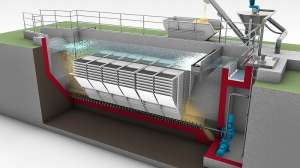
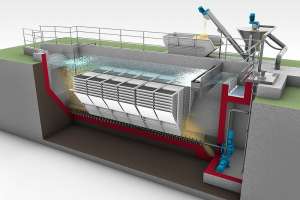
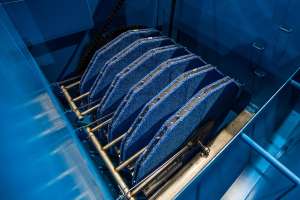
The vendor is an often-overlooked stakeholder in the pilot test. For example, Duperon is conducting pilot tests using its new Internally Fed Rotary Drum Screen to observe the technology in a variety of customer-specific settings, which provides a better understanding of the full range of its capabilities, benefits and limitations. By partnering with the technology vendor on pilot tests, WWTPs and engineers can obtain relevant and applicable information, as well as build a relationship that extends beyond capital investment.
The duration of a pilot test is often a key to its success. For instance, with biological or chemical treatment processes, the test should run long enough to ensure that the impact of seasonal changes is observed and accounted for. However, for physical processes, such as screening, the duration can be shorter — typically around a week or two.
Pilot testing is an indispensable component of capital investments for WWTPs. By providing valuable data and insights, pilot tests enable facilities to make informed decisions, optimize their operations, and mitigate risks associated with new technologies. As the industry continues to evolve, embracing pilot testing will not only enhance the reliability of wastewater treatment systems but also ensure that they meet the growing demands of environmental regulations and community needs.