Per- and poly-fluoroalkyl substances (PFAS) have long been used to make products like stain-resistant carpets and clothing, water-proofing textiles, grease- and water-resistant packing, and stick-free pots and pans. That also means they accumulate in human bodies, and there’s evidence that they can be harmful to our health.
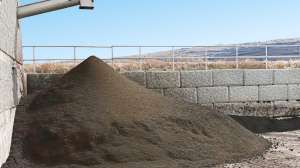
Wastewater treatment plants have to deal with our waste, thus PFAS can be found in biosolids and treated wastewater used in irrigation.
Linda Lee, a Purdue professor of agronomy, recently received a $1.6 million grant from the U.S. Environmental Protection Agency to understand the ways in which these agricultural applications may affect surface and ground waters that feed rural drinking wells in Indiana, Pennsylvania and Virginia. With other partners, including Virginia’s Hampton Roads Sanitation District, Lee’s team will get more than $2.3 million for the research.
“We apply biosolids to our farmland because they’re very valuable. Plants grow better when you apply biosolids, but they also contain PFAS,” Lee says. “Right now, there’s a knowledge gap there. We don’t know if these PFAS are getting into rural water supplies and, if so, at what levels and what might be the primary transport pathways.”
Lee’s study will evaluate the levels of PFAS in land-applied biosolids; the fate, transport and crop uptake of PFAS; the levels of PFAS in local rural water supplies; and the ways in which climate, landscape and hydrology affect PFAS movement and distribution.
“EPA’s funding of this research will not only benefit our rural communities but will also provide valuable insight to our agricultural producers,” says Karen Plaut, the Glenn W. Sample Dean of Agriculture at Purdue University. “This grant allows us to collaborate with research partners across multiple states to increase the potential impact.”
A U.S. Centers for Disease Control and Prevention study shows that PFAS are present in 98% of Americans’ blood. Other research has linked some PFAS to increased levels of cholesterol, low infant birth weights, thyroid and immune system problems and cancer.
This grant comes less than a year after Lee secured a $900,000 EPA grant to find ways to reduce the level of PFAS in drinking water by capturing or remediating them before they leave wastewater treatment plants.