The Chambers Creek Regional Wastewater Treatment Plant is also a manufacturing facility. Besides high-quality effluent, the plant produces SoundGRO pelletized fertilizer, a product that meets U.S. EPA Class A standards.
SoundGRO is the state’s only registered and trademarked fertilizer produced by a wastewater utility. But with that mark of distinction comes the responsibility of meeting both effluent permit requirements and biosolids criteria — along with product-quality standards.
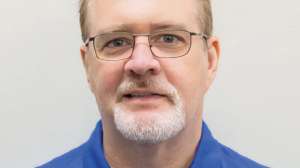
“It’s a challenge from an operations perspective,” says Larry Ekstrom, superintendent of the plant in Pierce County, Wash. “Not only do we have water-quality concerns, but since we became a commercial manufacturer, we have product-quality issues, too.”
Besides meeting EPA criteria, the product must meet commercial fertilizer 5-4-0 nutrient requirements (the percentages of nitrogen, phosphorus and potassium, respectively). If the biosolids are out of compliance with the fertilizer criteria, the plant risks a fine from the state Department of Agriculture. And quality control also must account for customer satisfaction.
“Overall, there’s pellet quality,” Ekstrom says. “It’s how it holds together. Pellets that crumble into dust don’t make a good quality product, and that can affect their market value.” For its excellent performance, the Chambers Creek plant received the 2008 Northwest Biosolids Management Award from the Northwest Biosolids Management Association.
Even though they pay for it like any other customer, operators at the plant use the fertilizer at their own homes. “I use it on my lawn and ornamental plants,” says Ekstrom. “We see the comparison to our neighbors’ lawns. SoundGRO has iron and it really greens up the lawn. I get comments from my neighbors, asking why my lawn is so green. We can honestly promote it and are able to say, ‘These are the results.’”
The pelletizing process
The Chambers Creek plant, a 28.7-mgd (design) activated sludge facility, is owned and operated by the Pierce County Sewer Utility. The move into manufacturing came in 2001, when the plant staff decided that its Class B biosolids program needed an upgrade.
Previously, biosolids were trucked out of the county for land application, incurring transportation and labor costs. The SoundGRO system came on line in 2005, and since then the plant has transformed a 20 percent solids Class B biosolids product into a 90+ percent solids Class A product. It has eliminated the transportation of 13,000 wet tons of biosolids and 52,000 road miles per year. And the plant now utilizes biogas in its operations.
Operators first work at the wastewater treatment plant before moving over to the fertilizer manufacturing facility (FMF). “Our lead operators work here in the FMF,” Ekstrom explains. “Group IIs work all the other areas, excluding the FMF. Ultimately we want to train more people to become operators at the FMF. It’s operated at the highest level, and we’re encouraging others to learn and gain experience. Through promotion, they will eventually work at the FMF.”
Steve Hanenburg, group IV certification, is the chief operator at the wastewater treatment plant, which includes the FMF. Dave Cole, group IV certification, is the supervisor at the FMF, but his responsibilities extend beyond typical wastewater operation tasks.
“Dave’s responsible for production and shipping,” says Ekstrom. “He handles receiving of materials and the logistics of dealing with the finished product including storage and distribution. It’s like a retail establishment.”
As in most facilities, the biosolids process begins in the anaerobic digester, but Chambers Creek added drying and pelletizing processes. Andritz Separation Inc. provided the design and equipment.
The first step in the SoundGRO process is dewatering. Material at 2.5 percent solids from the anaerobic digester is conveyed to one of two Andritz D-5 centrifuges. Each processes at 100 gpm and runs at 3,200 rpm. Only one is operated at a time, the other serving as backup. A liquid polymer is added in the centrifuge to help separate the water from the solids.
Biosolids at 20 to 21 percent solids leave the centrifuge and are mixed with recycled pellets, comprised of pieces that are broken or too small to be used as final product. The biosolids mix and bond with undersized pellets to form larger pellets with a solids content of about 70 percent. A total of 47 percent of the product is recycled and brought back to the front of the fertilizer manufacturing plant.
The pellets are then conveyed to the Andritz DDS40 drum dryer system, comprised of three concentric and interconnected drums. Pellets enter the innermost drum and float along the center shaft, moving from one end of the drum to the other. At the end, they pass into the next larger drum, and ultimately into the outermost drum. As the drum rotates, hot air travels back and forth across the pellets until they are dried to a solids content of 94 percent.
The drum inlet air temperature is 850 to 950 degrees F, and the exit temperature is 210 degrees F. The heat for drying is supplied by a furnace fueled by a mixture of 85 percent digester methane and 15 percent natural gas. The digesters use a submerged cover design that allows more efficient gas collection. Typical digester configurations collect 8 to 10 cubic feet per pound of solids. The digesters at Chambers Creek collect 14 to 15 cubic feet per pound.
“If we changed the burner configuration, we could burn all of the biogas,” explains Ekstrom. But like many treatment plants located in colder climates, biogas is needed to heat the digesters in winter months, so only a portion can be dedicated to the dryer. An added benefit of using the biogas as fuel is that it destroys the methane, a potent greenhouse gas.
Startup of the system revolves around the dryer drum and is relatively quick. Shutdown takes longer. “Within an hour, we can be at full capacity. As we start up, we primarily watch oxygen levels and temperature,” says Ekstrom. “Depending on the temperature, it can take about two hours to shut it down. We have to step down the feed rate and make sure the dryer drum isn’t filled with product. We incrementally stop feeding it.”
Sorting the product
Once the pellets are dried, they must be sorted to maintain a consistent product. The combined hot air and solids travel via an enclosed conveyor to separation units. Initially, in the pre-separation process, a baffle reduces the air velocity, allowing heavier solids to fall out. These are collected and conveyed back to the front of the fertilizer manufacturing plant.
The air and lighter particles enter a polycyclone, which uses the centrifugal force of a cyclone to further separate particulate matter from the air. The polycyclone is a series of spinning tubes. The particulate-laden air enters from the side, and the particles are forced to the side of the cylinder. Then they drop from the walls of the cyclone and are conveyed to the front of the manufacturing plant. Clean air is directed out of the top of the cyclone.
These smaller particles and dust, if not removed, would be a detriment to the quality of the fertilizer. In addition, the dust is ignitable. Low anoxic conditions are maintained in the pre-separator and polycyclone, at 6.5 percent oxygen, to suppress the potential for combustion.
Solids from the separation process are then sent for sorting. A vibratory screen with three tiers separates the pellets by size. As described by Ekstrom, the size designations are finished product, dust, and clinkers (over-sized pellets). The finished product measures 0.5 to 2.5 mm. The oversized particles are 2.5 to 10 mm, and dust is anything smaller than 0.5 mm.
“With the larger pellets, a percentage is crushed in a roller mill and returned,” Ekstrom says. “The largest ones are spit out. We try to use them here on the property, or we dispose of them.” The dust and undersized pellets bypass the roller mill and return to the mixer. The finished product is sent to a pellet cooler. On average, the plant produces 11 to 12 tons of SoundGRO pelletized fertilizer per day.
“The pellet cooler is a finned radiator,” says Ekstrom. “The material passes against stainless steel plates. There’s a water side and a product side that allows heat transfer.”
After cooling, the pellets are moved by a pneumatic conveyor to one of three silos, each with 10,000 cubic feet of storage capacity — enough for 14 weeks.
Trucks load directly from the bottoms of the silos for bulk deliveries. The plant is equipped to bag SoundGRO fertilizer in 50- and 1,200-pound bags. For the smaller bags, the plant uses auxiliary bagging equipment that pulls from a main silo and feeds into a mini silo. Auxiliary equipment is not needed to fill the larger bags.
Bulk and bagged fertilizer is available for purchase from the treatment plant. The 50-pound bags are also sold by 10 distributors at 13 locations. Bulk fertilizer is sold through four distributorships. The 1,200-pound bags (called tay bags or ton bags) go mostly to large-quantity users, such as golf courses. The bags provide bulk quantities for facilities that don’t have storage space to protect it from the weather.
“Most of the fertilizer leaves the plant on a flatbed, bagged, palletized and wrapped,” Ekstrom says. The plant bagged some 2.5 million pounds of fertilizer last year. The treatment plant Web site posts average nutrient and heavy metal concentrations for the fertilizer along with suggestions for home users.
Managing the air
The air used to dry the pellets is both treated and used in the system. Heated air from the polycyclone is recirculated through the system, but is first run through a Venturri wet scrubber and a regenerative thermal oxidizer (RTO). In the wet scrubber, the air is sprayed with reclaimed water. “We’re hitting it with chlorinated water,” says Ekstrom. “It’s reclaimed water and has residual chlorine that oxidizes some of the odor.”
The primary purpose of the wet scrubber is to remove particulate matter, not as pretreatment for the RTO, but strictly as emissions treatment. The RTO consists of three towers, each running a purge, standby and use cycle that allows recycling of any air not completely treated during the oxidation process.
The gas stream enters the RTO and is preheated. It then enters the combustion chamber, where the temperature reaches 1,500 degrees F. Here, volatile organic compounds (VOCs) are destroyed. Typical VOC destruction rates for RTOs are upwards of 99 percent.
The heat generated during the destruction of organics is collected in ceramic media and is used to preheat the incoming gas stream. The treated air is then sent back to the furnace, where it is used to supplement air entering the drum dryer.
From air to effluent to product quality, Chambers Creek has more streams to manage than most wastewater treatment plants. At times it can be complicated, but there’s no regretting the success. As Ekstrom says, “We’re very proud of what we do. We have an exceptional crew here, in all disciplines — operations, maintenance, laboratory, electrical and instrumentation. It really is a team effort and the great expertise they have gives us a high level of efficiency. We have some of the lowest utility rates in the area and it’s because they do a stellar job.”