Tighter permit limits facing wastewater treatment plants raise the importance of accurate laboratory testing. The Texas Engineering Extension Service (TEEX) helps treatment operators meet that need with an Intermediate Wastewater Laboratory course taught at locations around the state in a specially outfitted mobile training unit.
TEEX, part of The Texas A&M University System, offers a wide range of technical training programs in public works as well as fire and rescue services, homeland security, public safety and security, safety and health, and other areas.
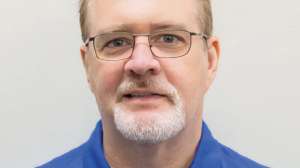
The wastewater lab course provides comprehensive hands-on training in analysis of raw and effluent wastewaters, using methods approved by the U.S. EPA and the Texas Commission on Environmental Quality (TCEQ). Instructor Keith McLeroy says he is not aware of any similar program offered in a mobile unit in the country. McLeroy provided details about the course in an interview with Treatment Plant Operator.
TPO:
Why has your organization placed such a priority on laboratory training for wastewater professionals?
McLeroy:
In Texas, as in many states, effluent quality regulations are becoming very tight. BODs are dropping. We now have E. coli limits appearing in many wastewater treatment plant discharge permits. Ammonia limits are showing up at less than 3 mg/l.
To get to these new levels of efficiency in treatment, it’s got to start in the laboratory. We’ve had great success with operators and lab technicians taking back the knowledge gained from this class and applying it to get their plants to work more efficiently and to get their laboratories to be more efficient also.
TPO:
How does the mobile laboratory fit in with the other training programs that TEEX offers?
McLeroy:
My division is water and environmental training, and we are the primary water and wastewater training provider in Texas. There are about 26,000 licensed water and wastewater operators in the state. We train those individuals either for their new licenses or for renewal licenses, which are issued by the TCEQ. Certifications range from Level D, which is the entry level, on up to Level A.
We teach 35 different water and wastewater courses throughout the state, serving about 12,000 students a year. My primary niche is laboratory training. In our mobile trailer over the past six years, we have taught close to 600 students in Intermediate Wastewater Laboratory, and another 500 in Intermediate Water Laboratory. We have about 43,000 miles on the trailer so far, all of it in Texas.
TPO:
What does this mobile laboratory look like? How is it equipped?
McLeroy:
It’s a 45-foot-long trailer. The total value of the trailer and the truck that pulls it is about $500,000. With all the equipment and laboratory instrumentation onboard, at any given time I’m pulling about $600,000 down the road with me.
The trailer includes a diesel generator that fully runs all the electrical components. We have a working fume hood, a vacuum pump system, and hot and cold running water. Our instrumentation includes ion-selective electrode meters, DO meters, total organic carbon analyzers, pH meters, spectrophotometers, COD analyzers, and a wide variety of smaller bench-top instrumentation kits and field-portable kits.
We also carry all the general apparatus that’s needed: glassware, small portable ovens, analytical balances, and digital microscopes that we can use to project images up on a screen for checking their activated sludge. We also teach bacteriological work and wet chemistry methods, such as titrations and solids weighing. We can do everything a typical treatment plant lab can do, and beyond.
TPO:
Why do you need such a fully equipped mobile unit? Why not just offer instruction in a treatment plant laboratory?
McLeroy:
The majority of wastewater treatment plants have very small laboratories. We couldn’t teach our usual class size, which is 12 people, in most in-house labs. And in any case, doing so would interrupt the daily operations of the plant. With the mobile trailer, we’re able to get the operators into a full-scale laboratory environment and offer them the latest and greatest in technologies and methods.
TPO:
How is the class itself structured?
McLeroy:
It’s a 32-hour class, taught Monday through Friday. It’s all hands-on instruction. We teach the operators everything starting from the entry level to get them introduced to the laboratory tests. Then we run actual samples collected from the treatment plant where we’re visiting.
We run them through the procedures from start to finish using standard, approved methods. We teach a lot of process control methodology. Our primary goal is to teach the students how to come up with results that meet exacting quality assurance and quality control standards. In Texas, each wastewater treatment plant has to file a monthly discharge report (MDR) for its effluent. We teach them how to take their lab numbers and apply them to their MDRs, how to balance out the plant, and how to meet the state QA and QC regulations and rules.
TPO:
Is there an exam at the end of the class?
McLeroy:
There is no exam. The students don’t get a pass or fail. If they attend the full 32 hours, they get that credit toward certification. The way I know they have learned the material is that during their experiments, I ask questions and facilitate discussions. In addition, they have to prove the QA and QC results of their lab numbers.
We get raw influent and effluent samples and run them exactly as they would in their in-house lab, and at the end of the day, they have to prove that their results are accurate. We wrap up each lab session day by meeting back in the classroom and lecturing on what we learned and where our mistakes were. Then we go through and look at all the lab data and practice our calculations. If somebody has made a mistake, that’s where we learn how to backtrack the lab errors and correct for them.
TPO:
What is the typical age or level of expertise of students?
McLeroy:
Students come in anywhere from 18 years old to 80. I’ve had people in class who have never touched a piece of laboratory equipment in their lives, and I’ve also had Ph.D.s. If I get 12 people, I guarantee all 12 will be of different ages, and they’ll all be at different levels of expertise.
Also, we have gone to larger cities like Houston and Dallas, where they have full-scale labs at their plants. They like to send their full-time lab technicians to the class to refresh themselves, get updated on new technologies, and ensure that they’re still meeting their QA and QC requirements.
In each case, I’ll try to get to know what everybody’s expertise is, and then divide them into partner teams, so that beginners are teamed with people who have been in the business for quite some time. That way, they all learn from each other.
TPO:
What are some of the key points of emphasis in the class?
McLeroy:
I teach a lot of troubleshooting — that’s very important. Let’s say you’re running an ammonia analysis. You have to calibrate your analyzer using standards and setting up benchmark curves. If the meter is not calibrating properly, one of the more important things you have to learn in a lab is how to troubleshoot it.
Also, after we get all the results, we teach them the mathematics. I teach the class how to take their lab numbers and put them into an application mode at their treatment plant. That is a very important aspect of meeting their effluent discharge permit limits and getting their plant to run as efficiently as possible.
TPO:
How do you ensure that the training keeps up with changes operators and lab technicians will face in the real world?
McLeroy:
We stay very well ahead of laboratory requirements and methodologies. That way, if the state approves a new method, or unapproves an old one, we’re four or five months ahead of the game. We have very good relationships with the TCEQ in regard to new methods and new regulations. They give us quite a bit of a heads-up, so that we can get that kind of information out to the operators.
We also stay ahead of the technology. Any time new instrumentation comes out, we’re ready to purchase it or have it made available for us to get out on the road and teach it. Each year, we spend quite a bit of money on instrumentation. We have great relationships with laboratory equipment vendors and high-end instrumentation companies. They often loan us the latest instruments and technologies so that I can introduce them to our students.
TPO:
How do you see the laboratory course affecting the quality of performance in wastewater treatment?
McLeroy:
I think it has a huge impact. We’ve had quite a bit of success over the past six years, where students have taken their knowledge back to their treatment plants and back to their laboratories. Number one, they become more accurate and precise with their data. They may also learn that some methodology they had been using might not be correct, or that they had not been using the most exacting methods.
No matter the size of your lab, a method is a method; technique is technique. Whatever level you’re at, it all boils down to your methodology, your techniques and your laboratory skills. That’s what our class is all about: Getting operators who aren’t full-time scientists to think scientifically when running lab tests, so that they can take the results and make adjustments to get their plants working more efficiently.
TPO:
How much does your program cost? How is it supported financially?
McLeroy:
The cost of the Intermediate Wastewater Laboratory class is $505 per student. The mobile lab is self-supporting on that basis. That is actually very affordable when you look at the hands-on work we do and how convenient we make it for the cities and utilities to send their personnel.
TPO:
What kind of feedback do you receive from students and from the treatment agencies?
McLeroy:
We give the students an evaluation form at the end of the class, and about 99.9 percent of the time, the feedback is incredibly positive. The way I know the utility managers and plant managers appreciate the class is when they ask me to come back. I’ve been back to several cities four or five times already.
TPO:
How does the regulatory community respond to the program?
McLeroy:
The TCEQ asks me to come and teach them. That’s the best feedback there is. The information I give to the treatment operators and plant lab technicians is the same information the TCEQ plant inspectors need. In addition, the TCEQ has at times asked us to set up classes at certain utilities that might be having trouble.
TPO:
Could other states replicate the mobile laboratory concept?
McLeroy:
In today’s environment, it’s all about funding. To produce a mobile lab, if you have the money and the design team, you can do it.