While clean-water agencies worry about finding the next generation of treatment plant leaders, a group in Rhode Island has acted.
The New England Interstate Water Pollution Control Commission (NEIWPCC), the Narragansett Water Pollution Control Association (NWPCA), and the state Department of Environmental Management (DEM) have collaborated to organize a Wastewater Operator Management Boot Camp, now completing its second year.
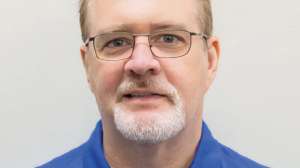
The DEM operates the boot camp, which is designed to help promising treatment professionals build the diverse skills they need to thrive as plant superintendents or in other leadership roles. Coordinating the program is Bill Patenaude, principal engineer in the DEM Office of Water Resources. Patenaude explained the program, its aims and its successes to date in an interview with Treatment Plant Operator.
TPO:
What was the rationale for the boot camp?
Patenaude:
For some time, I have been aware of the need for succession planning. When all the regional trainers and certification officials from New England would meet every year, the topic would come up.
The urgency hit me the hardest about four years ago when a community in Rhode Island was searching for a plant superintendent and asked me to be on the interview panel. I was impressed by one candidate, someone I knew in the profession who was very active in the operators’ association. He came in looking polished, and he did a good job in the interview, but he was lacking in certain areas.
Technically speaking, he was close to being qualified, but when it came to labor relations and managerial skills and how he would handle certain situations, he didn’t have the vocabulary or the confidence to carry the conversation through.
I found myself wishing we could provide a broad overview to prepare people like him who wanted to move up the chain of command. I wanted to build a training program that would give promising people more education and experience and help them build confidence, so that when they had to step up to the plate, they would know how to swing.
TPO:
How did you go about organizing the boot camp?
Patenaude:
We used to receive training grant funds from the federal government. We would transfer those funds to the NEIWPCC and work with them to develop our training plans, and they would administer the training for us. For a long time, we had classroom training, and some site-specific or problem-specific training programs.
Rhode Island doesn’t have a requirement of retraining for certification renewal. As a result, we saw our training numbers go down. When the federal government began pulling back and eventually cut off the operator training money, we had to come up with another approach. We reached out to the NEIWPCC and worked with them to develop the boot camp.
With the small amount of money we had left over from the federal training grant program, they were able to get us a trainer for the first two sessions of the boot camp for both the first and second years. That trainer is Jon Jewett, who is a district facilities manager with the State of Vermont Buildings and General Services agency, and also a wastewater operator with experience in operations management training.
TPO:
How is the boot camp structured?
Patenaude:
We meet the last Thursday of every month for a full day or a half day, for 12 months. In the first two days, we cover technical issues — the areas where the participants feel the most comfortable. Over those first two sessions, we slowly weave in the management issues, such leadership, and labor relations. Those issues are sometimes more intimidating for operators.
With the exception of Jon Jewett, all the trainers are volunteers. They’re from Rhode Island, mostly within the wastewater field. The Narragansett Bay Commission, which it the largest public wastewater utility in the state, has provided numerous staff members to give volunteer training on topics from microscopic observation to basic engineering. They have been a big help.
TPO:
How are the boot camp participants selected?
Patenaude:
I wanted to have a small group of people who were dedicated. But I didn’t think it was in the state’s interests to have my office select people for the program, because then there would be a sense that we were picking the best. That’s not really a state agency’s job.
Participants are nominated and selected by their peers, or they can self-nominate. They must commit to the program’s time requirement of one day per month. Nominations require a letter of recommendation that includes job-history information, with special emphasis on why the person has the potential to manage.
In the summer of 2007, I sent letters out to all the plants’ superintendents in the state and issued notices through the associations. The Narragansett WPCA, which is the operators’ association in Rhode Island, was on board from the beginning. They took a very important role in receiving the nominations and vetting them. By August, we had our original 13 participants signed up.
We get people who are all over the spectrum in terms of age and experience. We have a number of folks who are coming to wastewater as a second career and need to be groomed in the profession. So we get folks in their 40s and 50s, and folks in their 20s, and anywhere in between.
TPO:
Where are the training sessions held?
Patenaude:
We have a large conference room here at the DEM in Providence, and we use that as a home base for the first sessions. Then we meet at different treatment facilities so they get out in the real world. For our November session this year, we focused on collection systems, and we went to the Warwick treatment facility. They had all their equipment on display. They had a camera truck set up for a demonstration. The city’s GIS person came out and did a presentation.
Another thing I emphasize is getting these folks to meet and work with as many regulators as possible, whether it’s enforcement people in my section or staff members from the EPA. It builds a sense of comfort to talk to those people and get to know them on a first-name basis. That’s very important.
TPO:
Do you find that the participants attend consistently?
Patenaude:
Absolutely. Unless something comes up at the plant or something very important happens in family life, for the most part everybody is there, ready, willing and able. Some people are there half an hour early — they are that eager to get going.
TPO:
In which areas do the participants need the most help?
Patenaude:
Certainly labor relations. We spend a lot of time on that, and they always want more — from how to conduct a disciplinary conversation, to what is the role of the union, to where do they go for help.
In our state, collection system and CMOM issues are important. Our department put out a new regulation last spring that requires any community that has a collection system to put together an operations and maintenance plan. We’re involved with the EPA on a joint project in SSO reduction.
We give them a full day of basic engineering so that they can understand the process of how a community goes from the facility planning stage all the way to blueprints. We try to take some of the mystique out of that, because consulting engineers can be intimidating to people who don’t have an engineering background.
Another item we cover is media relations. We have one TV reporter and one print reporter who give an hour of their time to talk with the group about the needs of their media and how to work with them. Then we do role-playing. It’s an experiential exercise that helps them gain confidence by working on their skills in a safe environment.
TPO:
What do you expect in terms of outcomes for people who take part?
Patenaude:
People have asked me: Do you really think 12 courses are all it takes for someone to become qualified as a plant superintendent? My answer is no. The participants may benefit from the boot camp in a variety of management positions, such as shift supervisor. We’re not necessarily preparing them to be superintendents.
Do I expect them to become subject matter experts in every area we cover? No. But they gain experience. They gain knowledge. And they meet people in the industry locally to reach out — people they now know on a first-name basis.
I think just the interaction with different people who are professionals in their own right gives the participants something of great value. What we’re really trying to do is not so much transfer knowledge — although that’s important — but to provide these folks with a sense of confidence in their own abilities.
Of course, one thing I emphasize right from the beginning is that boot camp is in no way a promise that they’re going to get a new job or a promotion.
TPO:
What kinds of reactions have you seen so far from people who have been through the boot camp experience?
Patenaude:
I think they would tell you the experience is making it easier for them and has helped them to a large degree. One guy, when we were handing out certificates of completion at the state association trade show and clambake in September, said, “This is the biggest thing I’ve done since I graduated high school.”
On the other side of the coin, I had a plant superintendent tell me he was delighted to have had his chief operator at boot camp. The guy was young, and the program gave him a new appreciation for what it takes to be a superintendent. Before, he would always be saying, “Why don’t we do it this way? Why do we have to do it that way?” But he learned why as time went on, and he backed off on his criticism.
TPO:
Do you see opportunities for other state agencies or clean-water organizations to replicate this program?
Patenaude:
Definitely. I’ve had meetings with people from other states, and when this topic comes up, there’s always, “Yeah, but ...” or “We can’t do it because ...”
If that was the attitude we had here, we never would have done it. Regions can do this. Groups of communities can bundle together and do something similar.
The critical point is that government can do this. It doesn’t have to be expensive. One thing that makes our boot camp a success is that it’s relatively cheap. In the future, all our trainers will be volunteers. They do it because they appreciate the importance and are excited about helping people who want to grow.
I hear a lot of people say they can’t do it like this. Well then, don’t do it like this. Do something else, but do something.