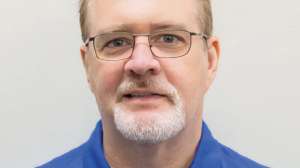
The least experienced operator at the Wright Smith Jr. Wastewater Treatment Plant in Mobile, Ala., has been on the job for 17 years.
Plant manager Mike Knapp will tell you that’s a key reason the plant routinely outperforms its permit requirements and receives performance awards. It’s also a reason residents of Mobile and its surroundings can rest easy with confidence that water resources are being well-protected.
The Wright Smith plant, which serves the north side of Mobile as part of Mobile Area Water & Sewer System (MAWSS), earned 2007 and 2008 Best Operated Plant Awards from the Alabama Water & Pollution Control Association and has won several Plant Excellence awards from the Alabama Water Environment Association.
It also earned a 2007 Platinum Peak Performance Award from the National Association of Clean Water Agencies for five consecutive years of 100 percent NPDES permit compliance. The plant often achieves an annual average of 95 percent reductions in BOD and TSS, far better than its NPDES permit requires.
It’s all thanks to experienced personnel, helped by technology that includes a supervisory control and data acquisition (SCADA) system that enables real-time monitoring and automated control of critical plant functions.
“The engineers have given us a well-designed and very forgiving plant,” says Knapp, who has been with MAWSS for 31 years, the last eight as Wright Smith plant manager. “We have a great bunch of operators — I can’t say enough about them. And we have a board of directors and management that see fit to give us the tools we need to do our jobs well.”
Working wet
The two MAWSS treatment plants have to be flexible because of wet weather on the Gulf Coast. Mobile averages about 67 inches of rainfall per year. “One year we may lead the nation in rainfall, and the next year it might be Seattle,” says Knapp. “We’re always in the top five cities in the States for rainfall.”
Of course, heavy rains mean increased inflow and infiltration, which despite significant efforts at mitigation drives up flows, from an average of 10.5 mgd to a peak of 30 mgd. The plant’s high-rate trickling filter technology handles the flow variations. “We can take 8 mgd today, 30 mgd tomorrow, and back to 8 mgd the next day and still meet our permit conditions,” Knapp says.
The plant was built with primary treatment in 1948. An upgrade in 1964 added two trickling filters and a digester, and a 1986 upgrade added two nitrification trickling filters to meet new ammonia limits in the permit, new final clarifiers, and another digester. The SCADA system was added in 2003.
Knapp runs the plant with eight operators, all certified by the Alabama Department of Environmental Management (ADEM). The whole team buys into Knapp’s philosophy that the job means more than meeting the permit.
“For years and years, wastewater treatment was out of sight and out of mind,” Knapp says. “Now, it’s in the front light. Our operators are environmentalists at heart. I don’t see how you can work as many years as we have in this organization without becoming an environmentalist.
“Our permit specifies 85 percent removal of BOD and TSS,” he notes. “We pride ourselves on getting to 95 percent or more in a given month. We want to achieve better than what ADEM or EPA says because this is our environment. This is the community we live in.”
Letting people work
Knapp praises MAWSS for a quality management group that provides competitive salary and benefits and empowers good people to do their jobs. He notes that managers take notice when the plant does well, recognizing the team at board meetings and providing special lunches for achievements such as plant performance awards.
In turn, Knapp tries to provide quality management of his own. “I believe in letting a man do his job,” he says. “When you have a crew as mature as what we have here, there’s not a whole lot of management that has to be done. They know what their job is. They go out and do it.
“I believe first of all that you need to let people know what you expect of them,” Knapp says. “Then give them the tools to do it, and give them the freedom to do it their way. I don’t like to manage with a strong arm. I like to give the guys the flexibility to see what their way is, because a lot of times their way will be better than my way. If they have an idea on how to achieve something that helps us save time and money, I’m all for it.”
His approach is often rewarded. As one example, operator Billy Vaughn approached Knapp with an idea he thought could reduce chlorine feed. Vaughn had been observing effluent fecal coliform trends and had determined that the feed rate could be reduced in cooler weather while keeping the coliform count below the required level. “I let him take the ball and run with it, and he was able to cut our chemical usage by 10 to 15 percent,” Knapp says.
A good work environment has contributed to staff longevity, observes Barbara Shaw, MAWSS public affairs manager. Employees are eligible for retirement after 25 years of service, yet six members of the staff have been on the job at least that long. “It’s a credit to Mike that so many have stayed on,” Shaw says.
Embracing technology
Long experience and established habits have not kept the Wright Smith team from embracing technology, notably the SCADA system. “The operators adapted very well,” says Knapp. “I did see some reluctance at the beginning, but the longer they’ve used it, the more confidence they’ve built in it.
“It’s important to spend a percentage of your time out in the field. Nothing takes the place of that,” Knapp says. “But you don’t have to be out in the field to do everything. The SCADA system saves us a lot of footsteps and time and enables us to look at real-time data, instead of data that may be two, three, four or five days old.”
SCADA lets the team monitor the primary pump stations and increase and decrease the pumping rate as needed. It also enables them to maintain flow to the trickling filters for the optimum hydraulic and biological loading.
“Previously, we would make physical adjusts, then go back in three hours and find that conditions had changed considerably,” Knapp says. “With SCADA, we can observe flow in real time and make adjustments just by entering a setpoint. We’re able to monitor DO and turn another aerator on, or turn an aerator off as needed, while sitting in the control center.”
The staff’s confidence in the technology became clear one cold, rainy Saturday night, when SCADA information told operator Eddie Stewart that plant flow was below expectations. Stewart deduced that a major interceptor must be blocked, and so phoned the supervisor and manager on call, getting them out of bed.
A crew sent into the field found a surcharged manhole. A bypass pumping setup solved the immediate problem; a camera inspection ultimately showed that a pipe lining had separated from the concrete pipe and was catching debris that blocked the flow.
“Actions like Eddie’s are just an everyday occurrence with the type of crew I have,” Knapp says. “You get to where you almost expect that kind of excellent operation.
“Between the SCADA system and Eddie being on his toes, we were able to save MAWSS from a costly overflow. Without SCADA, he wouldn’t have been able see the instantaneous flow data.”
Meeting the challenge
As smoothly as things run at the Wright Smith plant, challenges remain. Budgeting has become difficult with rising prices for commodities, especially fuel and electricity. Both are up more than 100 percent for 2008 versus the previous year.
“We’ve got to pay the electric bill and the gas bill before we can buy new equipment, hire new employees, and train people,” Knapp says. “Money is definitely a challenge. So is keeping these operators who are eligible to retire — making it so they want to stay on. Over the next few years, it will be a challenge to bring some new people into the organization and get them trained and up to speed.”
Perhaps the biggest challenge is preparing for a new NPDES permit. The current permit expires in August 2009, and Knapp expects the new one to include limits on phosphorus discharges.
“It’s one thing to operate under the permit conditions you have,” says Knapp. “When you look ahead to renewing your permit, you know your numbers are going to go down, and you need to start looking today at getting them down.”
That comes naturally for a plant crew that takes its clean-water responsibilities to heart. “We want our grandkids and great-grandkids to be able to swim in these creeks around here,” Knapp says. “We want to be able to eat shellfish out of Mobile Bay. I’d like to see the day come where we have uses for all the effluent from this plant.”