Treating wastewater takes energy — lots of it. Treating wastewater also creates energy, if you consider methane, a byproduct of biosolids digestion.
For both reasons, energy is getting big attention in the operator community. Municipal plants across America and presumably the world are working hard to reduce their energy consumption and make themselves more energy-independent.
The New England Water Environment Association is a leading promoter of energy management in treatment plants. The association has an Energy Committee, whose main charge is outreach to help member facilities use energy wisely.
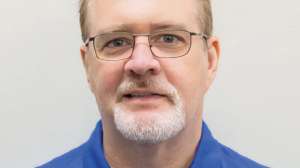
The committee, formed in 2007, is chaired by Michael D. Curtis, Ph.D., P.E., a senior vice president with the Fuss & O’Neill consulting engineering firm (with offices in various New England locations). Curtis shared his perspectives on treatment plants and energy in an interview with Treatment Plant Operator magazine.
TPO: Why did NEWEA create a committee to focus on energy?
Curtis: Outside of labor, energy is perhaps the single largest cost that wastewater treatment plants face in the Northeast. It is likely the same in the rest of the nation. It’s also something that managers and operators can do something about. That’s why we created the committee. I know of a few other state associations that are considering such committees.
TPO: What is the primary mission of the Energy Committee?
Curtis: The primary focus is outreach. We have supply-side and demand- side energy-management opportunities. Our role is to help detail these to people, to show them that it’s not insurmountable, that you don’t have to spend millions of dollars to improve energy performance.
You don’t necessarily have to upgrade the plant. There are a lot of operational modifications that can make big differences. So we want to conduct outreach and education through seminars, EPA literature, and an outreach program that we can take from state to state, inviting operators, superintendents and city officials in to learn about these opportunities.
TPO: Aside from the obvious digester methane, what kinds of supply-side opportunities exist for treatment plants?
Curtis: The most common ones are photovoltaic cells, solar hot water and the occasional site on the coast with wind power. Everyone understands that those are expensive, but they can be viable. They’re heavily incentivized. Plants are increasingly evaluating these and putting them in place. One great thing about municipalities is they don’t need the same fast return on investment that industry does. They can envision and accept longer-term payback.
TPO: How great is the potential for digester methane as an energy source?
Curtis: Speaking for New England specifically, there has been a trend to abandon sludge digestion. In my opinion, that is going to be reversed. For a time it was seen as expedient to eliminate digestion in favor of less costly alternatives. In Connecticut, for example, there are five commercial sludge incinerators. That has been the fate of the vast majority of sludge — it’s burned.
Of late, with concern about energy conservation and climate change, the value of that carbon resource is becoming apparent, and new digestion opportunities are arising. Several larger plants have built digesters in the last few years in New England, and more are on the drawing board. Of course, getting back into digestion has financial implications. It’s a multimillion-dollar decision for a midsize facility.
Also on the supply side, there is an occasional plant adding internal hydropower generation — typically pretty small, but it has some advantages. There’s also a significant effort in bringing high-strength carbon waste, like FOG, to digesters for more methane production. These are the supply-side opportunities we want to educate people on.
TPO: Where are the opportunities on the demand side?
Curtis: Here, the opportunities are limited only by the operators’ imagination. The list is as long as your arm. Some measures are very simple, and others much more involved.
TPO: What are some examples of simple, low-cost measures?
Curtis: A number of improvements can be made without a plant upgrade and without capital expenditure. For example, if you can somehow enhance carbon removal in primary settling, you have to treat that much less with aeration, which typically is the highest energy cost in a plant. Get more to settle with whatever enhancement technique you can, whether by polymer addition or some kind of coagulation.
Another measure you can take is blower optimization, which can save a tremendous amount of money. Some plants simply have one blower setting — on. That covers the highest loads during the day, but if the flow drops to one-third of that by 3 a.m., and they’re still running the same level of aeration, that’s not efficient.
Could you ramp that blower down at times of lower flow and save a lot of power? Could you install a more efficient blower? There’s a new generation of blowers coming out that are aerospace in nature. They run on air bearings — they have one moving part.
TPO: What about more complex mechanical or electrical changes?
Curtis: With capital upgrades, there are any number of retrofits. You can go through the plant, do an energy audit, identify the big power users, then look at the various retrofits and upgrades you could perform and what they will return.
You can retrofit variable-frequency drives, add high-efficiency motors, high-efficiency lighting or day lighting. You can upgrade the HVAC systems. Inside almost any building, if it’s got any age, there is likely a potential payback in buying new, more efficient, better equipment.
Our committee is providing information from local utilities about their incentives for high-efficiency equipment. The Northeast utilities have some of the strongest upgrade incentive programs in the nation. If you need a new motor, for example, you can buy a standard efficiency motor, or you can buy the high-efficiency model, and the utility will participate and buy down the additional cost. That makes the high-efficiency model affordable — a real no-brainer.
TPO: What about more innovative energy-saving measures?
Curtis: I know of a small number of plants that are operating heating and cooling off their effluent streams. In summer, for example, effluent is at about 70 degrees F. You can put in a simple heat exchanger and use that for cooling. Efficiency goes down in winter, because you’re trying to pull heat out of 50- or 55-degree water; but it’s still cost-effective to do. It’s similar to a geothermal application, except the source heat sink is effluent.
TPO: How successful has your outreach been so far?
Curtis: We’re making good progress. We have very strong participation by our EPA region. We’re also working various other fronts. NEWEA has an annual conference that is extremely well attended. It includes sustainability sessions and mechanical case study sessions. We also have an annual energy specialty conference, where the audience attends a day-long session that is much more intensive.
We’re also developing our state-to-state program for delivery to the state associations. Not everyone can afford to go to our annual conference in Boston for three days and stay in an expensive hotel. But most people can make a day trip to their state organization.
TPO: What role does interest in sustainability play in decisions about energy projects at treatment plants?
Curtis: Right now, economics is driving most of the changes, but increasingly, municipal sustainability initiatives are taking hold. People are saying, “We do this, number one, because it makes economic sense, and number two, because it’s the right thing looking forward.” Sustainability has an increasingly important role in decisions affecting energy management.