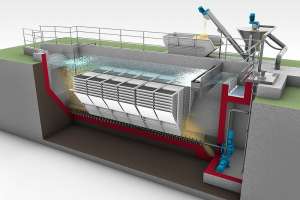
As global pressures around limiting environmental impacts of phosphorus and availability of phosphate fertilizers to support food production continue to grow, requirements around phosphorus recovery from wastewater are emerging. Municipal wastewater facilities have a unique opportunity through the recovery of phosphorus to limit point-source and nonpoint-source nutrient discharge that impact water bodies with the production of a market viable struvite fertilizer product.
Why is phosphorus an important element to remove and recover from wastewater?
Phosphorus has long been identified as an element that is essential to life through the food we consume. With the world population continuing to grow, phosphorus fertilizer production has soared to support the food production required. This has highlighted the need to recover phosphorus to reduce dependence on imports from limited regions with highly concentrated rock phosphorus reserves. In countries like Germany and Switzerland they are taking action to require phosphorus recovery and expect this trend to continue to spread.
Phosphorus is also a known contributor to eutrophication that is impacting our local water bodies, which has driven the recent increase in mandates around removal from wastewater facilities. According to the EPA, nutrient impairment prevails in 58% of the nation’s rivers and streams, 45% of our lakes, about two-thirds of our coastal areas, and more than one-third of our estuaries. To address this, the EPA is working to increase the adoption and tightening of discharge phosphorus limits. In the United States approximately 150 plants add new permits every year for reduced phosphorus discharge levels. Phosphorus recovery through struvite precipitation provides the opportunity to address the major global challenges we face around phosphorus.

How does Ostara's Nutrient Recovery solution address global phosphorus and operational challenges at wastewater treatment facilities?
Evoqua Water Technologies (part of Xylem) and Ostara Nutrient Recovery Solutions have partnered with a licensing agreement where Evoqua will engineer and supply the Ostara Pearl nutrient recovery system while Ostara continues to support the process design and handle the struvite offtake. This water treatment solution revolves around the treatment of the high nutrient loaded post digestion centrate line with recovery of phosphorus and nitrogen in the form of struvite. This reduces point source phosphorus eutrophication while also supporting food production with the controlled production of struvite which can then be resold as Crystal Green fertilizer.
What are the major components included in the Ostara nutrient recovery system?
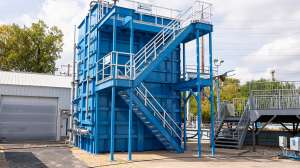
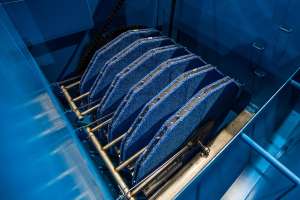
The system consists of two major components, the core piece being the Ostara Pearl system which is designed to precipitate struvite from the centrate of filtrate streams. Also included in the equipment package is the product handling equipment. This includes dewatering, drying and bagging equipment to prepare the Crystal Green fertilizer to be commercially ready for shipment. The other piece of the solution is the WASSTRIP system, which is designed to improve internal phosphorus removal providing critical benefits to plant operations, maximizing nutrient removal and recovery in a controlled environment.
What would be the benefits that the Pearl system reactor could provide to a wastewater treatment plant?
Through the controlled precipitation of struvite within the reactor, the Pearl system reduces the phosphorus load in the recycled centrate or filtrate line by up to 85%. This additional outlet for phosphorus reduces nuisance struvite issues, lightens phosphorus load that is recycled back to the front of the plant that causes challenges for BNR treatment, and assists in achieving effluent phosphorus limits all while producing an eco-friendly, commercially viable fertilizer product, Crystal Green fertilizer.
What additional benefits does the WASSTRIP system provide?
The WASSTRIP system is an anaerobic stage in the side stream that is designed to allow for phosphorus release from PAOs in WAS. This provides benefits to facilities using anaerobic digestion by releasing phosphorus and magnesium upstream in the process and bypassing the anaerobic digester system sending the stream directly to the Pearl system. Magnesium is typically the limiting component for struvite production in municipal applications, with each ton of magnesium diverted around the digester, resulting in 10 tons less unintentional struvite production. Bypassing of magnesium helps protect digesters, dewatering equipment, and pipes from struvite scale formation, while bypassing phosphate improves dewaterability, and reduces biosolids volume.
How does the WASSTRIP system help improve dewaterability?
Studies point to the release of phosphorus from the WAS prior to dewatering providing a more favorable monovalent to divalent cation ratio, providing up to 4% improvement in cake solids and 15% reduction in polymer use.
Who handles the distribution of the struvite fertilizer and selling it to end users?
It can be a difficult task for a wastewater plant to identify a market and sell a product into that market as it strays off from the main vital mission of treating wastewater and meeting permit limits, especially for small to midsize plants. Fortunately, Ostara has a committed group that has worked on research, marketing the product based on this research, and selling it to the agricultural industry. This allows any plant that does implement an Ostara Pearl system to have a guaranteed buyer that will purchase the product from the end user. Ostara will pick up the product from your specific site and will pay an agreed amount based on the product produced.
What features of the Crystal Green fertilizer that is produced from the Ostara solution makes it environmentally friendly?
Crystal Green fertilizer is only 4% water soluble versus approximately 90% water solubility for typical phosphorus fertilizers. This greatly reduces the runoff and leaching of phosphorus into our waterways and groundwater. The nutrients are accessible from acid release of the crop roots allowing the fertilizer to remain in the root zone longer, requiring less phosphorus application for greater crop yields.
Are there concerns in the quality of the Crystal Green fertilizer produced with variable wastewater conditions?
Due to the fertilizer being produced from controlled precipitation of struvite through targeted reaction conditions, the product is >99.6% pure struvite in its final form making it a viable resource recovery product. Crystal Green fertilizer is a registered fertilizer in the U.S. and Canada, an AAPFCO approved source of slow-release nutrients, and a USDA CSP approved input.
Learn more at www.evoqua.com/phosphorus.