Your treatment plant is performing well and meeting its permit. Now, prove it. That’s the basic function of laboratory testing. Many larger treatment plants do their lab testing in-house. Smaller plants often delegate their testing to a certified third-party laboratory. And in fact, even some larger plants send certain sophisticated analyses outside.
But beware: Farming out lab work doesn’t mean shedding all responsibility. There’s an art and a science to collecting samples properly. And then there’s the matter of doing the paperwork and documentation correctly, and packing the samples properly before shipping them off.
Northern Lake Service, a fully certified environmental lab with 34 employees based in Crandon, Wis., helps treatment plant operators handle samples the right way. Ronald K. Krueger started the business in 1974 to provide analytical and consulting support for Wisconsin’s Inland Lake Renewal Program.
Since then, the company has evolved and grown into one of the larger environmental laboratories in the Midwest, providing complete water and wastewater analysis service to some 100 municipal and industrial treatment plants in the state. Services include analysis of groundwater, wastewater, drinking water, soil, sludge, as well as field collection for groundwater and wastewater samples.
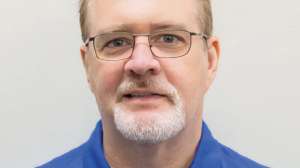
Ronald T. (R.T.) Krueger, the founder’s son, is now president and CEO. He started his career as a “dad’s helper” in early grade school and later earned a bachelor’s degree in biology and earth sciences from the University of Wisconsin-Stevens Point.
Since then, he has worked for Northern Lake Service as a field technician, inorganic analyst, groundwater monitoring crew chief, limnologist and, in 1996, lab manager. He moved up to president in 2000.
Krueger, a former president of the Wisconsin Environmental Laboratory Association, sometimes makes presentations about the importance of proper sampling and sample handling. He shared his advice to wastewater professionals in an interview with Treatment Plant Operator.
TPO:
Why would a treatment plant decide to have lab work done outside?
Krueger:
Often it’s because there are things they need to do for which they don’t have the capability. Beyond that, while I can understand the convenience of having your own internal lab, I think it’s also good for a treatment plant to have some third-party information, too, to test their own results and their own technique.
As uncomfortable as it sounds, you really have to look at every piece of compliance data as potentially a piece of evidence. If something goes wrong downstream, it’s up to you to prove that you were operating within the state requirements. It can give a plant a level of security knowing they have a third party behind them saying, “Yes, they did everything right, and we have the numbers to prove it.”
TPO:
What are the keys to sampling properly?
Krueger:
You need to realize that you’re trying to take a million gallons of water flowing through your plant and represent it with half a liter of water. The whole point is to get the best representation you possibly can.
I like to say a sample schedule can be considered routine, but a sample never should be. If you are very careful with how you take a sample and do a perfect job with the paperwork, if you do that 90 percent of the time, you know that other 10 percent is what will come back to bite you.
It’s important to treat every single sample as if that’s the one that someday an attorney is going to grab onto. You have to make sure every one of those samples can stand up on its own.
I also remind people that every sample we take, no matter how routine it seems, should be treated as low-level. On the drinking water side in particular, we’re looking for some compounds at incredibly low levels. Even on the wastewater side, it’s important to understand that “low level” is all relative, and any of these samples can be contaminated.
TPO:
Why is it so important to handle paperwork properly?
Krueger:
You have to remember that once a sample is collected and analyzed, you’re no longer going to have that sample. All you’re going to have is the paper trail. It’s important to have a good chain of custody.
TPO:
What constitutes a good chain of custody?
Krueger:
It’s just good documentation of the sampling process. It can be as formal as a plant wants it to be. Basically, it tells the date and time that Bob collected the sample — the date and time and his initials. It tells when he put it into the refrigerator, and when Mary took it out and performed the BOD and TSS analysis. With a good chain of custody, they can go right down the line and document the whole process.
It’s also a good idea, if certain steps in the process are usually performed by the same person, to have things looked at by someone else now and then, and to have some simple documentation, some initialing. That makes it more difficult for someone later on to poke holes in your process.
TPO:
What disciplines apply to collecting and handling samples?
Krueger:
Here, I like to talk about a chain of consciousness — a way of approaching every step of the process. It starts with preparation. Sampling is usually a tiny part of an operator’s job — they have a lot of other things on their plate.
Still, it’s important, and it can be expensive to get it wrong. So it’s important on the day you have to do it to make sure you’re ready to be a sampler. Even if you’re just taking a weekly sample, clear your head and be ready to focus on just that.
In addition, be attentive to time requirements. If you have a defined reporting period, keep in mind that analysis at the lab takes a little time. If you have to report on something by September 15, don’t wait until August 30 to do the sampling. For example, a sample might arrive at the lab warm and have to be thrown out. Wherever possible, give yourself the opportunity to do a re-sample if you need to.
TPO:
What else is critical to the process?
Krueger:
The sample site is very important. You’re looking to provide that accurate representation for what’s running through your facility. You don’t want to be testing for what’s stuck to the side of a pipe or for what’s floating on top of the water.
In a wastewater treatment plant, you typically want to represent water that is continuously flowing. If you sample at a point where the water has slowed way down and may be stagnating, or where the water is swirling and may be causing solids to fall out, that can dramatically change your numbers.
Sampling points should be as convenient as possible. In general, the easier it is to get that sample collected, into the bottle, capped and into a cooler, the better representation you’re going to have. I’ve seen sampling ports extremely tight against a floor or a wall, or on the backside of a pipe. That creates a lot of opportunity to scrape a surface with an open bottle.
I’ve also seen cases where an operator doesn’t have a good, clean place to set things down, like sample bottles and caps. When that is the case, there is more opportunity to stick your thumb into a bottle cap, or drop things.
TPO:
What about procedures for the actual collecting and handling of the samples?
Krueger:
Sampling equipment should be properly cleaned. Contrary to what many people believe, the best thing to clean a piece of sampling equipment with is the water you’re sampling. If, for example, you use distilled water for rinsing, you’re always going to leave a little of that in the sampler, and you’re going to dilute your sample a little bit. If you’re sampling effluent and you just do a triple rinse of your sampler with the effluent itself, you won’t be diluting anything.
Perhaps the single most important thing is not to simply assume that the person you send out to do your sampling knows exactly how to do it. Anyone who does sampling needs to understand the importance of what they’re doing. That person needs to be able to say, “I understand why I collected the samples, I followed our procedures, I understood the ways I could have contaminated the sample, and I avoided them.”
If you take the high school intern who was hired to mow the lawn and send him out to collect a couple hundred dollars’ worth of samples for WPDES permit compliance, that might come back to haunt you.
TPO:
What about the process of packaging samples and shipping them to an off-site laboratory?
Krueger:
Icing is a big thing. You’ve taken a lot of time to put the samples together. Some sampling events are very time-consuming, and there’s a lot of money riding on them. A bag of ice is fairly cheap.
If there’s one piece of ice floating in the container when it arrives at our lab, we can say the samples are on ice. But if not, we have to measure the temperature, and if it’s out of range — above 6 degrees F for most wastewater samples — we’re required to put a qualifier in the data, and it may get kicked out.
TPO:
As the head of a third-party lab, what are some of the most common mistakes you see treatment plants making?
Krueger:
An awful lot of operators take sampling very seriously and do a fantastic job of it, but there are some mistakes we see quite often. Probably the most common is the temperature issue. They’re not icing samples adequately.
Another huge mistake is incomplete paperwork. I like to say that good sample plus bad paperwork equals bad data. They can be the best samplers in the world. They can be totally conscientious about everything else, but if they don’t have the paperwork to back that up, it doesn’t matter at all. It’s amazing how many people don’t do that properly or just skip it altogether.
Good paperwork also lets you document unusual conditions that may have existed during sampling. If you have any unusual conditions and you do have to sample because of timing requirements, use that paper trail.
That way, if you get some odd numbers, you can go to your engineer and say yes, this is abnormal, but keep in mind that we got 3 inches of rain the day before, or we had workers in doing lift station work six hours before this. When you are put in a situation where you have reason to believe something could affect your sample, document it. Use that piece of paper.