Are you about to start a major plant renovation? Do you face lots of complicated outages and cut-ins? Will your landscape be nothing but mud for quite a while?
You might want to talk to the crew at the Southerly Wastewater Treatment Plant in Columbus, Ohio. They’ve been through it all and then some.
Several years ago, the city entered into a consent decree to improve collection and treatment of wet-weather flows. Within the last year and a half, a new $110 million headworks facility has been completed at the Southerly plant, and this year, major modifications to the rest of the treatment plant will be wrapped up. Its sister facility, the Jackson Pike Wastewater Treatment Plant, is undergoing similar improvements.
It hasn’t been easy, as plant manager Dean Posekany explains, but through it all, the Southerly plant staff has continued to treat nearly 100 mgd, while implementing changes to processes and redirecting flows.
“We’ve managed pretty well through all of this,” says Posekany. “We’re on schedule. But I have to be honest — we’ve got fewer hairs on our heads. And there’s not a blade of grass left on the property.”
The old plant
The Southerly plant was built in 1967 and shares treatment duties with the Jackson Pike plant, a slightly smaller facility 7 miles away as the pipe flows. The two facilities are linked via a 156-inch connector sewer so that flow can be transferred to Southerly if the loadings and conditions become unfavorable at Jackson Pike. Both plants discharge to the Scioto River.
Wastewater from eastern and northeastern Franklin County enters the Southerly plant through a headworks equipped for debris and grit removal. Primary clarifiers remove solids and oil and grease before biological treatment, which includes a nitrification step.
After final clarification, the effluent is disinfected with sodium hypochlorite and dechlorinated with sodium bisulfite in summer, and then released to the Scioto, designated as a warm-water habitat by the Ohio EPA.
Waste solids are thickened, then dewatered in centrifuges. The plant has a number of options for final disposition of the material: multiple hearth furnaces, composting, landfilling, or subsurface injection of liquid biosolids.
The current construction projects are the centerpiece of a massive wet-weather management plan, submitted to the Ohio EPA as a result of the consent order, and calling for updated processes and increased hydraulic capacity.
The need for change
Old equipment was a big part of the problem. “We had an old pump station on the other side of the river to help the two treatment plants transfer wastewater between them and cope with overflows,” says assistant plant manager Jeff Hall. “But it was actually an 80 mgd bottleneck. We couldn’t get any more flow through it. Plus it was obsolete and a maintenance nightmare.”
The city actually launched the design of the new headworks before the final consent order was negotiated. “We knew the writing was on the wall,” Posekany observes. “We knew we had to provide more capacity. And the headworks equipment had reached the end of its useful life. We had six raw sewage pumps of three different sizes. They were the old variable-speed models. Our grit removal process was just about worthless.”
In the new configuration, hydraulic capacity has increased to 330 mgd, with the potential to expand to 550 mgd. The interconnect now flows by gravity to a new pump station with a capacity of 400 mgd on the Southerly treatment plant side of the river.
In the headworks itself, new bar racks remove sticks and rags ahead of new self-cleaning wet wells. The well floor design stimulates turbulence that automatically dislodges and removes debris and solids, saving on energy costs. A set of four 6 mm perforated fine screens follow the wet wells, and flow passes from there to a battery of eight new vortex-type grit removal chambers before distribution to the treatment plant.
Posekany says the new facility works well, especially the self-cleaning wet wells. “It’s a very big change from the way we used to do business,” he says. “The flexibility we now have lets us take more of a system view, instead of focusing on one treatment plant or the other.”
Exciting times
But the headworks project had its share of challenges. “We ran both pumping buildings for a while as we phased the tie-in of sewer lines to the new structure,” Posekany says. “But right in the middle of construction, we experienced a 35-year storm event. It turned the 85-foot hole into a sea of mud.”
The final connection was exciting, too, and must have made the annual WEFTEC Operations Challenge look pretty tame. Posekany recalls, “Under the supervision of Jeff Hall and project manager Rick Reinhold, we built a completely sealed structure over the incoming 108-inch sewer line, and then — when we were ready — cut out a section of the line to divert flow to the new headworks. We were running normal plant flow at the time, and this was on the fly. It was interesting — oh, yeah!”
This summer, the Southerly treatment plant team is finishing the rest of the upgrades. The primary tanks have been fitted with new center-feed mechanisms, and the secondary treatment train has seen several major changes.
“We’ve switched from plug-flow to step-feed aeration operation and added two new aerators to the center train of the plant’s 16 aeration basins,” says Hall. Each basin now has six aerators. The project also added three new 200-foot-diameter final clarifiers, and the existing nine clarifiers have received new mechanicals.
In the solids handling area, the plant is installing new thickening centrifuges. Previously, primary solids were gravity thickened and a battery of old centrifuges thickened the waste activated sludge. The new machines will thicken both and boost overall solids content.
The digesters are getting a makeover, too. An acid phase process now occurs ahead of mesophilic digestion, improving gas quality. “The setup enables the production of volatile fatty acids before methane production,” Posekany says. “As a result, the gas contains less carbon dioxide and hydrogen sulfide. I think we’re one of only four or five in the country doing this.”
Hall says about 50 percent of the dewatered biosolids are incinerated. The rest becomes compost, available to area soil blenders and residents. The total cost of the improvements to primary and secondary treatment and solids handling is $250 to $300 million.
As the construction crews bang away, the backup beepers beep, and the front-end loaders and cranes move earth and materials, the Southerly treatment plant staff continues to purify millions of gallons of wastewater every day. How have they done it?
All about the team
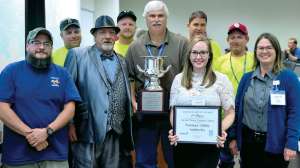
Without pause, Posekany and his staff will tell you it’s teamwork, communication, and a very dedicated group of employees. “Our people make it work,” Posekany says. “They do whatever is necessary. Without any extra money, they go to training — on site and off site — and then come back to their regular duties. They haven’t been able to drive a clean vehicle home from here for years. It’s been an excellent effort.”
Two management teams formed to direct the project have also been critical to success. One is a Professional Program Management (PPM) team that includes 10 members representing local design firms. This group has the overarching administrative responsibility for projects. “They’ve done a good job with our initial scheduling,” Reinhold explains. “This helps us in our overall direction.”
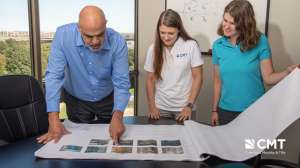
The Construction Management Team (CMT) consists of several veteran staff members, the city engineering department, and representatives from H.R. Gray, the Columbus-based firm serving as construction manager. “With all the critical flow reductions, cut-ins and outages — both here and at Jackson Pike — this has been a very complicated schedule,” says Reinhold.
When a process is ready for startup, a request to schedule equipment is made to supervisors, approved, and then routed to the CMT. In the end, all work is funneled through the CMT. The teams communicate frequently, and conference calls are held regularly between the teams at Southerly and their counterparts at Jackson Pike.
“It’s very important that we plan ahead, that we have knowledgeable people, and that we involve everyone,” says Reinhold.
Cosmo Bertino, vice president with Malcolm Pirnie, the engineering and design firm that has worked with Columbus for more than 20 years, credits the Southerly plant management and staff for “super competence. They’ve done a super job in accommodating all of the construction. There’s no magic bullet. It’s a matter of communication with everybody at every level, anticipating where you’re going to be at certain points in time, and adjusting the trajectory.
“We’ve implemented nine different projects there. I can’t say enough about how they’ve handled a situation that has been extremely disruptive.”
Posekany sums up, “Every day brings something new. But considering the size of the program, it’s gone very, very well.” The plant has experienced only one minor permit violation in the five years the facility has been under construction.
“Considering all we’ve been through,” says Posekany, “that’s incredible.”