Measuring chlorine levels in water is essential for various applications, and two primary methods used are DPD colorimetric and amperometric electrode. Both methods offer accurate results but differ fundamentally in their approach to chlorine determination. Read on to explore the differences between these two methods, and their strengths and limitations.
DPD Colorimetric Method
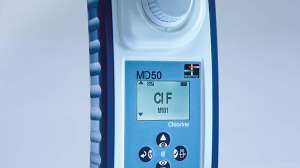
The DPD (N,N-diethyl-p-phenylenediamine) colorimetric method is widely used for chlorine measurement in various applications, including swimming pools, drinking water and wastewater treatment.
Principle
The DPD method is a colorimetric method that relies on the reaction between chlorine and DPD reagents, which produces a colored compound. The intensity of the color is directly proportional to the chlorine concentration in the water sample.
Procedure
- Collect a water sample in a test cell or cuvette.
- Add DPD reagents to the water sample. These reagents typically consist of DPD powder and a buffer solution.
- Mix the reagents thoroughly to ensure complete reaction.
- Allow the color to develop for a specific duration.
- Compare the resulting color intensity with a color scale or use a spectrophotometer to measure the absorbance at a specific wavelength.
- Determine the chlorine concentration based on the color intensity or absorbance value.
Advantages
- Relatively simple and cost-effective method
- Provides visual color comparison or precise measurement using a spectrophotometer
- Suitable for online and laboratory measurements
- Suitable for both online and laboratory measurements
- Easily measure either free or total chlorine
- DPD measurements provide adequate accuracy across the calibration range
Disadvantages
- Susceptible to interferences from the presence of specific compounds
- Requires reagents
Instrumentation
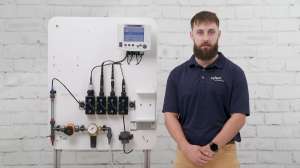
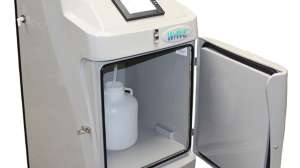
The 3017M DPD Chlorine Analyzer provides continuous free or total chlorine measurements for applications where the DPD colorimetric method is preferred. This analyzer is designed to streamline the chlorine determination process by automating the colorimetric method, offering significant advantages over traditional manual testing.
The 3017M simplifies the procedure by automatically mixing the DPD reagents with the water sample and precisely timing the color development. The analyzer then measures the resulting color intensity or absorbance, providing accurate and reliable chlorine concentration values. This automated approach not only enhances efficiency and repeatability but also reduces the potential for human error.
The analyzer is accurate, reliable and built with advanced flow injection technology, factory calibration, and simplified tubing, which lower reagent use and maintenance requirements. The 3017M is a robust and dependable solution for DPD colorimetric chlorine measurement in various water treatment and quality control applications. [Learn more: watch the 3017M Online Chlorine Analyzer Overview video.]
Amperometric Electrode Method
Amperometric electrode-based methods offer an alternative approach for chlorine measurement. These methods utilize a specialized electrode to detect chlorine ions and measure the current produced during the reaction.
Principle
The amperometric method utilizes a chlorine-selective electrode (often combined with a reference electrode) immersed in the water sample. The electrode generates a current proportional to the chlorine concentration.
Procedure
- Immerse the chlorine-selective electrode and the reference electrode in the water sample.
- Apply a small voltage to the electrodes to establish a constant potential.
- Measure the resulting current generated due to the electrochemical reaction between chlorine and the electrode.
- Calibrate the electrode using known chlorine standards to establish a linear relationship between current and chlorine concentration.
- Determine the chlorine concentration based on the measured current.
Advantages
- Allows real-time and continuous monitoring of chlorine levels
- Exhibits high sensitivity, making it suitable for low chlorine concentrations
- Minimal interference from colored substances or turbidity
- Suitable for automatic monitoring systems in process control
Disadvantages
- Generally more expensive compared to DPD colorimetric method
- Requires regular calibration and maintenance of electrodes
- Susceptible to electrode fouling or drift over time
- Online and laboratory measurements employ different methodologies
- Amperometric measurements provide adequate accuracy around a setpoint
Instrumentation
Amperometric employs a specialized chlorine-selective electrode in conjunction with a reference electrode, both of which are submerged in the water sample. By applying a small voltage to these electrodes, a constant potential is established, enabling the measurement of the resulting current generated during the electrochemical reaction between chlorine and the electrode.
Amperometric sensors offer high sensitivity, making them particularly well-suited for detecting low chlorine concentrations. Moreover, they exhibit minimal interference from colored substances or turbidity in the water, providing accurate and reliable results even in challenging environmental conditions. While amperometric sensors may involve a higher initial investment and require periodic calibration and maintenance, their ability to provide real-time data, reduce the need for manual intervention, and operate effectively in automated monitoring systems makes them an essential choice for chlorine measurement in water treatment applications.
Conclusion
Both DPD colorimetric and amperometric electrode methods possess unique advantages and disadvantages in chlorine measurement. The DPD colorimetric method offers simplicity, cost-effectiveness for routine testing, and greater accuracy, while the amperometric electrode method provides continuous monitoring and eliminates the need for reagents. The choice between these two methods depends on the specific application, required accuracy, and budget considerations. Ultimately, both methods contribute to maintaining chlorine levels within the desired range for safe and efficient water treatment processes.