PFAS in the environment emerged as a concern in the early 2000s. Since then these “forever chemicals” have been detected in varying concentrations in municipal drinking water systems, in private wells, and in other settings.
In recent years, it seems an entire new industry has grown up around ways to remove PFAS from water supplies. Some vendors offer adsorption systems that use granular activated carbon, ion exchange resin or other media to adsorb the PFAS molecules.
Some remove PFAS with nanofiltration or reverse osmosis. Other technologies actually destroy the chemicals, breaking them to benign substances so that no waste material that needs to be managed after the treatment. Here is a look at a number of PFAS treatment and removal technologies that have been introduced in the past few years.
PFAS Effluent Treatment System (PETS)
This technology is a mobile and modular wastewater treatment unit invented by the U.S. Army Corps of Engineers Engineer Research and Development Center. The technology is designed to reduce PFAS waste volumes up by to 10,000 times, minimizing waste transportation costs. It can use any type of sorption-based media to remove PFAS and achieve regulatory discharge limits. It is easily adapted to remove other constituents from co-mingled waste streams. AxNano, www.axnano.com.
ECOTHOR-EOx
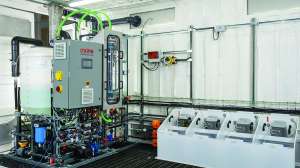
This complete integrated solution is designed to treat and destroy PFAS in municipal drinking water using an electrochemical oxidation technology. The core offering is the ECOTHOR electrotechnology platform from E2metrix, already used in 200 installations treating a wide range of complex contaminants. That technology has been modified and tailored to optimize onsite PFAS destruction.
Electrochemical destruction mineralizes PFAS by direct oxidation. It uses electricity to cleave the carbon-fluoride bonds and break the molecules down into their elemental parts of carbon and fluorine. The system uses an anode with an extended useful life. Different electrode combinations are used depending on the compounds to be addressed. The approach uses an advanced and economical electro-oxidation process that can also be applied to other persistent organic compounds in municipal water and wastewater.
In pilot testing the technology has achieved up to 99% PFAS reduction and more than 85% reduction of total detectable PFAS in the water treated, returning safe water to the environment at a full-scale facility. Ovivo, www.ovivowater.com.
GAC thermal reactivation
This treatment process is designed to make more efficient use of granular activated carbon adsorbent. Thermal reactivation takes in spent activated carbon and makes it work more effectively than virgin carbon. This helps minimize the amount of virgin carbon that must be mined. It also reduces the amount of carbon the treatment process requires, and the amount of spent material that needs disposal. The technology is also applicable to water pollutants other than PFAS. Birchtech, www.birchtech.com.
PFASigator
This process uses a proprietary chemistry that mineralizes PFAS. Photo-activated reductive defluorination chemistry couples with UV light to stimulate a reaction that disassembles the PFAS molecules. The equipment is modular, compact and mobile. It is deployed downstream of a process that first concentrates PFAS in solution. The company says the technology destroys PFAS at a cost comparable to capture and disposal options. It operates on site in a variety of circumstances that include a pH range of 3 to 12 and aerobic or anaerobic conditions.
An aqueous solution containing PFAS is fed to the machine. Reagents are added and the solution is exposed to UV light, which catalyzes a reaction that breaks the carbon-carbon and carbon-fluorine bonds in the PFAS molecules and reduces them to water, fluoride ion, and simple carbon compounds. The end product can be released to a wastewater treatment plant.
The treatment technology is intended to be one component in a larger system and is typically deployed after foam fractionation in which pass bubbles are passed through water containing PFAS, creating a foam on the top in which the PFAS is captured. The foam collapses into a liquid PFAS concentrate that is fed to the PFASigator unit. Enspired Solutions, www.enspiredsolutions.com.
AquaPRS
This treatment system uses a sorbent suspension to adsorb PFAS and a separator to produce clean water from the suspension. The suspended adsorbent slurry prevents biofouling and controls solids and mineral buildup. The material is engineered to adsorb more PFAS per gram of sorbent than the same amount of GAC or ion-exchange resin, reducing lifecycle operating cost. The process achieves enhanced removal of short-chain PFAS in a single process. The entire process including adsorbent replacement is automated. It allows adjustments in response to changing influent PFAS concentrations.
Single-stage operation removes PFOS, PFOA and other regulated PFAS contaminants to levels below EPA standards with low to moderate influent levels. For very high influent PFAS concentrations (greater than 1,000 ng/L) or difficult influent characteristics, a two-stage configuration can yield effluent levels meeting EPA standards. Aqua-Aerobic Systems, www.aqua-aerobic.com.
Preconfigured SORB systems
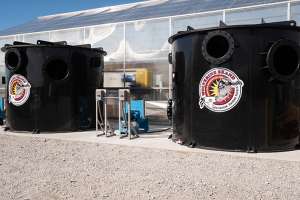
SORB systems include GAC and ion exchange treatments that reduce PFAS to nondetectable levels. Pre-configured SORB systems include a regenerable multi-use ion exchange technology that can be paired with electrochemical advanced oxidation processes, significantly prolonging resin use and reducing the need for media disposal.
The GAC and ion exchange systems are optimized locally depending on variables such as flow, seasonality and the targeted contaminants. The treatments are proven up to 99.99% effective with features designed to streamline processes from installation to operation, according to the company. Units are configured with features that allow maintenance to be done from outside the tank, reducing the need for permits, added personnel, or media removal.
The GAC offering, SORB CX, is designed for lower-challenge, long-chain PFAS and for waters that contain other organic contaminants like chlorinated compounds and disinfection byproducts. Ion exchange offerings use a synthetic formulated media that can be specifically tailored to target PFAS. These systems can remove long-chain and some short-chain PFAS. De Nora, www.denora.com.
PFAS Annihilator
This closed-loop, on-site destruction technology is powered by supercritical water oxidation. It destroys PFAS in contaminated wastewater, landfill leachate, and aqueous film forming foam to non-detectable levels without creating harmful byproducts. The system destroys more than 99.99% of PFAS, according to the vendor.
A supercritical fluid is a substance held at a temperature and pressure above its critical point. In this state, the fluid is neither a liquid nor a gas and has properties of both. Substances begin to act differently above the critical point. Supercritical water is highly expandable and compressible. Without distinct liquid and gas phases, mass transfer is unrestricted, facilitating chemical reactions. This indistinct liquid-gas phase is the reason supercritical water oxidation enables comprehensive PFAS destruction. The only byproducts are water, inert salts, and carbon dioxide. The system works in concert with filtration, separation, and concentration technologies. Batelle, www.batelle.org.
electraCLEAR
This technology destroys more than 99.99% of long- and short-chain PFAS after concentration processes such as foam fractionation. It produces oxidizing conditions many times stronger than traditional chemical oxidation technologies, according to the supplier. PFAS are broken down into harmless elemental components.
Operating at ambient temperature and pressure, the process eliminates safety concerns and special operating conditions. Its plug-flow/batch process, familiar to water and wastewater professionals, easily integrates into any complementary treatment process. It delivers cost-effective treatment and significant operating cost benefits. Modular systems are offered through a turn-key treatment-as-a-service contract. Axine, www.axinewater.com.
FILTRASORB GAC
This granular activated carbon solution is proven to remove more than 99.99% total PFAS in drinking water and remediation applications for over 15 years. The supplier provides a complete solution including activated carbon, equipment, on-site installation and exchange services, reactivation, and financing. A focused PFAS team us are ready to respond with technical services, equipment and carbon supply. Spent activated carbon can be thermally reactivated, destroying the captured PFAS and enabling the material to be recycled and reused.
Because each water source contains different combinations and levels of PFAS and TOC, a lab or pilot test is typically performed on a representative water sample to determine the adsorption zone needed and the estimated carbon exhaustion rate. Solutions can accommodate a broad range of applications and system sizes. Temporary and permanent systems can be rapidly deployed. Calgon Carbon, www.calgoncarbon.com.
Purofine PFA694
This ion exchange resin can help drinking water systems meet and outperform PFAS removal requirements. The vendor’s technical team can provide design recommendations that offer a compact footprint, long media treatment life, and low lifecycle costs. The Purofine PFA694 family of products provides high selectivity for PFAS.
The single-use, uniform-particle-size resin incorporates dual removal mechanisms of ion exchange and adsorption for maximum PFAS uptake. Water treated with the resin is proven to consistently achieve simultaneous removal of short- and long-chain PFAS, according to the vendor. There are no regenerant chemicals. PFAS are captured and concentrated on the ion exchange beads. Exhausted resin can be disposed of through landfill or incineration. Ecolab, www.purolite.com.
FLUORO-SORB
This adsorption media is an NSF-certified product designed to support remediation of PFAS contamination. It binds the entire spectrum of PFAS efficiently and in a wide variety of removal and remediation processes, according to the manufacturer. It deploys easily as a flow- through treatment media, as a passive in situ treatment, or in a CETCO Reactive Core Mat.
The material resists competitive adsorption from other water and sediment contaminants. Because of its high adsorption properties and high density, it requires fewer change-outs and so helps minimize total cost of ownership. It can serve as a pre- or post-treatment with other technologies including granular activated carbon or ion exchange resin water treatment trains. CETCO, www.cetco.co.uk.
Liquid-phase remediation
The HS-PF remediation process is designed to remove a broad spectrum of PFAS. Based on the application, flow, and concentration of PFAS, the process removes the chemicals by way of an adsorption media to non-detectable levels. The process economically and efficiently captures long- and short chain molecules. The company describes the process as an affordable, high-performance technology that is versatile for stand-alone treatment or as a pre- or post-treatment step. It can be used in combination with other media such as granular activated carbon to enhance efficiency. Hydrosil International, https://hydrosilintl.com.
Tailored solutions
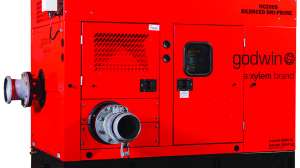
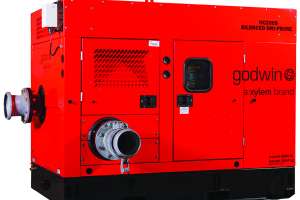
A diverse range of PFAS treatments can be adapted to various industries. For municipal water systems, offerings included granular activated carbon filtration, ion exchange, and advanced liquid-phase media adsorption systems, either in permanent installations or as emergency mobile treatment units adaptable to different water chemistries and needs.
On the industrial and commercial side, mobile filtration systems are effective for construction projects, quickly reducing PFAS to non-detectable levels and enabling safe water discharge.
Specialized treatment solutions for groundwater and soil remediation are available for airports and military bases to address PFAS contamination. Xylem, www.xylem.com.
CANSORB adsorption treatment
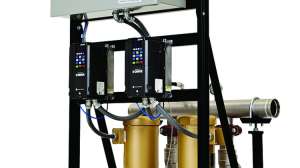
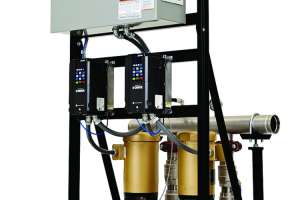
Granular activated carbon adsorber systems reliably and efficiently remove PFAS from municipal water sources to non-detectable levels while minimizing capital and operations expenses, according to the supplier. The backwashable CANSORB CP system holds up to 40,000 pounds per vessel of activated carbon and accommodates flows up to 1,000 gpm. Virgin coal-based, wood-based and coconut-based GAC filer media are available.
CANSORB CP20K-10 and CP20K-12 deep-bed, backwashable, dual-vessel skid systems use virgin coconut GAC. When operated in series, systems provide full redundancy to ensure a safe water supply. Dual-vessel systems are well suited for municipalities looking to upgrade their capabilities to comply with tightening state and federal regulations. Systems install in eight hours or less, allowing utilities to quickly and effectively reclaim wells that were shut down due to PFAS contamination. Newterra, www.newterra.com.