Washington State University researchers have shown the fundamental mechanisms that allow tiny pieces of plastic bags and foam packaging at the nanoscale to move through the environment.
The researchers found that a silica surface such as sand has little effect on slowing down the movement of the plastics, but that natural organic matter resulting from decomposition of plant and animal remains can either temporarily or permanently trap the nanoscale plastic particles, depending on the type of plastics.
The work, published in the journal Water Research, could help researchers develop better ways to filter out and clean up pervasive plastics from the environment. The researchers include Indranil Chowdhury, assistant professor in WSU's Department of Civil and Environmental Engineering, along with Mehnaz Shams and Iftaykhairul Alam, recent graduates of the civil engineering program.
"We're looking at developing a filter that can be more efficient at removing these plastics," Chowdhury says. "People have seen these plastics escaping into our drinking water, and our current drinking water system is not adequate enough to remove these micro and nanoscale plastics. This work is the first fundamental way to look at those mechanisms."
Around since the 1950s, plastics have properties that make them useful for modern society. They are water resistant, cheap, easy to manufacture and useful for a huge variety of purposes. However, plastics accumulation is becoming a growing concern around the world with giant patches of plastic garbage floating in the oceans and plastic waste showing up in the most remote areas of the world.
"Plastics are a great invention and so easy to use, but they are so persistent in the environment," Chowdhury says.
After they're used, plastics degrade through chemical, mechanical and biological processes to micro- and then nano-sized particles less than 100 nanometers in size. Despite their removal in some wastewater treatment plants, large amounts of micro and nanoscale plastics still end up in the environment. More than 90% of tap water in the U.S. contains nanoscale plastics, Chowdhury says, and a 2019 study found that people eat about five grams of plastic a week — or the amount of plastic in a credit card. The health effects of such environmental pollution is not well understood.
"We don't know the health effects, and the toxicity is still unknown, but we continue to drink these plastics every day," says Chowdhury.
As part of the new study, the researchers studied the interactions with the environment of the tiniest particles of the two most common types of plastics — polyethylene and polystyrene — to learn what might impede their movement. Polyethylene is used in plastic bags, milk cartons and food packaging, while polystyrene is a foamed plastic that is used in foam drinking cups and packaging materials.
In their work, the researchers found that the polyethylene particles from plastic bags move easily through the environment, whether through a silica surface like sand or natural organic matter. Sand and the plastic particles repel each other similarly to like-poles of a magnet, so that the plastic won't stick to the sand particles. The plastic particles do glom onto natural organic material that is ubiquitous in natural aquatic environment, but only temporarily. They can be easily washed off with a change in chemistry in the water.
"That's bad news for polyethylene in the environment," says Chowdhury. "It doesn't stick to the silica surface that much, and if it sticks to the natural organic matter surface, it can be re-mobilized. Based on these findings, it indicates that nanoscale polyethylene plastics may escape from our drinking water treatment processes, particularly filtration."
In the case of polystyrene particles, the researchers found better news. While a silica surface was not able to stop its movement, organic matter did. Once the polystyrene particles stuck to the organic matter, they stayed in place.
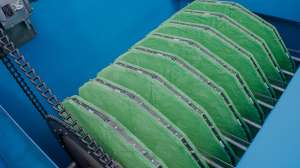
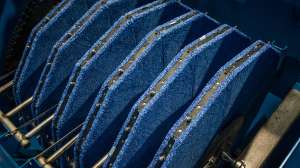
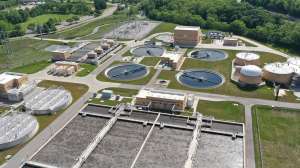
The researchers hope that the research will eventually help them develop filtration systems for water treatment facilities to remove nanoscale particles of plastics.