Wastewater treatment plants should aim to produce quality effluent without using a treatment aid for process control, and the best way to do that is by being proactive. By using these five steps, a plant will operate efficiently and will produce quality effluent well within the National Pollution Discharge Elimination System permit limits.
1. Involved management
When management cares about the treatment process, the entire operations department moves toward the right culture. When upper, middle and lower management are on the same page, it shows in all areas of the utility — especially when things go wrong and effluent quality is in jeopardy.
A management team should regularly communicate status updates, trending changes and even personnel issues with each other. When frontline supervisors control shifts, they need backend managerial support during nights and weekends. With that support, the treatment process improves.
2. Dedicated operators
Operators are bound by law to be ethical, knowledgeable and to protect the public’s health. However, each operator has ideas about how to run a treatment plant in a given condition.
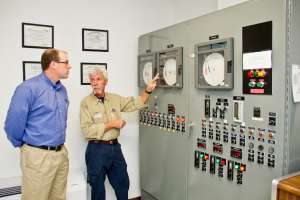
The plant benefits when each shift communicates and respects each other. Chief operators and plant superintendents give directives for the day, but it’s up to the frontline supervisor and individual operators to be attentive, professional and responsive to leadership goals.
3.Well-trained staff
Operator training, which is necessary for maintaining active licenses, can also be fine-tuned to help a wastewater treatment plant reach peak performance. For instance, many operators take online training because of convenience, but do they choose courses that benefit the plant?
In-house group training is a great way to address the specific needs of a facility. That way, the entire staff hears the same message. Plus, in those settings, trainers can use pictures, maintenance manuals and operational data from a specific plant to make the training more personal.
Training sessions for operators should include plant-specific process control, laboratory skills, plant safety and maintenance. When employees are trained on these topics, they become well rounded. Many associations offer this type of training at a regional school if local trainers are not available.
4. Great maintenance program
Maintenance personnel are the unsung heroes of a treatment plant. They are often overlooked when a work order is written to fix a component of the plant, such as a clarifier return activated pump. However, without a fully functioning RAS pump, a treatment plant’s health can deteriorate quickly, even causing permit violations.
Should maintenance staff be separate from the operations staff in a wastewater facility? Or should maintenance workers be required to have operator licenses to work at a plant? It’s a question only management can answer.
Before making that decision, management should consider whether a license is beneficial to maintenance staff. Also, what happens to an employee who excels at maintenance, but has no interest in operation? And, will a license requirement hinder staff recruitment?
5. Contingency plans
Because it’s impossible to eliminate process control problems, a backup plan is necessary. To prepare for worst-case scenarios, analyze past problems and look at all relative parameters such as flow and biological oxygen demand loadings.
When troubleshooting a plant, look for the basics of the system, such as the food source (BOD), mass (mixed liquor suspended solids/mixed liquor volatile suspended solids) loading, flows (raw, recycled plant flows and other contributing flows), pH (raw and aeration basin), alkalinity (raw and aeration basin), temperatures (aeration basins), nitrification and denitrification, and dissolved oxygen.
By graphing these parameters in hours, minutes and even seconds, you’ll identify trends at your facility. Mix and match the parameters on your graph and add other related processes to troubleshoot most issues.
After you understand plant conditions and trends, establish remedies using past experiences and contact operators at plants with similar processes to pick their brains. And get your management team and key operators to create a plan of action. If you decide to use a chemical solution, make sure you have an exit strategy to efficiently wean off the chemical.
Contingency plans are necessary for every process. If you maintain plant trends with two or even three mean cell residence times or sludge ages, you’ll know when a plant is heading for trouble.Understanding these five steps to peak performance will position your plant for high-quality effluent.

Sheldon Primus is a Class A licensed wastewater operator with more than 18 years of industry experience. He is a Certified Occupational Safety Specialist, authorized OSHA outreach instructor, and holds a master’s degrees in public administration with a concentration in environmental policies. He has held positions as a laboratory operator, chief operator, plant superintendent, safety and compliance officer, and industrial pretreatment coordinator.
Primus is CEO of Utility Compliance Inc. based in Port St. Lucie, Fla., which helps utilities in industrial pretreatment and risk management program compliance, water and wastewater CEU training, as well as occupational safety program development and OSHA outreach training for general industry and construction. He is also an online adjunct instructor for the Environmental Science Department at Florida Gateway College. He can be reached at sheldon@utilitycompliance.net or 888/398-0120.