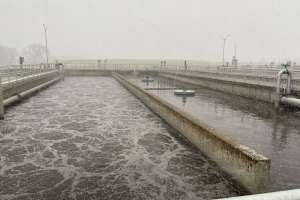
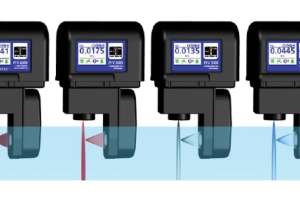
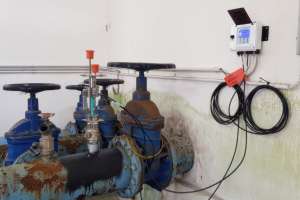
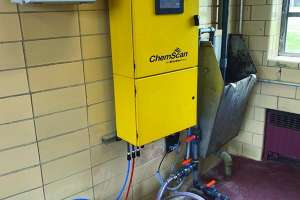
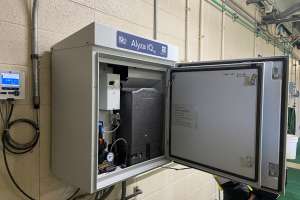
Faced with increasingly stringent phosphorus limits, the Oconomowoc Wastewater Treatment Facility implemented real-time monitoring and automated chemical control to ensure compliance.
The mid-sized utility must...
Instrumentation and Monitoring
Displaying results 18-34 of 1086
White Papers
Enhanced Biological and Chemical Phosphorus Control at Fond du Lac WRRF
The Fond du Lac Regional Wastewater Treatment & Resource Recovery Facility (WRRF) is an advanced 8-10 mgd facility that plays a critical role in...
White Papers
Future-Ready Phosphorus Control in Kewaskum, Wisconsin
Serving a small Wisconsin community of 4,000, the Kewaskum Wastewater Treatment Facility manages an average flow of 0.4 million gallons per day. Like many small...
Editorial
Ohio’s Biggest City Finds the Future in GIS-Based Management
Like most water and wastewater utilities, the Metropolitan Sewer District of Greater Cincinnati constantly strives to do more with less.
Beginning in 1989...
Editorial
A Smart, Low-Maintenance Way to Measure I&I
A key to reducing I&I is to know where clear water is entering the collection system.
Strategic flow metering can identify and quantify...
Online Exclusives
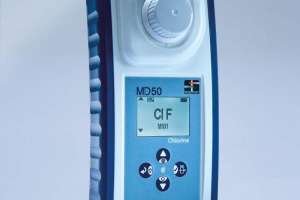
Lovibond MD50 Colorimeter
The MD50 Colorimeter from Lovibond combines a simple user interface with advanced optics to deliver the accurate and reliable results users require....
Online Exclusives
Traceability in Turbidity Standards
How do you know the results displayed by a turbidimeter are true? Especially when the measurement of water samples with low turbidity...
Online Exclusives
Turbidity Spikes: Real or Artifacts?
This webinar will talk about turbidity spikes related to turbidimeter sampling, measurement parameters, and reporting along with approaches for troubleshooting and resolving...
Online Exclusives
Understanding Why Turbidity is a Method-Specific Parameter
Learn about unique aspects of measuring high-range turbidity samples with portable turbidimeters. Turbidity can be useful as an indicator of the effects...
White Papers
Understanding the Limit of Detection of Portable Turbidimeters
For analytical method development, the limit of detection (LOD) and the limit of quantitation (LOQ) are important parameters that need to be...
Online Exclusives
Understanding the Impact of Light Source on Turbidity Readings
Process turbidity instruments are available with different light sources to meet regulatory requirements. To select the correct turbidimeter for a facility, it...
Online Exclusives
The Laser Advantage for Turbidity Measurement
Laser turbidimeters have been found to be more effective in low turbidity applications such as membrane effluent performance or conventional filtration practices...
Editorial
Effective Water Stewardship Requires Accurate Flow Measurement
Losses in drinking water systems are inevitable. Natural evaporation, friction losses and pipeline leakage will occur.The question is how to limit those...
Editorial
Digital Technology Transforms Data Management for Erie Water
In the water treatment industry the transition from paper-based systems to digital solutions isn’t just about precision and convenience. It’s about ensuring...
Editorial
Case Studies: Odor Control, Treatment Chemistries and Disinfection
Continuous data critical for industrial discharge management
Problem: When a nearby pharmaceutical facility began discharging into Lansdale Borough’s (Pennsylvania) wastewater system, the local treatment plant...
Editorial
Product Focus: Digital Technology, Cybersecurity, Water Metering, Nonrevenue Water Reduction
Control/Electrical Panels
Lone Star Logistics sLOCThe sLOC from Lone Star Logistics is a comprehensive solution for controlling blowers and compressors. Whether integrating with...
Videos
Webinar: Small Utility Optimizes Water Operations
St. Albans Municipal Utility Commission Water Plant is a surface water treatment facility in Kanawha County, West Virginia, producing an average of...