Effective industrial pretreatment revolves around one basic thing: open communication between staffs at the industrial facility and the municipal clean-water plant.
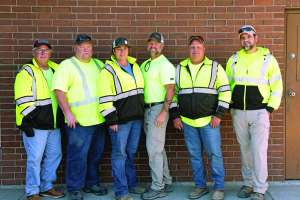
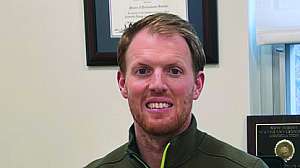
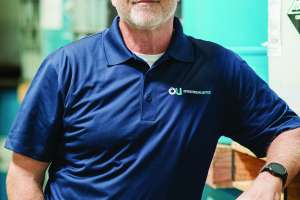
That’s the opinion of Alan Johnson, compliance and safety manager with Operators Unlimited, a contract operations company based in Duncan, South Carolina, and serving mainly industrial customers. While factors like good plant design, effective maintenance and the use of automation are also essential, it’s good relationships that make programs work, Johnson says.
Operators Unlimited serves mainly South Carolina but also has customers in Georgia and North Carolina. The company serves facilities in the food and beverage, metal finishing, automotive chemical, textile, packaging, coating, adhesive, sealants and general manufacturing sectors.
Its staff of 36 includes 20 professional wastewater treatment operators, serving some 65 customers. Johnson talked about the company and the keys to high-performing industrial pretreatment programs in an interview with Treatment Plant Operator.
TPO: What is your background in wastewater operations?
Johnson: I have been an operator for 34 years, of which 28 years were in the municipal world. I have operated probably 40 to 50 treatment facilities. For several years I was a public works director, and as part of that I was responsible for a pretreatment program covering 21 industrial sites. After I retired I went into the private sector, working in physical-chemical industrial operations. I have been with Operators Unlimited for five years.
TPO: How would you describe your company’s mission?
Johnson: Our mission is transformation. We want the people we serve to be better for having worked with us. When we do operations, it’s not simply going in and getting the job done. We like to make things better wherever we can.
TPO: Do you focus strictly on industrial customers?
Johnson: We are almost exclusively industrial. We don’t actively pursue municipal facilities, but we do work with some of them. Manufacturers typically are not in the business of wastewater treatment, whereas municipal utilities have that as their sole focus. We go into industrial facilities and take that off their plate.
TPO: What is the range of operations-related services you provide?
Johnson: We provide the wastewater chemistry. We provide the operations. We can do design-build projects. We have technical resources, so if a customer is having problems with their wastewater, we come in and figure out what is going on. We also do compliance, whether that’s reporting or working with permitting. We train staff. We can do one or more of those or a combination of them all.
TPO: What would you say is the biggest challenge facing industrial facilities in wastewater treatment?
Johnson: The biggest challenge is staffing, having qualified operators to do the work that needs to be done. Operators, and here I include myself, are getting older and looking at retirement, and we don’t see many young people coming in. Along with that, we see production increasing, and often it’s hard for wastewater treatment to keep up with production demand. So some treatment facilities are in need of upgrading.
TPO: What advice do you give to industrial customers about dealing effectively with municipal treatment plants?
Johnson: One of the most important things is open communication. I’ve been on both sides of the fence. Some in industry say, “We don’t want to talk to the municipal plant because that’s just going to lead to more issues.” But if an industry is having an issue, sometimes the municipal plant has flexibility in what they can do. You don’t know until you ask. The most effective approach is an open door policy.
TPO: What else is important for industrial dischargers to know?
Johnson: They need to be completely aware of their permit provisions. Often, the environment, health and safety people have a lot of plates in the air, but being familiar with the permit, knowing exactly what it says, can be a big help.
TPO: Can you cite an example that shows the value of good communication?
Johnson: Suppose an industrial user for whatever reason has some wastewater with a higher TKN or BOD than the permit allows. They should contact the municipality and ask if they can discharge it, as opposed to having a contractor come in and haul it off. The municipality might have room in their permit to be able to help. They might charge more to treat that water, but that’s still less expensive than having it hauled to another facility for treatment. It’s better to have the conversation than to assume it’s something the municipality can’t do.
TPO: What suggestions would you have for pretreatment coordinators in dealing effectively with industrial users?
Johnson: I don’t know of any municipality where we have an adversarial relationship. It goes back to communication. In my experience as a pretreatment coordinator, it was helpful to know that most of these industries just want to make their products. We all want a clean environment, and we all know industrial users contribute to the economy. They hire people. They’re not in the wastewater business. They just want to do what they do. They’re not the enemy.
If a municipal plant has a treatability issue, they should reach out to industrial users and say, “This is going on — any thoughts?” Once when I was in the municipal world we went through a long process of figuring out why we were failing our whole effluent toxicity tests. There were two basic ways to deal with that. One was to try and catch somebody dumping on us. The other was to tell everybody what was going on — maybe they were discharging something they didn’t even know about. We chose the latter approach. I think that’s a lot more productive.
TPO: Have you seen cases where the municipality offered training to industrial facilities’ operations staffs?
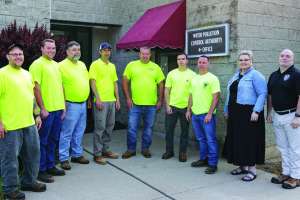
Johnson: Not actual training, but many municipal utilities used to have yearly industrial meetings and awards luncheons, such as for facilities that had 100% compliance. That was a great opportunity for the two sides to get together and talk about potential issues. Operators Unlimited does training, but I’m not aware of municipalities that do. Pretreatment coordinators are pretty good about communicating with the industrial users.
TPO: How do you go about recruiting and retaining good people?
Johnson: In the industrial field it’s extremely difficult to find certified operators who aren’t already comfortable where they’re working. The South Carolina Water Environment Association has an apprenticeship program that I believe is geared toward municipal treatment. We are starting our own program for industrial processes. We find people who aren’t necessarily certified and start them on a track where they can learn the business. We’ve had some success bringing people in who, for instance, have a chemical background. We train them and prepare them for wastewater operations and guide them through the certification process.
TPO: What would you say are a few keys to an effective and compliant industrial wastewater treatment operation?
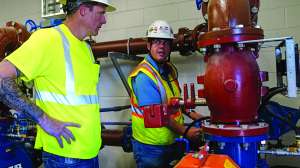
Johnson: One of the keys is communication between the production and wastewater treatment teams. The production staff should be versed in wastewater treatment, what they can handle and what they can’t. The operations staff needs to understand that there are going to be upsets at times. It’s not about pointing fingers. It’s about what they’ve got and how to treat it. Proper plant design is another key. Preventive and predictive maintenance ensure that everything keeps running so that production can keep running. And finally, alarm telemetry and automation are hugely important to operating a compliant system.