The Delhi Charter Township Wastewater Treatment Plant has an open invitation to all. For the past nine years, the plant has held an Open House and Re-Use Rally in May to coincide with Water Quality Awareness Week.
“It’s a way to bring the community in to see a place they don’t typically see,” says Allen Bryant, environmental coordinator at the plant, in Holt, south of Lansing. “We want them to see that we’re a part of the community and what their sewer bills pay for.”
The event is free, including hotdogs, hamburgers, and snow cones, and is open to anyone. While it’s geared toward elementary school children, older kids and adults learn things, too.
Influent to effluent
Plant tours begin every 30 minutes. A large green tractor pulls a hay wagon load of visitors across the grounds. An employee, usually Sandra Diorka, plant superintendent and director of public services, leads the expedition.
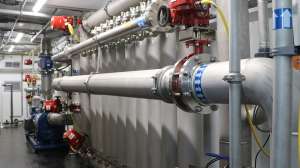
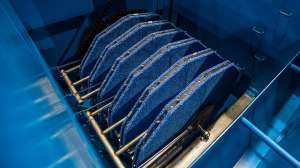
Over a megaphone, she describes the physical, biological, and chemical processes in the tertiary treatment plant. While visitors can’t see the plant discharge, they learn that the effluent flows to the Grand River and eventually to Lake Michigan.
Visitors have time to step off the wagon and take a closer look at the processes. They are also encouraged to visit a treatment system demonstration when they finish the tour. The demonstration, presented by a plant operator, includes a plant schematic along with samples from each step of the treatment process. A microscope lets visitors see the microorganisms they learned about on the tour.
Plant tours are available year round, but one day a year it’s part of a celebration. Videos from last year’s tour and demonstrations are posted on the township’s Web site and on social networking sites like Facebook.
Flyers advertising the event are sent with utility bills, posters are put up in town, press releases are sent, and plant personnel do interviews on TV and radio. It works: The highest turnout was 800 in 2008.
Activities abound
The treatment plant shares 60 acres with other municipal facilities including the recycling center. Plant employees and volunteers staff booths and referee activities that include face painting, creating edible aquifers, and competing in pet waste pick-up, where contestants with buckets and pooper scoopers race to pick up phony droppings.
As children make their way through the games, they can answer educational water-quality questions. Every correct answer earns them a sticker, and those stickers add up to something: a chance to release a fish into the Grand River.
“It depends on what’s available,” says Bryant. “We have different ones every year, and we have to get permission from the Department of Environmental Quality. It could be channel catfish, bluegills, or bass.”
The Re-Use Rally, more like a large swap meet, is an exciting part of the day. Tents and tables are set up, and people bring unwanted items, from clothes to electronics. “It’s a big draw,” says Bryant. “A lot of people come to see what’s being given away.”
In 2008, Gill, the recycle center mascot, was created at the Re-Use Rally. Local children were asked to donate used liquid detergent bottles. Some 2,500 of them were attached to a cut-out section of fence mounted on wheels. Gill, made up of bright reds, blues, yellows, and greens, stands 15 feet high and is 25 feet long.
“Already, he’s done three parades and has been to the local farmer’s market,” Bryant says. “We’ll get calls from people asking if Gill can come sit in their parking lot.” Gill was at the 2009 open house along with other plywood fish decorated by area school children. He serves as a good reminder on the importance of protecting water quality.