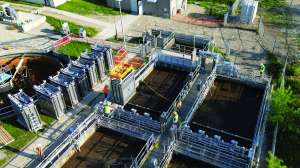
While the old plant in the city of Clinton, Iowa, did have fine screens, the screens got so clogged that they required manual emptying using wheelbarrows several times during each shift. It was a common occurrence to see solids and debris along the channel and this immediately signaled that the flow was not being adequately cleaned before reaching the end of the channel.
The HUBER Technology perforated screens quite simply provide better removal. The occurrence of solid material or debris of any type has been eliminated and the plant feels confident in the cleanliness quality of the end product.
In this case study, learn why the WWTP chose HUBER fine screens for its newly constructed plant, and see how the operators benefited from the automated system's improved functionality.
Download Case Study