Researchers at the University of Surrey and the University of Warwick recently developed a new manufacturing process for biocoatings. Published in ACS Applied Materials & Interfaces, the new method keeps the bacteria completely submerged during production, increasing cell survival rates by roughly 500 times compared to conventional drying methods.
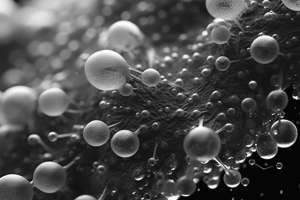
Historically, creating these metabolically active coatings involved drying the polymer in warm air, a harsh process that dehydrates cells, concentrates fatal salts and creates a dense, poorly permeable layer. To solve this, the research team adapted a technique used in latex glove manufacturing. They coat a substrate with a calcium salt and dip it into a bacteria-polymer mixture, causing the polymer to gel on contact. Instead of moving to a drying oven, the coating is immediately submerged in a warm, nutrient-rich laboratory broth. The heat fuses the polymer into a hard but highly porous shell, while the bacteria remain safely hydrated inside.
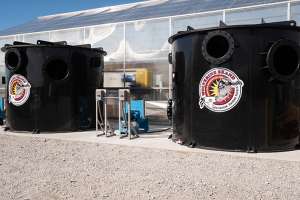
For industrial and municipal applications, this structural change is just as important as the survival rate. The new coatings are highly permeable, allowing waste to easily escape and nutrients to reach the working bacteria. In wastewater treatment facilities, which currently rely on large, expensive open tanks to break down organics, these active biocoatings could be applied to modular panels or carrier objects. This would concentrate biological processing power into a much smaller infrastructure footprint and allow plants to respond faster to changing load demands.