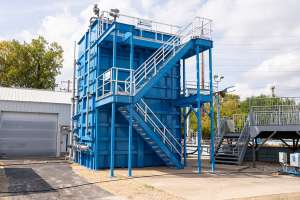
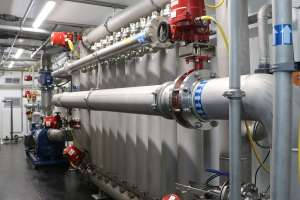
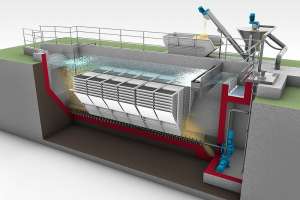
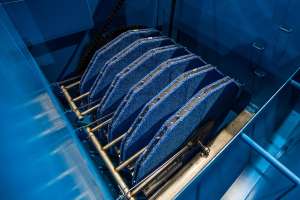
At a major biogas production facility in Cleveland, Ohio, innovation never stops — and neither does the pursuit of more efficient sludge dewatering. In partnership with Esmil, the plant recently evaluated the performance of new technology designed to push dewatering results even further: the Esmil xJD Roller Press.
Turning waste into energy
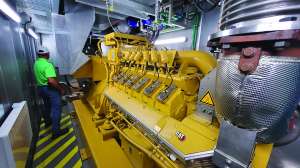
The biogas facility plays a vital role in Northeast Ohio’s renewable energy efforts. It processes sludge collected from food processors and industrial clients across the region, using anaerobic digestion to convert organic waste into methane gas for electricity, heat, and organic fertilizer production.
To manage the solids remaining after digestion, the plant already operates an Esmil MDQ-504C multi-disk screw press, commissioned in 2022. However, Esmil’s commitment to continuous improvement sparked new ideas: What if an even drier cake and cleaner filtrate could be achieved? Enter the xJD Roller Press.
Esmil’s drive to innovate
At Esmil, innovation is not just encouraged — it's embedded in the company's DNA. Whether developing new equipment or re-engineering existing designs, Esmil constantly seeks opportunities to improve performance, solve problems, and meet evolving industrial needs. The introduction of the xJD Roller Press in the U.S. provided the perfect opportunity to test cutting-edge dewatering advancements on real-world anaerobic sludge.

Optimizing dewatering with the xJD Roller Press
The goal was clear: maximize cake dryness and filtrate clarity while maintaining efficient operation.
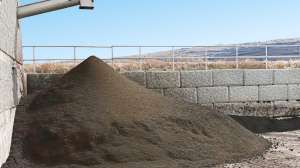
Initial tests conducted on sludge averaging 6.5% dry solids produced promising results. Operating with polymer alone, the xJD Roller Press achieved cake dryness between 23–25%, with filtrate quality improving to as low as 800 ppm at roller speeds between 0.5 and 1.4 rpm.
The introduction of a coagulant alongside the polymer led to dramatic gains:
- Cake dryness increased by an additional 2–3%
- Throughput rose by up to 40%
- Filtrate clarity improved, reaching as low as 400 ppm
Advantages of the Esmil xJD Roller Press
The xJD Roller Press offers a range of powerful advantages that make it particularly well-suited to demanding sludge applications such as those at biogas facilities:
- Handles difficult sludges: Excels with sludges high in fats, oils, abrasives, minerals, and fibrous material — no clogging or abrasive wear.
- Superior dewatering efficiency: Cake dryness can reach up to 65% depending on sludge characteristics.
- Self-cleaning rollers: Innovative filtering roller design prevents clogging and eliminates the need for rinsing water.
- Low energy consumption: Total installed power for the main dewatering unit is as low as 3–4 hp, dramatically lowering operating costs.
- Minimal maintenance: Slow roller speeds (up to 1.5 rpm) reduce wear, vibration and noise, while simplified design allows easy access for maintenance without specialized skills.
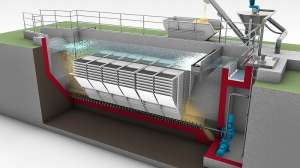
- Compact and modular design: Small footprint, fully enclosed structure, and suitability for containerized or trailer-mounted systems.
- Highly reliable and safe operation: Built-in safeguards against overflows, incorrect settings, and motor overloads.
With these features, the xJD Roller Press provides a robust, economical, and high-performing solution for a wide range of sludge dewatering challenges — from municipal plants to biogas facilities.

Smarter chemistry, superior results
Testing at the biogas plant clearly demonstrated that combining polymer and coagulant produces not only a drier sludge cake but also a significantly cleaner filtrate and improved system throughput. For facilities looking to enhance operational efficiency and optimize resource recovery, the Esmil xJD Roller Press offers a compelling and powerful new option for advanced sludge dewatering.