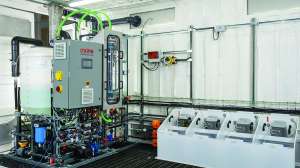
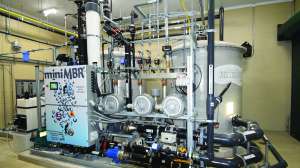
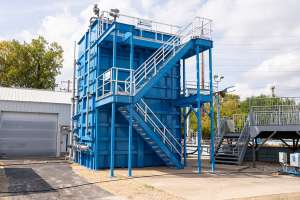
A recent study of seven wastewater treatment plants in the Eastern U.S. reveals a mixed record when it comes to removing medicines such as antibiotics and antidepressants.
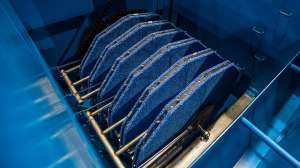
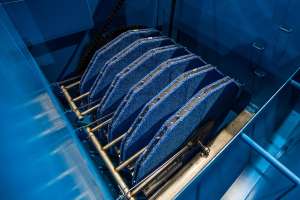
The research points to two treatment methods — granular activated carbon and ozonation — as being particularly promising. Each technique reduced the concentration of a number of pharmaceuticals — including certain antidepressants and antibiotics — in water by more than 95%, the scientists’ analysis found.
Activated sludge serves an important purpose in wastewater treatment, but it was less effective at destroying persistent drugs such as antidepressants and antibiotics.
“The take-home message here is that we could actually remove most of the pharmaceuticals we studied. That’s the good news. If you really want clean water, there are multiple ways to do it,” says Diana Aga, Henry M. Woodburn Professor of Chemistry at the University at Buffalo’s College of Arts and Sciences.

“However, for plants that rely on activated sludge only, more advanced treatment like granular activated carbon and/or ozonation may be needed,” Aga adds. “Some cities are already doing this, but it can be expensive.”
The findings are important because any drugs discharged from treatment plants can enter the environment, where they may contribute to phenomena such as antibiotic resistance or be consumed by wildlife.
“Our research adds to a growing body of work showing that advanced treatment methods — including ozonation and activated carbon — can be very effective at removing persistent pharmaceuticals from wastewater,” says Anne McElroy, professor and associate dean for research in the Stony Brook University School of Marine and Atmospheric Sciences.
The study — funded by New York Sea Grant — was published online in November 2019 in the journal Environmental Science: Water Research & Technology. The research is featured in the journal’s January 2020 edition.
Aga and McElroy led the project, with Luisa Angeles, University at Buffalo chemistry Ph.D. student, as first author. The paper was a partnership between researchers at University at Buffalo, Stony Brook University, the Hampton Roads Sanitation District, and Hazen and Sawyer, a national water engineering firm that designs advanced wastewater treatment systems, including some of the systems studied.
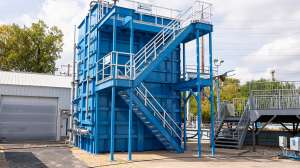
The research analyzed a variety of technologies in use at seven wastewater treatment plants in the Eastern U.S., including six full-scale plants and one large pilot-scale plant. According to the paper, “more precise locations are not provided in order to protect the identity” of the facilities.
Angeles says the study’s findings could guide future decision-making, especially in areas where water is scarce and in cities that may want to recycle wastewater, converting it into drinking water.
The research is also important for environmental conservation. It demonstrated that larval zebra fish did not change their behavior when they were exposed to wastewater discharged from treatment plants. However, much more work is needed to understand how longer-term exposures may impact wildlife, Aga says.
In a separate study in 2017, Aga’s team found high concentrations of antidepressants or the metabolized remnants of those drugs in the brains of numerous fish in the Niagara River, part of the Great Lakes region. Scientists still don’t fully understand the behavioral and ecological impacts that may occur when chemicals from human medicines build up in wild animals over time, Aga says.
Though wastewater treatment plants were historically designed and operated for purposes such as removing organic matter and nitrogen from used water, the new research and other prior studies demonstrate that these facilities could also be harnessed to remove different classes of medicines. Source: University at Buffalo