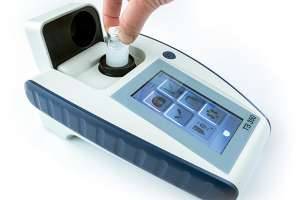
The Lovibond TB 350 WL portable turbidimeter offers simplistic operation combined with intelligent instrument engineering to provide an unparalleled level of accuracy...
Laboratory Analysis
Displaying results 18-34 of 241
Online Exclusives
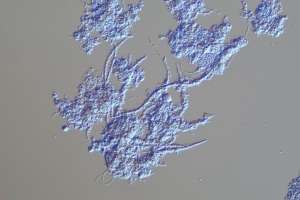
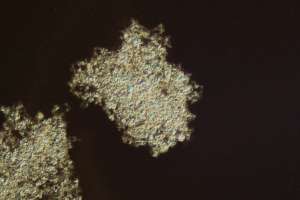
Bug of the Month: Distinguishing the Causes of Pin Floc
The subject of this article is not in relation to a single bug, but rather a sometimes poorly understood concept regarding the...
Online Exclusives
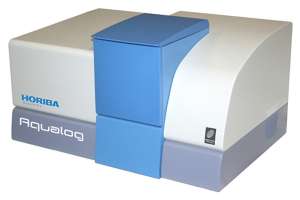
Streamline Your Lab Work With These Analytical Instruments
Analytical instruments in water treatment plants, which include optical spectrometers and mass spectrometers like those below, allow for the detection and quantification...
Online Exclusives
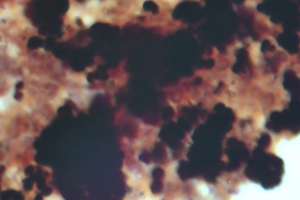
Bug of the Month: Exocellular Polysaccharide and Floc Formation
The subject of this article is not a “bug,” but rather a highly significant fraction of the mixed liquor which is critical...
Online Exclusives
Bug of the Month: Dead Filamentous Bacteria and Their Significance
Based on experience viewing a high amount of mixed liquor samples under fluorescent microscopy, it appears common to have a high percentage...
Videos
City of San Luis Obispo Streamlines Reporting & Response Times
The City of San Luis Obispo treats about 1.75 billion gallons of water per year and serves around 47,545 customers with 14,800...
Online Exclusives
Bug of the Month: Accumulibacter and Enhanced Biological Phosphorus Removal
At the time of this writing there are two main genera recognized to be responsible for the majority of enhanced biological phosphorus...
Editorial
Need to Quantify PFAS in Wastewater? Here Are Some Proven Methods.
As concerns continue to grow about PFAS compounds in wastewater streams, treatment plant operators have become responsible for detecting and monitoring those...
Online Exclusives
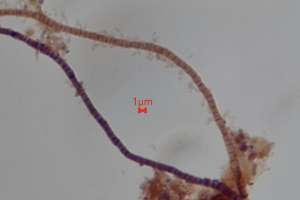
Bug of the Month: The Role of Staining in Filamentous Bacteria Identification
Based on experience, one of the most challenging aspects of identifying filamentous bacteria is utilizing Gram and Neisser staining. Many incorrect identifications...
Online Exclusives
Bug of the Month: Bacteriophages and Their Possible Role in Removing Undesirable Bacteria
There is emerging literature about viruses in biological wastewater treatment and how they may impact wastewater bacteria and subsequent processes. Bacteria of...
Online Exclusives
Bug of the Month: Gordonia and Nocardioform Foaming
In this month’s edition, we’re going to take an in-depth look at Nocardioform foaming. Please note that the “bug” listed is a...
Online Exclusives
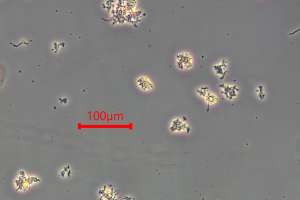
Bug of the Month: Diagnosing the 'Stress Bug'
While there’s no official morphotype name that we’re familiar with, the “irregular growth formations” microbe type recognition was passed on from the...
Online Exclusives
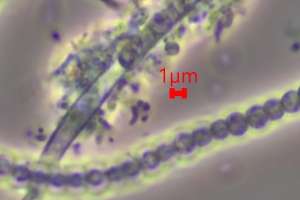
Bug of the Month: Filament Type 0581, an Uncommonly Observed Bacterium
One of the most challenging filament types to diagnose is Eickelboom filament type 0581. It’s a curved or coiled shaped filament located...
Videos
Leading the Lab: Ashley Roberts' Journey From Chemist to Lab Manager
In this online exclusive video, Ashley Roberts, award-winning laboratory manager for Hampton Roads (Virginia) Sanitation District, walks viewers through her lab facility...
Editorial
Ashley Roberts Loves Chemistry – In the Lab and the Kitchen
On completing her degree in chemistry Ashley Roberts wasn’t sure where she would go to work. She did have a clear idea...
Online Exclusives
Bug of the Month: The Interesting Case of Filament Type 0803
Filament type 0803 has a unique backstory, and depending upon the reference source, has various potential associated growth causes.
The manuals written by...
Online Exclusives
Bug of the Month: Tetrad Growth and Volatile Organic Acid Substrate
This month’s “Bug of the Month” is a morphotype recognized as tetrads. Tetrads are a formation of four bacterial cells in a...