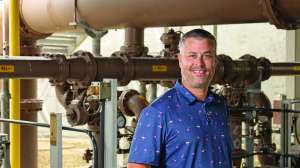

When Jamie Amlong drove into the Norton (Kansas) Water Treatment Plant on a May morning in 2016, he had no idea he was about to confront a catastrophe.
He could smell chlorine gas and, assuming there was a small leak somewhere, he walked up to the chlorine contact building. That’s when he noticed green gas puffing out around the door and a 15-foot patch of grass around the entrance burned to a crisp.
“A faulty heater had warmed up the room to the point where the lead plug on one of our chlorine cylinders melted,” he recalls. The entire contents of the cylinder emptied into the room, creating a poisonous environment and adding more heat.
The gas also mixed with the moist air in the confined space, corroding the electrical conduits and connections and the electrical panel for the chlorine building and the backup generator. That disabled the chlorine scales, the chemical feed system, flowmeters, pumps, and the building’s heating and lighting systems. The plant’s SCADA system went down as well.
“We were dead in the water,” says Amlong, who was then assistant plant superintendent. “It was like we went backward 750 years in one step.”
Amlong and his team did more than respond to the emergency with dispatch. They turned it into an opportunity to improve the plant for the long haul. In recognition, they received the 2017 Most Improved Water System award from the Kansas Rural Water Association.
Before the fall
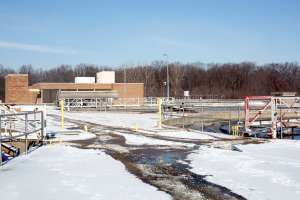
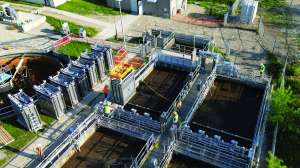
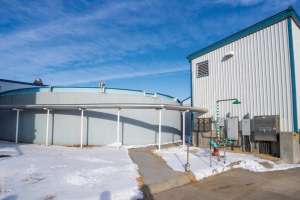
Amlong was assistant plant superintendent when the chlorine leak occurred; he was named superintendent soon after. Built in 1964, the Norton treatment plant draws raw water from Keith Sebelius Lake (60 percent of the supply) and the balance from four groundwater wells. It was designed as a basic flocculation-sedimentation plant with a pair of gravity filters.
The plant had been challenged to meet drinking water standards for disinfection byproducts, an issue generally associated with surface water, along with standards for arsenic and other contaminants in groundwater. Norton blends its well water into the surface water flow.
In 2007-08, the plant was upgraded. The city rejected a proposal to add membrane filtration and instead refurbished the existing facility. Liquid chemical feed equipment replaced old dry feed systems for chlorine dioxide (the primary oxidant), ferric chloride for coagulation, and chlorine for disinfection. Caustic was added for pH control. New bulk storage tanks were installed and equipped with spill protection, and a new chlorine contact basin was built.
The sand, gravel, and anthracite filters received an update with new media, a badly needed air scour system, and filter-to-waste piping. A third filter was added, and turbidity meters were installed on each filter. Production is about 1.1 mgd during the summer irrigation season and 0.35 mgd in winter. The flow is chlorinated just ahead of the filters, and ammonia is added to the 450,000-gallon clearwell. An elevated tank adds 250,000 gallons of storage. Distribution lines carry the finished water to 2,800 residents.
Disaster and response
That was the normal state of operations at the Norton water plant until that fateful morning of May 3, 2016. The first thing Amlong did that day was call the Norton Volunteer Fire Department and his administration. He then ordered the plant evacuated and all vehicles removed from the property. He also called the local radio station to issue a boil order and used the city’s reverse 911 phone network and Facebook to alert citizens that their water was not safe.
The Fire Department implemented the mandated safety procedures and fogged the chlorine building interior, then went in and manually shut down all six chlorine cylinders. That done, Amlong and his staff assessed the damage and called for help.
They contacted Tom Lasser of Hawkins Water Treatment Group, the plant’s provider of the chemicals and chemical feed systems; Pat McCool of the Kansas Rural Water Association; and Dan Wells of the Kansas Department of Health and Environment. The response was immediate.
“Tom Lasser and Tim Bentzinger from Hawkins came down the next day and started helping us with process controls,” Amlong recalls. McCool arrived later that day, and his Kansas Rural Water Association colleague Lonnie Boller drove through the night to get there. Together, the group began to put the plant back together.
Back to manual
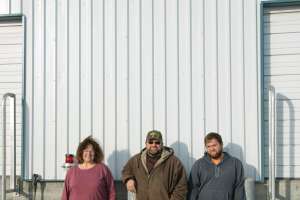
“Pat McCool and I shared ideas over the phone and in person,” Amlong recalls. “Our high-service pump was not affected, but we had to turn it on manually to fill the water storage tank.” While the clarifiers and filters were still functional, Amlong and operators Joyce Garrison, Drew Eagleburger, and Chancey Dial started running everything manually, working 19-hour days, seven days a week, until the plant returned to normal in August.
They opened and closed valves by hand and sprinkled powered chlorine into the clarifier to prevent biological growth. Kansas Rural Water Association’s Boller devised a homemade header system that enabled a return to normal chlorination.
“I’d seen a situation like this once before,” says Boller, a surface water technician. “So I had piping and valves and everything I needed in the car. I started putting things together outside, and when the building was cleared, we went back in and installed temporary chlorine bottles and injectors.”
The staff rigged temporary piping around equipment that had been knocked out by the electrical failure. With no functioning flowmeters, they fed all chemicals by hand and ran manual turbidity and chlorine residual checks. “It was a lot of longhand math,” Eagleburger says.
Restoration and recovery
Eventually, the chlorine room walls were cleaned and repainted. A new electrical panel was installed — outside the building. The staff pulled new wires through the affected conduits and ordered replacement parts, chlorine scales, chemical feed pumps and controls. Normal operation resumed on Aug. 23.
Amazingly, the recovery didn’t force the city to petition for outside government funding. By doing most of the work in-house and using the professional help available, Norton got its water plant back online at a cost of just over $50,000. Insurance covered much of the repair and replacement expense.
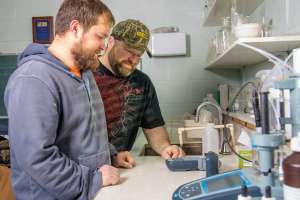
If the disaster had a silver lining, it was a new approach to chemicals and chemical feed suggested by Lasser. “I looked at the chemistry they were using,” he says. “Previously, they had been testing only in the laboratory, so I worked with the staff to start running jar tests all across the plant, from the clarifiers to the top of the filters and to the bottom of the filters.”
Lasser recommended a new proprietary coagulant (AquaHawk 457) in place of ferric chloride. Since the raw water pH was suitable, he suggested the staff stop using caustic soda. The new approach included dosing a small amount of permanganate to remove manganese and some organics. Different feed points for both chemicals were established, at the surface water and well water inlets.
“The less chemistry you have to do, the better the quality of water,” Lasser says. He credits Mark Oberhelman of his firm for helping him understand the chemical processes at customer sites. “The operators were really open to change. Their attitude was great.”
Working with Lasser, the staff also cleaned out the sedimentation basin and established a clarifier blanket. The changes have worked wonders. Today, the plant produces water averaging 0.01 to 0.03 NTU and the lowest level of DBPs ever. “It’s absolutely fabulous what Jamie and the staff have been able to do,” Lasser says. “It’s been a lot of hard work.”
Change for the better
As if the chlorine leak and plant “burnout” weren’t enough, the Norton (Kansas) Water Treatment Plant had to overcome a nasty taste and odor issue last year.
“I was getting complaints at City Hall,” says Chad Buckley, city administrator. “People weren’t drinking the water. It looked bad and smelled bad. People were using bottled water.”
When Jamie Amlong assumed the leadership role, the team took a serious look at its chemicals and chemical feed systems and decided to make some significant changes.
Tom Lasser of chemical supplier Hawkins Water Treatment Group was a big help. “After the chlorine episode, he talked to us about our treatment process,” Amlong recalls. As a result, the Norton team changed coagulants and other chemicals and began weekly jar testing to optimize chemical feed rates.
“At first we had to get permission from the Kansas Department of Health and Environment, and then we implemented the changes for one month,” Buckley says. The trial was successful, and the changes were made permanent, with good results.
“Where I heard complaints before, now I hear a lot of good comments,” Buckley says. “People note that things have really changed. It’s nice to hear.”
Lasser adds, “When I came to work with the plant, I had dinner at the Eagle’s Club. People there told me about the bad water. After we made the changes, I took a jug of clear, clean plant water back to the club. The people there insisted I’d bought it at the grocery store.”